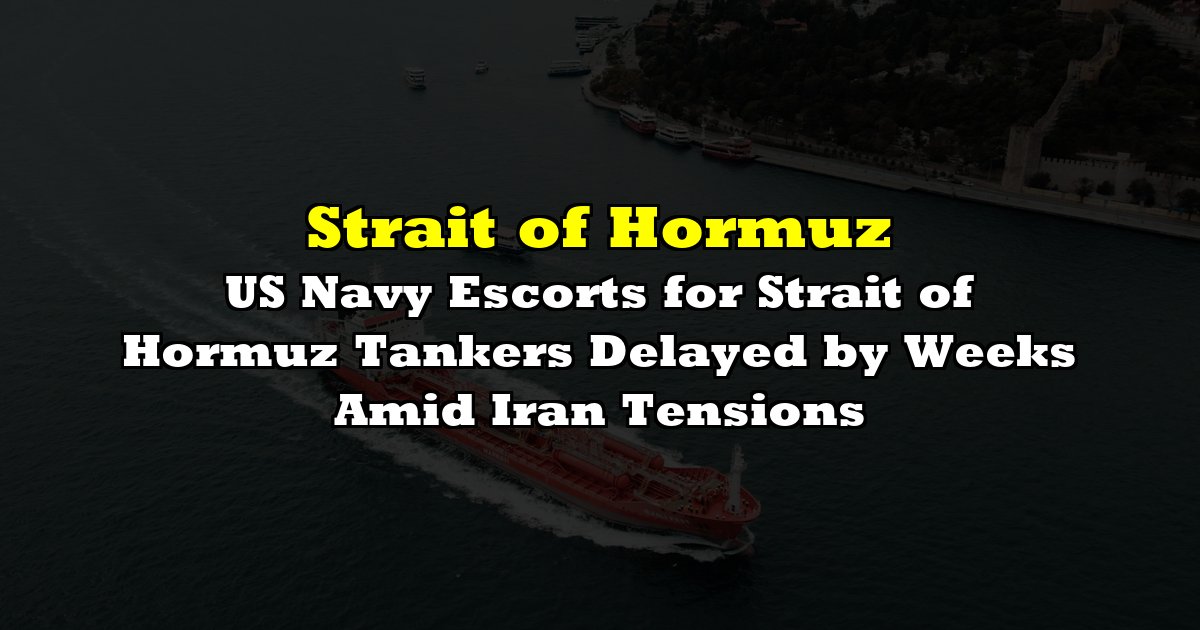

A planned US Navy operation to escort oil tankers through the Strait of Hormuz faces a delay of at least three to four weeks, as military officials assess the need to weaken Iran’s regional capabilities before deploying a convoy. The setback, highlighted by a former US Navy commander, comes as tensions with Iran escalate over control of the critical energy chokepoint.
The Strait of Hormuz, a narrow waterway linking the Persian Gulf to global markets, handles roughly a fifth of the world’s oil supply, making any disruption a potential shock to energy prices. Iran’s Islamic Revolutionary Guard Corps (IRGC) has issued stark warnings against US intervention, with a senior official stating they are prepared to confront any naval escorts. The IRGC’s rhetoric underscores the risk of direct conflict in a region already strained by geopolitical friction.
US officials, meanwhile, are calibrating their approach. A source from the Treasury Department indicated that escort missions could commence within a couple of weeks, though no firm timeline has been confirmed. This discrepancy with the Navy’s assessment suggests internal coordination challenges as the operation takes shape.
"No escort mission had been launched as of Saturday…According to a former US Navy commander, the military needs to make more of a dent in Iran’s war machine before it can send a convoy, and a mission is likely at least three to four weeks away."https://t.co/zXFokeEv2y
— Ellen R. Wald Ph.D.🛢 (@EnergzdEconomy) March 8, 2026
President Donald Trump has publicly prioritized securing the Strait, framing it as a cornerstone of US energy security policy in 2026. In a recent address, he emphasized the need to protect tankers from Iranian interference, linking the mission to broader efforts to stabilize oil markets. His administration’s focus reflects growing concerns over Iran’s ability to disrupt shipping lanes amid heightened sanctions and regional proxy conflicts.
Operational delays, however, point to the complexity of the task. Military planners are reportedly wary of Iran’s asymmetric warfare tactics, including speedboat swarms and missile capabilities, which have previously targeted vessels in the area. The Navy’s cautious stance aims to minimize risks to both personnel and civilian shipping.
Energy markets are already feeling the strain of uncertainty, with Brent crude prices ticking up 14.7% over the last week. Analysts warn that prolonged insecurity in the Strait could push prices past $90 per barrel if no resolution is reached. The economic stakes remain high, with global supply chains hanging in the balance as the US finalizes its next moves.
Information for this story was found via the sources and companies mentioned. The author has no securities or affiliations related to the organizations discussed. Not a recommendation to buy or sell. Always do additional research and consult a professional before purchasing a security. The author holds no licenses.