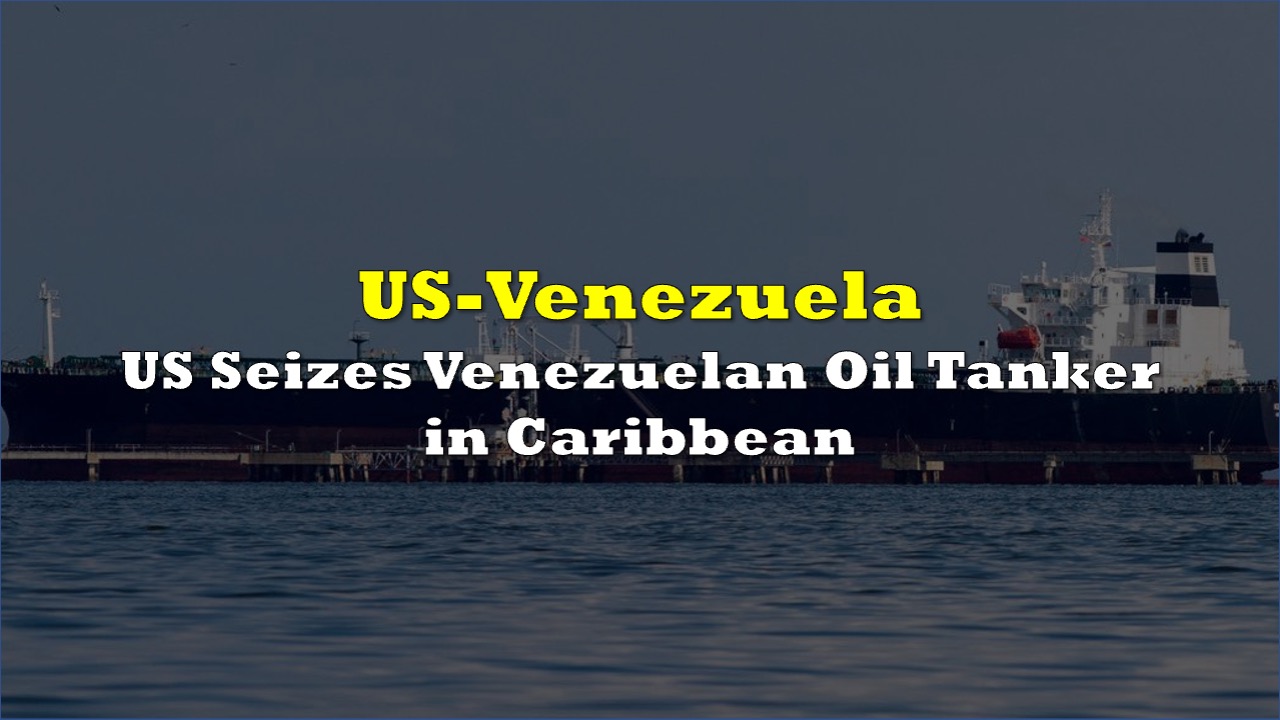

The United States seized a Venezuelan oil tanker carrying 2 million barrels of crude off the Caribbean coast Wednesday, escalating tensions between Washington and President Nicolás Maduro’s government.
President Donald Trump called the vessel “the largest one ever seized, actually,” but declined to explain the operation beyond saying authorities acted “for very good reason.”
FBI agents, Homeland Security personnel, and Coast Guard members rappelled from helicopters onto the tanker Skipper with weapons drawn, according to video released by Attorney General Pam Bondi.
The U.S. Navy has intercepted and seized a sanctioned oil tanker off the coast of Venezuela, in a serious escalation between the two countries, according to people familiar with the matter who spoke to Bloomberg. pic.twitter.com/jmLFIEqeTl
— OSINTdefender (@sentdefender) December 10, 2025
“For multiple years, the oil tanker has been sanctioned by the United States due to its involvement in an illicit oil shipping network supporting foreign terrorist organizations,” Bondi said in a statement.
The United States sanctioned the vessel in 2022 for alleged ties to Hezbollah and Iran’s Revolutionary Guard. US forces conducted the operation in international waters and reported no casualties.
WATCH: U.S. forces seize oil tanker off the coast of Venezuela pic.twitter.com/xCJjDP2oY3
— BNO News (@BNONews) December 10, 2025
Venezuela condemned the action as “blatant theft” and “an act of international piracy,” saying it revealed Washington’s true goal of seizing “our natural resources, our oil, our energy, the resources that belong exclusively to the Venezuelan people.”
Iran’s embassy in Caracas called the seizure “illegal and unjustified,” describing it as piracy in Caribbean waters.
Brent crude jumped 0.8% to $62.35 per barrel on the news, with West Texas Intermediate reaching $58.46.
The seizure marks the latest action in an expanding US military campaign in the region. Since summer, Washington has positioned over 15,000 service members in Caribbean waters, including the aircraft carrier USS Gerald R. Ford with 5,000 sailors aboard. Naval commanders report 15% of all deployed US warships now patrol the area.
American forces have struck more than 20 vessels suspected of drug trafficking near Venezuela and Colombia, killing 87 people. Democrats and legal scholars have questioned whether those operations comply with US laws on military force.
Trump told Politico this week that Maduro’s “days are numbered.” Federal prosecutors charged the Venezuelan leader with narcoterrorism in 2020, and Trump recently authorized a $50 million bounty for information leading to his arrest.
Venezuela holds the world’s largest proven oil reserves and produces roughly 1 million barrels daily through state company PDVSA. November exports fell to 700,000 barrels per day.
Related: Trump’s Ultimatum to Maduro Expires as Military Pressure Mounts
“This kind of action adds a geopolitical floor to prices: Even modest volumes can move sentiment when the risk is about sea lanes and state-to-state escalation,” said Jorge Leon, head of geopolitical analysis at Rystad Energy.
Chinese refineries now purchase most Venezuelan crude through intermediaries at discounted rates to avoid sanctions. Houston-based Chevron operates in Venezuela under Treasury exemption, receiving a share of production from its PDVSA joint ventures.
No similar military seizure has occurred since Navy SEAL teams in 2014 boarded a Libyan vessel that armed militants had commandeered in an attempt to illegally export state-owned crude.
Information for this story was found via the sources and companies mentioned. The author has no securities or affiliations related to the organizations discussed. Not a recommendation to buy or sell. Always do additional research and consult a professional before purchasing a security. The author holds no licenses.