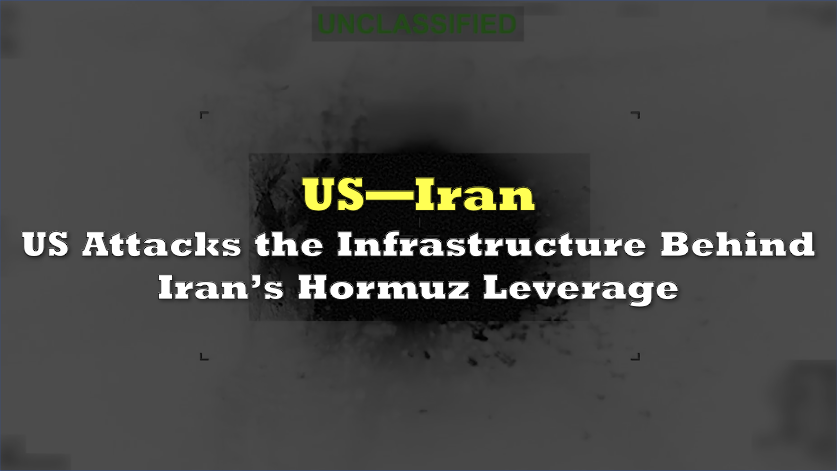

The US is no longer limiting its response to the weapons Iran has already fired at commercial vessels. Its latest strike suggests a broader attempt to remove the coastal infrastructure that allows Tehran to threaten shipping across the Strait of Hormuz.
US Central Command said American forces completed a 90-minute attack on Greater Tunb Island at 7:30 a.m. Eastern Time on July 15. Precision-guided weapons targeted coastal defense systems, cruise missile storage facilities, and launch sites, according to the command.
CENTCOM said the operation further reduced Iran’s ability to attack commercial vessels.
Greater Tunb sits near maritime approaches to the Strait of Hormuz and forms part of an Iranian-controlled island network capable of supporting surveillance, missile deployments, and coastal defense operations. Iran has maintained control of Greater Tunb since 1971, although the UAE continues to claim sovereignty over the island.
 Sponsored · Cambria Gold Mines
By targeting storage and launch infrastructure there, Washington appears to be attacking Iran’s capacity to sustain maritime pressure rather than merely intercepting weapons after launch.
The military contest is increasingly centered on who can determine whether ships move through Hormuz, under what conditions, and at what cost. Oil prices had already climbed above $85 per barrel amid the renewed fighting and threats to regional energy exports, according to Associated Press reporting.
Destroying missile batteries may reduce the number of weapons Iran can direct at ships. Repeated attacks on Iranian territory, however, give Tehran an incentive to retaliate through other coastal positions, fast-attack vessels, drones, mines, regional partners, or attacks on US installations and neighboring states.
Reuters reported that Iran responded to the broader US campaign with attacks it said were directed at American military locations in Bahrain, Kuwait, and Jordan. Tehran also threatened to disrupt additional regional energy exports.
Greater Tunb is only one point in a larger network. Recent US operations have targeted Iranian military infrastructure across locations including Bushehr, Jask, Konarak, Abu Musa, Chabahar, and Bandar Abbas, according to CENTCOM statements reported by Aljazeera.
The widening target set indicates that Washington sees the threat to shipping as a distributed system rather than a collection of isolated missile batteries.