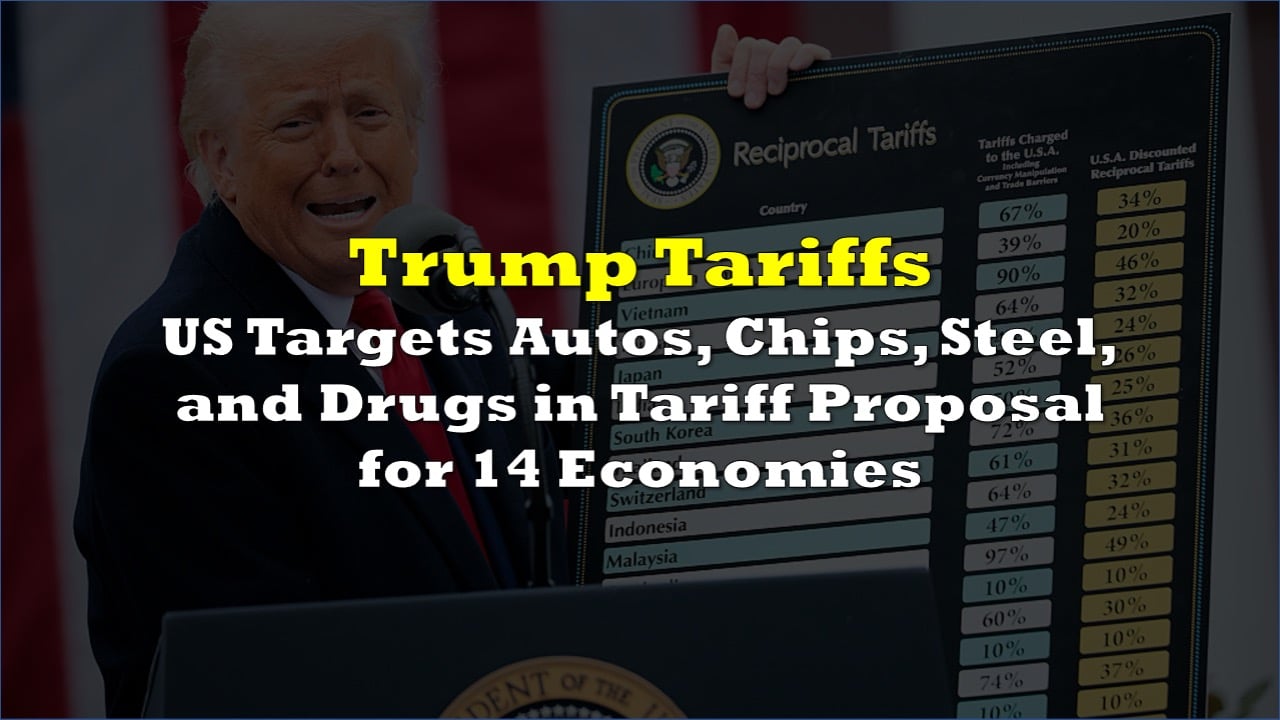

The US wants to raise tariffs on goods from 14 economies, including China, the European Union, Japan, South Korea, Taiwan, India, and Vietnam, over what it calls government-backed factory capacity that floods world markets. The proposed duties could reach 35% and apply to nearly everything those economies ship to the US, except steel, aluminum, autos, and other goods already facing separate tariffs.
US Trade Representative Jamieson Greer announced the findings Wednesday, concluding 14 of the 16 investigations his office opened on March 11 under Section 301 of the Trade Act of 1974. Greer said the actions could “level the playing field for American workers”. The tariffs are proposals, not rules, and no new duties take effect before public hearings begin on January 25, 2027.
Which countries are affected
The 14 economies are China, the EU, Japan, South Korea, Taiwan, India, Singapore, Switzerland, Indonesia, Malaysia, Cambodia, Thailand, Vietnam and Bangladesh. USTR has made no determination yet on the other two economies it investigated, Mexico and Norway.
 Sponsored · Silver47 Exploration Inc.
What each would pay
Each proposed rate is net of existing tariffs, so the new duty adds only the difference. USTR also set higher rates for economies whose commitments to address excess capacity it finds unsatisfactory.
| Economy | Proposed rate | If commitments are unsatisfactory | Sectors USTR named |
| China | Up to 20% | Up to 40% | 22 sectors, including aluminum, autos, batteries, semiconductors, steel, solar and wind |
| European Union | 15% | Up to 20% | Autos, chemicals, pharmaceuticals |
| Japan | Up to 15% | Up to 20% | Autos, steel, semiconductors, optical fiber |
| South Korea | Up to 15% | Up to 25% | Autos, semiconductors, petrochemicals |
| Taiwan | Up to 15% | Up to 25% | Electronics, semiconductors, telecommunications |
| Switzerland | Up to 15% | Up to 20% | Pharmaceuticals, steel, chemicals |
| India | Up to 25%, or 17% with a trade agreement | Not specified | Pharmaceuticals, medical devices, steel, solar, information technology |
| Vietnam | Up to 35%, or 20% with a trade agreement | Not specified | Textiles, apparel, footwear, shipbuilding, cement, information technology |
| Singapore | Up to 20%, or 10% with a trade agreement | Not specified | Electronics, semiconductors, health products, petrochemicals |
| Thailand | Up to 18% | Up to 25% | Electronics, autos, machinery, electrical equipment |
| Malaysia | Up to 18% | Up to 25% | Information technology, autos |
| Indonesia | Up to 18% | Up to 25% | Textiles and apparel, mining and metals, renewable energy |
| Cambodia | Up to 18% | Up to 25% | Apparel, solar, tires |
| Bangladesh | Up to 18% | Up to 20% | Ready-made garments and apparel |
The sector lists show where USTR says the excess capacity is, but the proposed tariffs are not limited to them. They would apply to all goods from the 14 economies except those exempted.
What is exempt
The proposal spares goods already hit by Section 232 tariffs. That covers aluminum, steel and copper and their derivatives, passenger vehicles, light trucks and parts, medium and heavy trucks and parts, wood products, patented pharmaceuticals and semiconductors. The notices also exclude informational materials, donations, accompanied baggage, certain iron ores and products the US cannot source domestically in meaningful quantities.
The administration also proposed carve-outs for chips and other high-tech goods from Taiwan and South Korea, products central to the AI boom. For China, the proposal sets up two product lists. Goods on Annex A would face up to 10%, and goods on Annex B, which track the US-China Board of Trade “30-For-30” lists, would be exempt or see reduced tariffs. Greer told CNBC the proposal includes a broad exemption for $30 billion in Chinese goods, in line with a trade truce that expires January 10, 2027. The notices do not describe what the lists contain.
How the rates fit with existing tariffs
For the EU, Japan, South Korea, Switzerland and Taiwan, the proposed rates are net of normal tariff rates and existing Section 301 duties, which appears to keep in place the 15% ceilings those economies negotiated with Washington rather than add to them. China’s rate is net of the forced-labor Section 301 duty already in place, and India and Vietnam could see adjustments for existing Section 301 and 232 duties. The new duties would not stack on Section 232 tariffs or on the forced-labor levies of 10% to 12.5% announced in July, according to the AP. For some Chinese goods, the new 20% would sit on top of other import taxes for a total rate of 45%.
What happens next
Written comments and requests to appear at the hearings are due January 5, 2027, and the hearings begin January 25. USTR can finalize its action after that, and final rates may differ from the proposal. Greer expects none of the tariffs to take effect for a couple of months or more, and the AP reported the duties likely will not start until February or March.
European Commission spokesperson Olof Gill said in March, when the probe began, that the sources of overcapacity “do not lie in Europe”, and the EU said it would respond firmly and proportionally if US tariffs breach its trade deal. China’s Foreign Ministry opposed the new proposal and urged dialogue, the AP reported. Dan Anthony of We Pay the Tariffs said small businesses cannot absorb stacked tariffs. Trade lawyer Ryan Majerus expects court challenges, as the forced-labor tariffs have drawn. Goldman Sachs estimates the overall US tariff rate would rise from 7.8% to 9.2%.