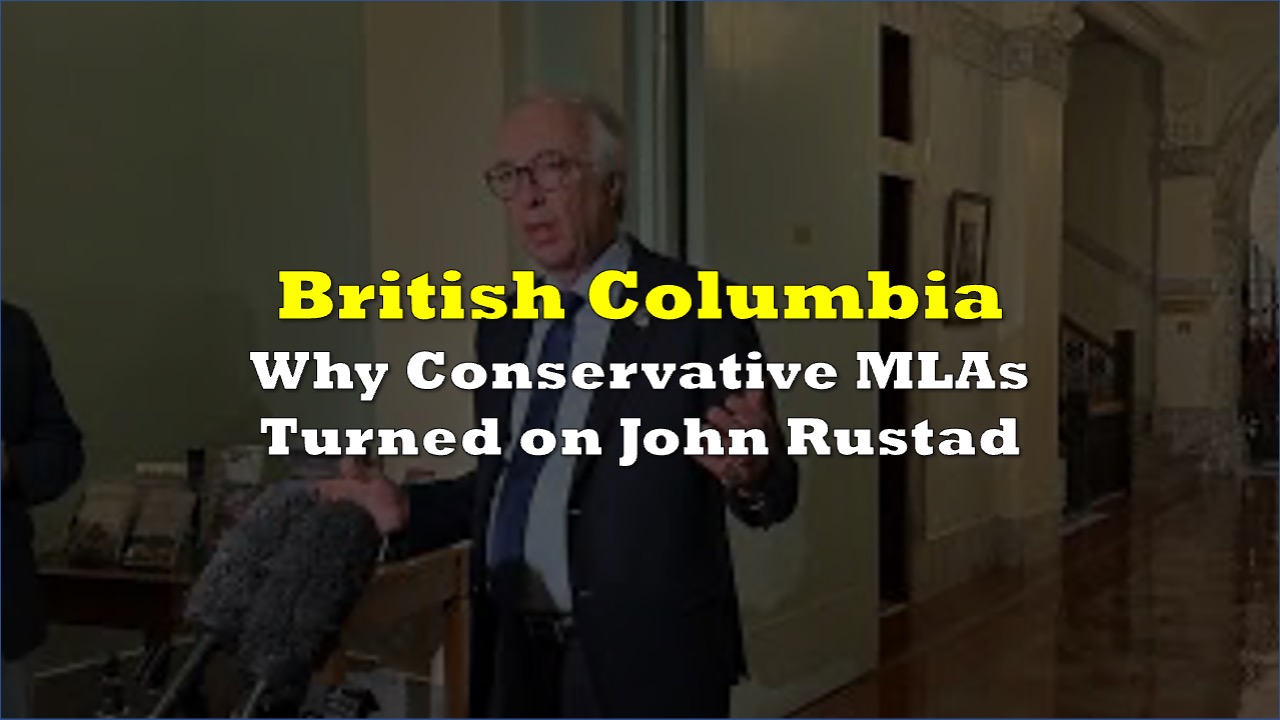

When British Columbia Conservative MLAs arrived for a caucus meeting on December 3, they expected a showdown over John Rustad’s leadership. Instead, organizers announced a gingerbread-making contest.
The bizarre team-building exercise became the final straw. Most MLAs walked out in protest, triggering events that forced Rustad to resign the next day after 20 of his 39 caucus members declared they had lost confidence in him.
But the gingerbread incident merely crystallized months of accumulated frustrations. Observers say Rustad lost his party not through ideology or any single misstep, but through what CBC News called “a cumulative failure of political leadership.”
NEW – @JohnRustad4BC has resigned as leader. Will remain as MLA. pic.twitter.com/OUSmJkLDWd
— Rob Shaw (@RobShaw_BC) December 4, 2025
The management failures
Rustad’s troubles began almost immediately after the October 2024 election transformed the Conservatives from a one-seat party into the 39-member official opposition.
Five MLAs either resigned or faced expulsion within months. Dallas Brodie and Tara Armstrong left to form OneBC. Jordan Kealy, Elenore Sturko, and Amelia Boultbee became independents, with Boultbee warning she had witnessed Rustad’s “unravelling.”
Each departure revealed different problems. Rustad expelled Brodie for residential school comments that embarrassed the party. He removed Sturko after surviving a September leadership review, claiming she undermined him. Sturko countered that he was silencing moderate voices.
In October, Rustad ordered MLAs’ phones searched during meetings to identify media leakers — eroding trust further. At another meeting, he publicly discussed a member’s alleged romantic relationship, later apologizing.
The procedural warfare
As discontent grew, Rustad and loyalists used constitutional technicalities to block leadership votes during caucus meetings. The strategy worked until party executives and riding association presidents coordinated against him.
By fall, the board of directors had urged Rustad to resign. When he refused, 30 riding association members signed a letter citing “chaos under his leadership” and stalled fundraising.
Rustad survived his September leadership review with 71% support, but only 1,268 of roughly 9,000 party members voted — about 14% turnout. The low participation suggested many had already disengaged from a party consumed by internal battles.
Rustad then faced a fundamental challenge: uniting former BC Liberal moderates, populist activists, and social conservatives. His solution—promising free speech in caucus and refusing to whip votes—failed to create unity.
Fraser Valley University political scientist Hamish Telford described the caucus as “a very unruly caucus, a very diverse coalition of people,” adding that Rustad “tried to play the ends against the middle, evidently to no avail.”
Neither wing felt represented. Social conservatives bristled when Rustad fired longtime staffer Lindsay Shepherd for calling the Truth and Reconciliation flag “a disgrace” and “fake.” Populist voices dominated and pushed moderates to the margins. Both sides turned against him.
The breaking point
By December, a majority of MLAs resolved to force a leadership vote at the December 3 meeting. When they arrived to find a gingerbread-making exercise instead, it confirmed their fears about Rustad’s accountability evasion.
They drafted an emergency legal letter declaring their loss of confidence. The party board — whose members Rustad had hand-picked as loyalists — passed a motion declaring him “professionally incapacitated” and appointed Trevor Halford as interim leader.
For 24 hours, Rustad fought back, insisting on social media he was “not going anywhere.” But by December 4, he conceded. “Tearing apart this party with a civil war was not the right thing to do,” he said, with tears in his eyes.
Well, that's that pic.twitter.com/Gm7eYsYrVn
— Jarryd Jäger (@JarrydJaeger) December 4, 2025
What’s next
Rustad’s departure solves the immediate crisis but leaves deeper problems unresolved. The party expects a leadership race within six months, but analysts warn the contest could worsen divisions.
Halford, serving as interim leader with no interest in the permanent role, claimed he sees no “gulf of ideology” in the caucus. But several Rustad-supporting MLAs were notably absent from Halford’s first press conference.
Party president Aisha Estey said the Conservatives will now “refocus on the NDP,” but the opposition’s credibility has suffered. The party that nearly formed government in October now faces questions about basic cohesion.
Rustad built the Conservative Party from nothing to the brink of power in less than two years, only to lose control through basic management failures and failing to build trust across a fractured coalition.
Good morning, my fellow British Columbians
— John Rustad (@JohnRustad4BC) December 4, 2025
This province, this place we all call home, has given me everything. The right to speak freely. The right to stand for what I believe. The right to fight for a better future for our children. And I have never taken that privilege…
His final message to supporters struck a defiant note, encouraging members to join the party and fight for “the soul of this party.”
Information for this story was found via CBC News, The Globe and Mail, and the sources and companies mentioned. The author has no securities or affiliations related to the organizations discussed. Not a recommendation to buy or sell. Always do additional research and consult a professional before purchasing a security. The author holds no licenses.