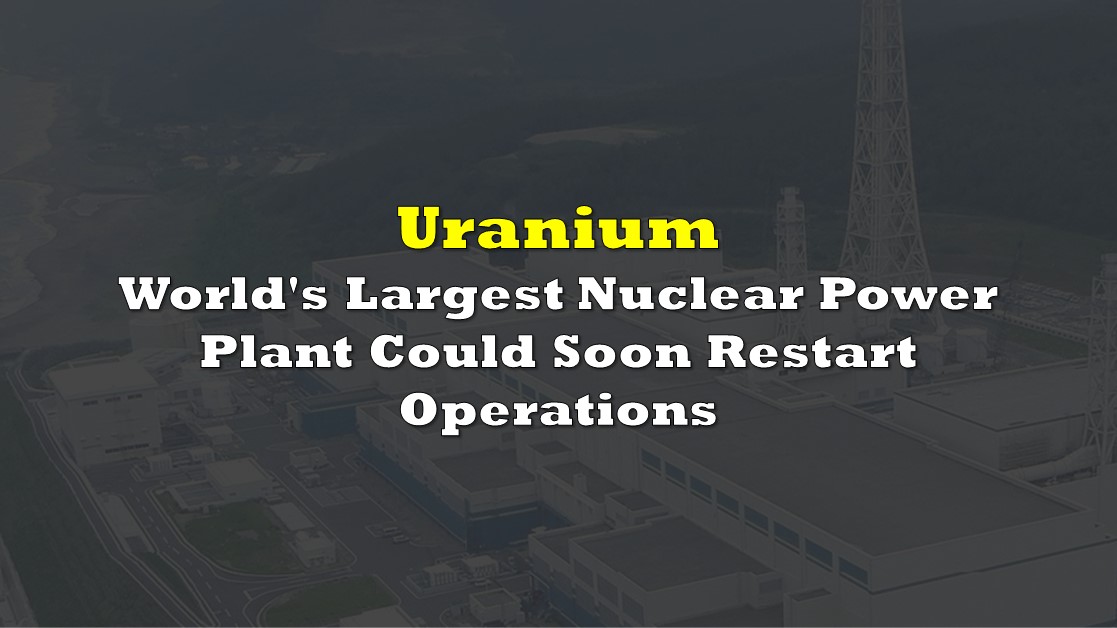

The bull case for uranium continues to build, with the largest nuclear power plant in the world moving towards reopening after shuttering following seismic events in 2007, with its reopening hindered by the 2011 Fukushima earthquake.
The power plant, known as the Kashiwazaki-Kariwa Nuclear Power Plant, is the largest in both Japan and the world, with the campus covering 4.2 square kilometres, or 1,000 acres. The campus is so large that it spans across two towns in the Niigata Prefecture, on the coast of the Sea of Japan.
The plant boasts a nameplate capacity of 7,965 megawatts, with a total of seven reactors. Five of the reactors are 1,067 MW in size, with the remaining two measuring in at 1,315 MW each.
 Sponsored · Silver47 Exploration Inc.
Japan’s government is moving to restart the plant following a rise in energy costs in the region. The government is currently aiming to secure local approval for the resumption of operations, with the Minister of Economy, Trade and Industry expected to request that the prefecture’s governor, Hideyo Hanazumi, endorse the restart. The request follows the Nuclear Regulation Authority in December lifting a ban on operations over safety violations.
Owned and operated by Tokyo Electric Power Company, or TEPCO, the restart of operations at the facility was approved for reactors 6 and 7 in 2017, however operations did not resume. In December the reloading of fuel at the plant was approved following the lifting of the ban on operations.
Reactors at the facility use a low-enriched uranium for nuclear fuel. In terms of uranium demand, a document published by TEPCO in 2009 suggests that across all their facilities, which encompassed 17 reactors at the time of publishing, the company had annual demand for 4,000 stU3O8, which translates to 7.95 million pounds of uranium consumed annually. This suggests that the Kashiwazaki-Kariwa plant consumes approximately 3.27 million pounds of uranium per year, when all seven reactors are in operation.
It is currently unclear if TEPCO is seeking approval to resume operations at all reactors, or just a portion of the seven reactors.
Information for this story was found via the sources and companies mentioned. The author has no securities or affiliations related to the organizations discussed. Not a recommendation to buy or sell. Always do additional research and consult a professional before purchasing a security. The author holds no licenses.