
The coronavirus pandemic has forced many companies and businesses to revert to more flexible work environments as a move to reduce the spread of the deadly virus. Now nearly eight months into the pandemic, uncertainty surrounding virus mitigation efforts grows as the number of daily cases is nearing exponential growth; as a result, what seemed as only temporary work-from-home measures are now turning permanent for the foreseeable future.
The increasing number of Americans that have been working remotely amid the pandemic have also sparked a mass exodus into suburban and rural neighbourhoods, as the escape from dangerous infection rates, rising social unrest, and surge in violent crime heightens. Likewise, the supply of metro and heavily-populated downtown housing has been on the rise amid the exodus, causing a new real estate phenomenon to emerge. However, the trend of remote work is not only affecting housing accommodations for American families, but also commercial real estate as well.
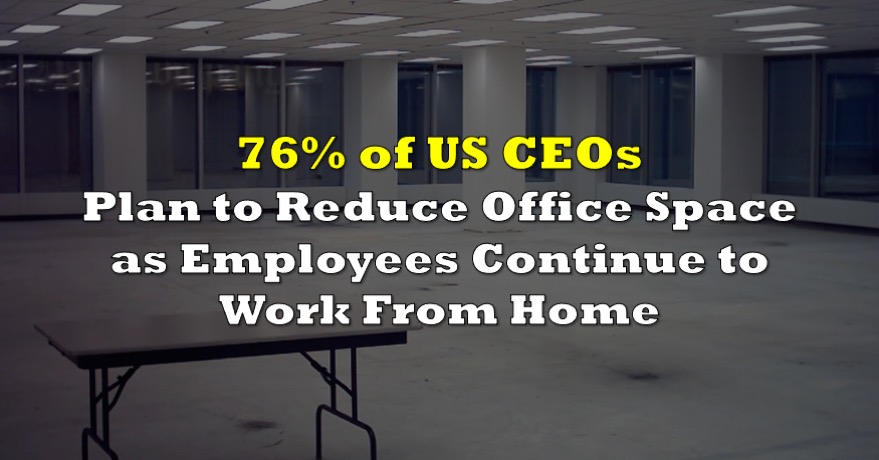
The prolonged work-from-home setting has reduced the need for pre-pandemic office space, as more and more company CEOs adopt the redefined work environment into the long run. According to a survey conducted by Deloitte and Furtune, a sample size of 171 CEOs across the US found that 76% of them plan to downsize their office space in the near future, while 28% noted that they will require significantly less corporate space. The eye-opening results of the survey certainly point to a reduction of corporate footprints among companies, as well as the emergence of yet another real estate anomaly.

While much of corporate America is currently reducing its office space needs, certain CMBC tranches will be under increased pressure, especially those that contain a higher concentration of office buildings. This means that while remote offices become increasingly popular over the next 6 to 12 months, many building operators will face reduced rental revenues, which in turn will translate to missed mortgage payments, and thus ultimately send delinquency rates through the roof.

However, the reduction in office space will not only hurt corporate mortgage holders and related parties, but also local economies as well. Small businesses that surround the corporate districts are seeing sales drop, especially those concentrated in the restaurant and accommodations sector. Moreover, the reduction in traffic will also affect local gas stations that heavily rely on daily commuters for their revenue. Nonetheless, the looming commercial real estate crisis will likely cause a cascade of problems that will trickle down from the greater US economy all the way down to small, local economies that will likely suffer the most.
 Sponsored · Cambria Gold Mines
Information for this briefing was found via Fortune and Trepp. The author has no securities or affiliations related to this organization. Not a recommendation to buy or sell. Always do additional research and consult a professional before purchasing a security. The author holds no licenses.