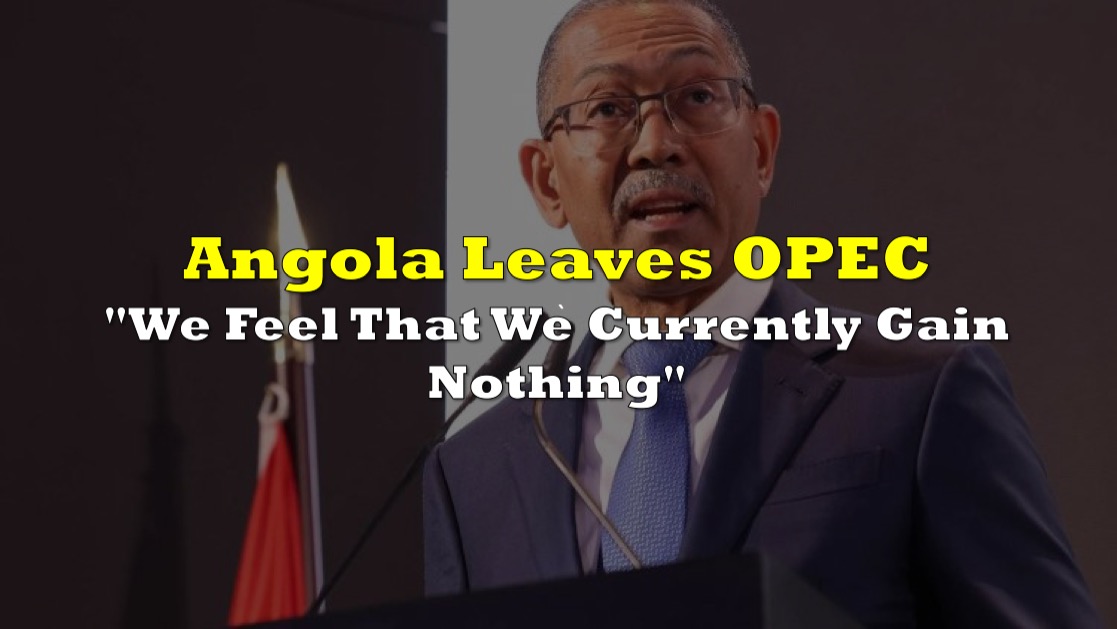

Angola has officially announced its decision to leave the Organization of the Petroleum Exporting Countries (OPEC). The move comes after a prolonged disagreement with the organization over production quotas, marking a departure that will reduce OPEC’s membership to 12 countries.
Diamantino Azevedo, Angola’s Minister for Mineral Resources, Petroleum, and Gas, emphasized that the decision was made in the interest of defending Angola’s economic concerns. Azevedo stated, “We feel that … Angola currently gains nothing by remaining in the organization and, in defense of its interests, decided to leave.”
Angola, a member since 2007, has faced challenges in meeting OPEC production quotas in recent years. The country’s daily oil production stands at approximately 1.1 million barrels. This departure follows similar moves by other nations, including Qatar and Ecuador, in the past decade.
 Sponsored · Selkirk Copper Mines
The decision has raised questions about the future of OPEC, with crude prices experiencing a drop of over 1.5 percent following the announcement. Giovanni Staunovo, a commodity analyst with UBS, provided insight, stating, “From an oil market supply perspective, the impact is minimal as oil production in Angola was on a downward trend and higher production would first require higher investments.”
While Angola’s departure represents a relatively small portion of OPEC’s overall production, concerns about the group’s unity have surfaced. OPEC countries, excluding Angola, will collectively produce about 27 million barrels of oil per day, accounting for roughly 27 percent of the global supply.
Angola’s decision stems from concerns raised last month when OPEC decided to reduce its production quota for 2024. Azevedo’s office expressed worry that such a reduction would impede Angola’s ability to increase its output capacity.
Clay Seigle, Director of Global Oil Service at Rapidan Energy Group, noted that the move was anticipated, stating, “The writing was on the wall already last month.” The disagreement over production baselines during the OPEC+ meeting in November further highlighted the tensions within the group.
Analysts at Scotiabank highlighted the minimal impact on global oil supply, considering Angola’s already maximized production. However, they noted that the departure adds to the rising tension within OPEC and suggested that other marginal players might reconsider their OPEC membership.
Information for this briefing was found via the Aljazeera, Reuters, CNBC, and the sources mentioned. The author has no securities or affiliations related to the organizations discussed. Not a recommendation to buy or sell. Always do additional research and consult a professional before purchasing a security. The author holds no licenses.