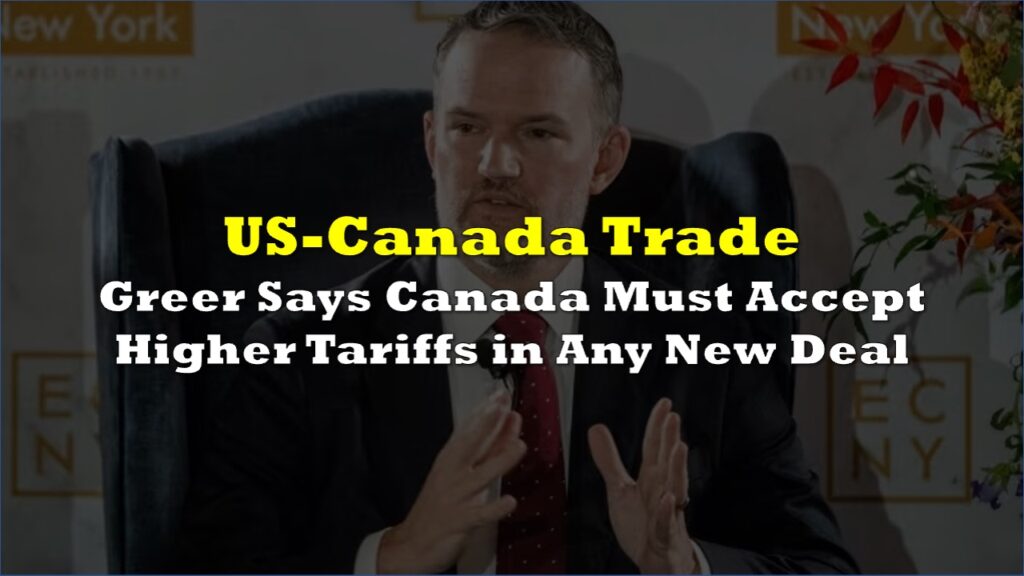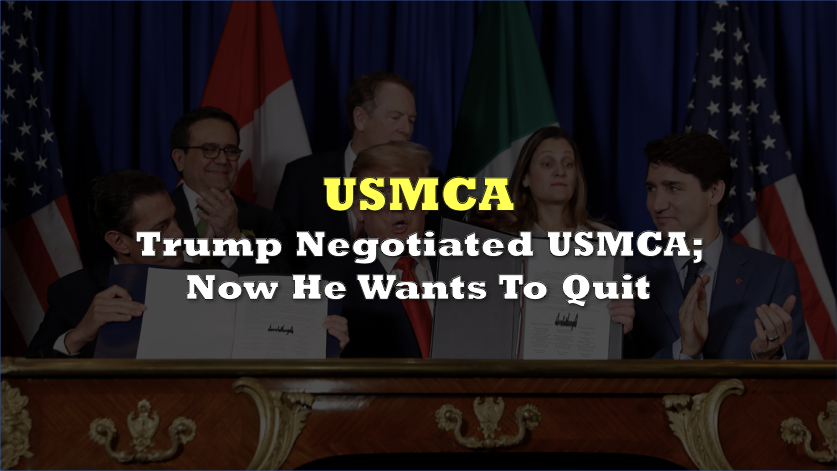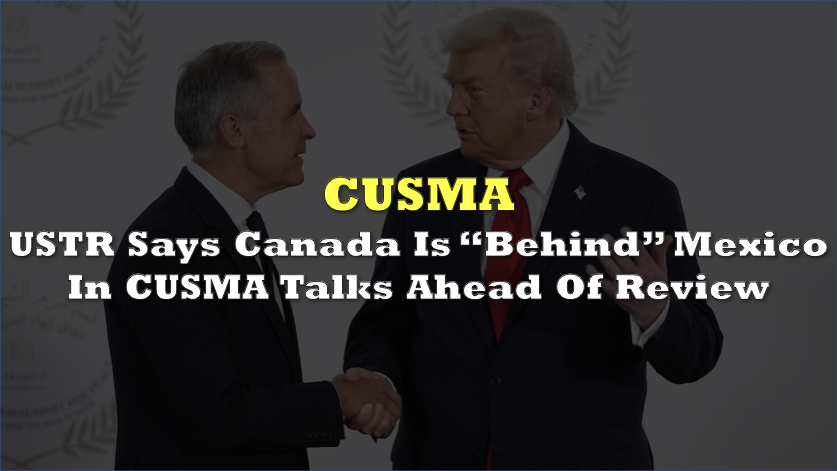

Canada is approaching the 2026 CUSMA review from a weaker position than Mexico after US Trade Representative Jamieson Greer said Wednesday that talks with Canada are continuing separately but have not progressed as far as negotiations with Mexico.
“We’re having talks separately with Canada, but we we’ve moved along with Mexico. Canada is behind on this with Mexico,” Greer said, signaling an asymmetry in readiness as the agreement’s first formal review date approaches on July 1.
CUSMA runs through 2036, but the agreement requires the parties to confront its future much earlier through a scheduled joint review. If the countries do not agree to extend it, the treaty does not end immediately. Instead, they enter annual reviews, while any member can still leave the agreement with six months’ notice.
Greer met Canada-US Trade Minister Dominic LeBlanc in Washington earlier this month, marking a high-level reengagement ahead of the review. After that meeting, LeBlanc said he was “not pessimistic” about renewal and expected targeted changes rather than a wholesale renegotiation.
He also left open the possibility of a bilateral Canada-US arrangement to reduce tariffs in specific sectors. Trump had previously halted talks on a Canada-US side deal in October after reacting angrily to an Ontario-backed television advertisement opposing US tariffs.
Mexico, by contrast, already has a more defined review track with Washington. On March 5, the US and Mexico formally launched bilateral discussions in preparation for the joint review, with negotiators instructed to begin scoping measures and meet regularly.
The US position is not that CUSMA is broken across the board. Greer has said some parts “function fine,” but Washington wants greater market access in selected areas. At the same time, Bloomberg has reported that Trump has privately raised the idea of withdrawing from the deal altogether.
For Canada and Mexico, the immediate economic reality is that CUSMA still provides meaningful insulation from Trump’s wider tariff regime. Most goods traded under the pact remain exempt from the harshest global tariffs, preserving a preferential corridor inside North America.
But that protection is incomplete. Sectoral duties on autos, steel, aluminum, and lumber remain in place, continuing to lift import costs on those products moving into the US from its two neighbors.
Information for this story was found via Bloomberg and the sources and companies mentioned. The author has no securities or affiliations related to the organizations discussed. Not a recommendation to buy or sell. Always do additional research and consult a professional before purchasing a security. The author holds no licenses.