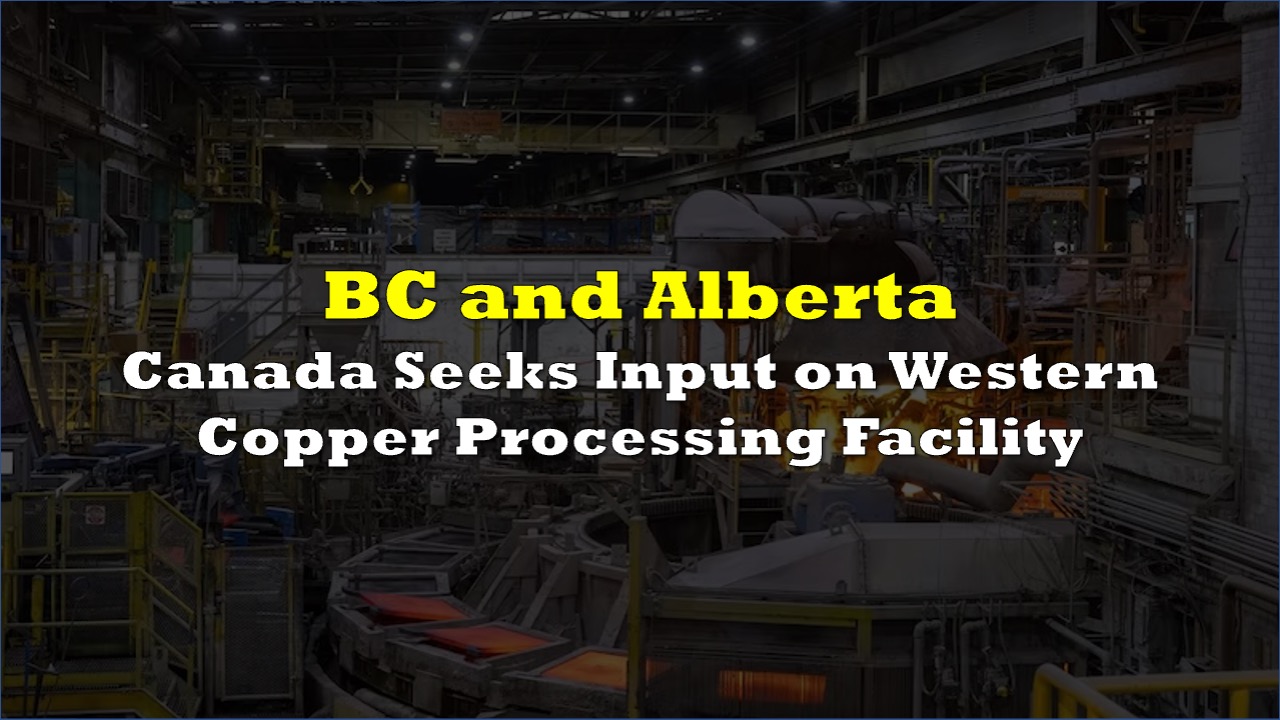

The federal government launched a request for information on December 17 to explore building Western Canada’s first copper smelter and refinery, which would become the country’s second domestic processing facility.
The federal initiative involves cooperation with British Columbia and Alberta to assess whether establishing midstream copper infrastructure makes economic and strategic sense. Responses to the request are due January 28, 2026.
Canada, BC and Alberta have put out a RFI to explore the economic viability and potential sites for a copper processing facility, including a smelter and refinery, in Western Canada. 👇
— Heather Exner-Pirot (@ExnerPirot) December 18, 2025
I love this so much. Mining bros, share with your networks! https://t.co/BOBZ3m8lo1
Canada mines significant copper but sends nearly all concentrate from Western Canada overseas for processing. The country operates only one copper smelter and refinery, both owned by Glencore in Quebec.
British Columbia produces close to half of Canada’s copper output. The province generated nearly half of the 508,250 tonnes of copper Canada mined in 2023, according to Natural Resources Canada.
Saskatchewan plans to join copper production in mid-2026 when Foran Mining’s McIlvenna Bay mine begins commercial operations. The underground mine will process copper, zinc, gold, and silver over an 18-year timeline.
The government views a second domestic facility as a way to strengthen supply chains and reduce vulnerability to disruptions. Global demand for refined copper is projected to rise 30% by 2040, driven by clean energy and digital infrastructure expansion, according to International Energy Agency forecasts cited in the request.
However, the request acknowledges significant hurdles. Global overcapacity in copper processing has pushed treatment charges to historic lows, undermining short-term economic viability. Securing reliable feedstock while maintaining supply to existing Quebec facilities presents another challenge.
The government invites responses from mining companies, investors, Indigenous organizations, researchers, and others with copper industry expertise. Submissions will inform internal analysis on feasibility and potential locations.
Copper smelting faces social opposition due to heavy metal emissions, particularly arsenic and lead. International regulations may also limit access to electronic waste feedstock used in processing.
The request covers six areas: economic viability, supply chain factors, costs and funding options, technology and environmental considerations, geographic sites, and recycling integration.
Natural Resources Canada states the request does not constitute formal consultation for future funding and creates no obligation to proceed with a project.
Information for this story was found via the sources and companies mentioned. The author has no securities or affiliations related to the organizations discussed. Not a recommendation to buy or sell. Always do additional research and consult a professional before purchasing a security. The author holds no licenses.