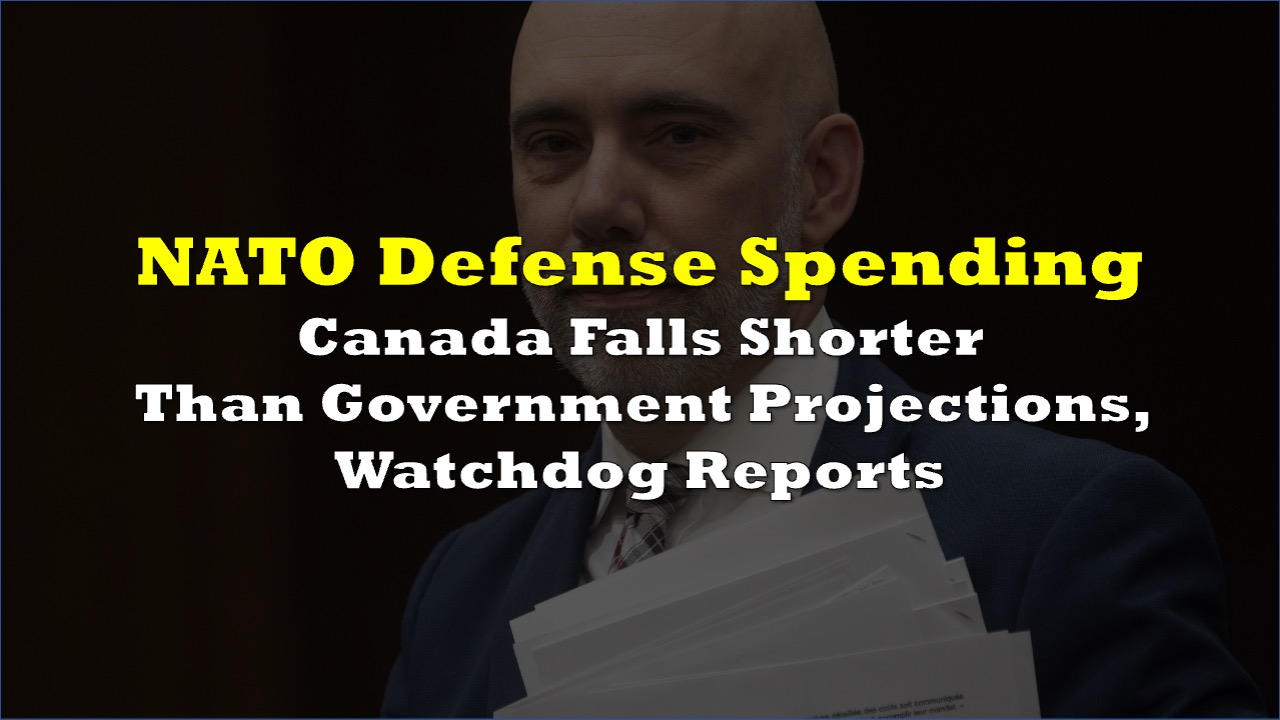

Canada’s Parliamentary Budget Officer (PBO) Yves Giroux has bad news for Canada’s North Atlantic Treaty Organization (NATO) allies. On Monday, the day before the start of the 2024 Washington summit, Giroux released a report challenging the government’s projections on defense spending.
The analysis suggests that Canada will fall even further behind its NATO commitment to invest 2% of GDP in military expenditures by 2030 than previously anticipated.
Giroux’s report estimates that Canada’s NATO-eligible military spending will reach $52.2 billion by 2029-2030, significantly lower than the government’s projection of $54.9 billion. Moreover, the PBO forecasts that Canada’s defense spending as a percentage of GDP will only reach 1.42% by the end of the decade, far below the government’s estimate of 1.76%.

This discrepancy has raised concerns as NATO allies gather in Washington, DC. Canada, which committed to the 2% target in 2014 along with other NATO members, has consistently failed to meet this goal and remains the only member without a clear timeline to do so.
The report has drawn criticism from politicians in the US, including House Speaker Mike Johnson, who accused Canada of “riding on America’s coattails” in terms of defense spending. This sentiment echoes a letter sent to Prime Minister Justin Trudeau in May by a bipartisan group of U.S. senators expressing disappointment in Canada’s projected military investments.
Blair rejects PBO’s projections
Defence Minister Bill Blair’s office has strongly disagreed with the PBO’s projections, and has stood by the government’s own estimates. They point to recent initiatives, such as a $2 billion investment in civilian procurement specialists and an internal review of purchasing practices, as efforts to improve spending efficiency.
 Sponsored · Cambria Gold Mines
Giroux attributes the difference in projections to historical patterns of underspending in the defense budget, particularly in capital expenditures. He notes that since 2017-2018, the Department of National Defence has allowed an average of 33% of its capital expenditures to lapse annually.
“If the minister is saying that they will improve their capacity to effectively spend, I have no reason to believe otherwise. But if history is any indication, I’m not very optimistic,” Giroux said.
Information for this story was found via the National Post, and the sources and companies mentioned. The author has no securities or affiliations related to the organizations discussed. Not a recommendation to buy or sell. Always do additional research and consult a professional before purchasing a security. The author holds no licenses.