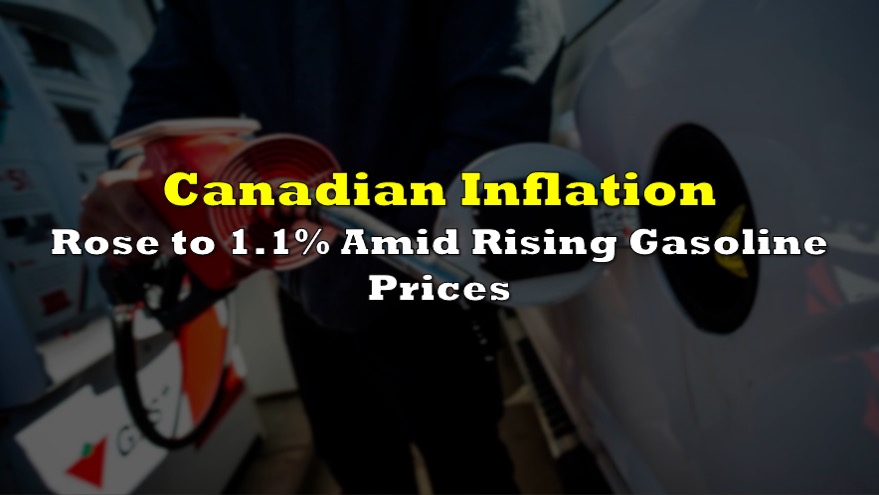

Price pressures are beginning to show signs of materializing, as Canada’s inflation level crept up to the highest since the onset of the pandemic amid a surge in gasoline prices.
According to Statistics Canada’s latest CPI print, annual inflation rose at a faster pace year-over-year, increasing from 1% to 1.1% in February. Although economists surveyed by Bloomberg anticipated prices to pick up by 1.3%, inflation levels will likely accelerate in coming months, and eventually exceed the Bank of Canada’s 2% target rate. Excluding volatility from gasoline, the CPI increased 1% in February, down from a 1.3% increase in the month before.

Marking the third consecutive month of increases, gasoline prices rose by 6.5% in February, which largely contributed to the growth in consumer prices. The price increase coincides with the rebound in global demand for crude oil, as well as ongoing supply cuts by major oil-producing economies. On a year-over-year basis, gasoline prices were 5% higher, marking the first annual price increase since February of last year.

The homeowner’s replacement cost index, which is linked to the price of new homes, increased by 7% year-over-year last month, amid rising construction costs, record-low interest rates, and the surge in demand for more spacious housing during the pandemic. Conversely, the Mortgage Interest Cost Index declined by 5.4% from the year before, as more Canadians renewed their mortgages at lower interest rates.

As an increasing number of Canadians flooded the real estate market amid the pandemic, prices for household furnishings also recorded an increase. According to Statistics Canada, household appliance prices rose from 3.4% to 6.1% year-over-year in February. Prices for food purchased at stores also increased in February, rising by 1.3% from the year before. This was largely attributable to an increase in the price of fresh fruit. Similarly, prices for food purchased as restaurants were up by 2.9% year-over-year, compared to a growth of 2.8% in January.
 Sponsored · Selkirk Copper Mines
Information for this briefing was found via Statistics Canada. The author has no securities or affiliations related to this organization. Not a recommendation to buy or sell. Always do additional research and consult a professional before purchasing a security. The author holds no licenses.