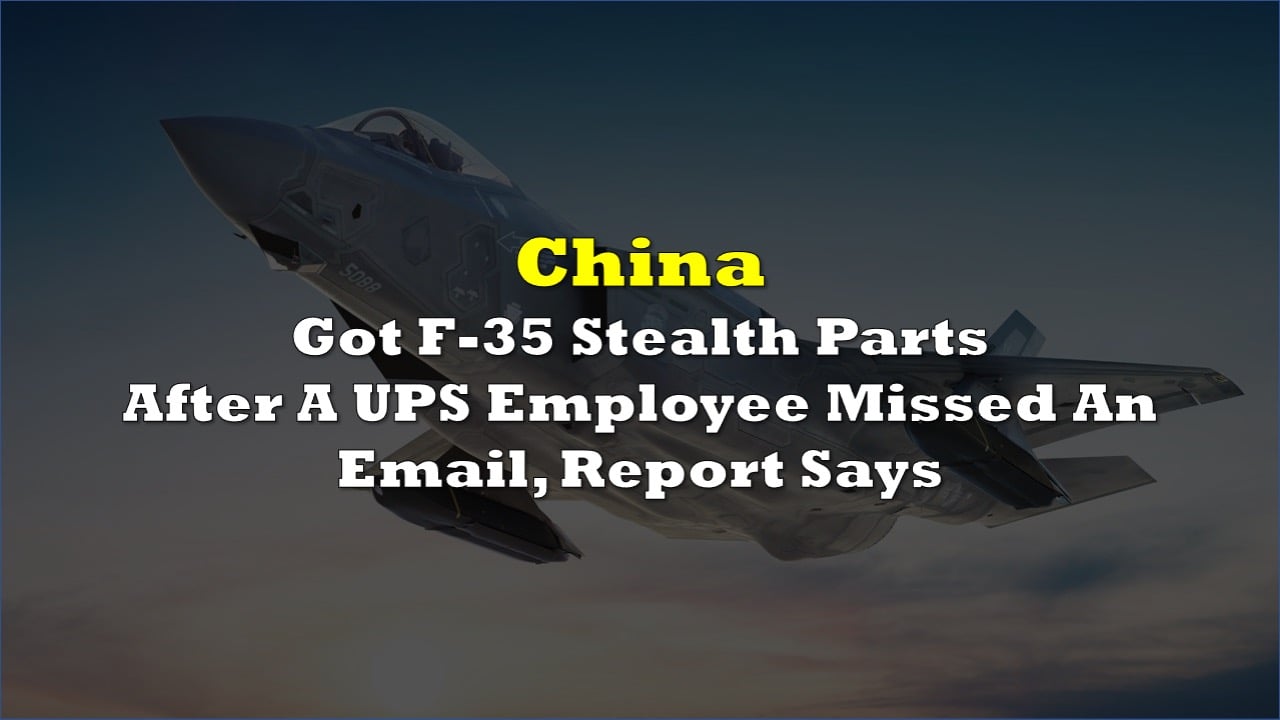

F-35 parts reached Chinese hands through Hong Kong after a UPS employee overlooked a DSV email advising against that route, a person briefed on the case says. DSV, a freight forwarder working for Lockheed Martin, flagged that US arms-export controls restrict which countries the parts can cross. The email may have gone through a different IT system than the one the UPS agent handling the shipment used.
The shipment held a canopy and a weapons-bay door from an Australian F-35, each with a radar-absorbing coating. The US-bound cargo left in late May so the parts could be inspected and possibly repaired or discarded. The intended path ran through South Korea and Taiwan before ending in San Francisco.
After the shipment departed behind schedule, a UPS employee sent it via Hong Kong, apparently to save time, the same account says. Chinese authorities took custody of the parts there.
 Sponsored · Selkirk Copper Mines
The Pentagon calls the parts unserviceable and says it’s working with authorities and industry to recover them. Pentagon officials briefed staff for two House committees, Foreign Affairs and Armed Services, on September 29.
Sen. Mark Warner pushed for the briefing, and Sen. Tom Cotton is pressing for an examination of the F-35 supply chain. Sen. Kevin Cramer asked, “Did China have a plan all along to intercept this?”
China’s Foreign Ministry says it is unaware of the incident. No US or Australian official has accused Beijing of engineering the diversion or reaching the technology inside the parts.
UPS and DSV declined to comment, while Lockheed Martin says it’s working with its logistics partner on preventive measures and declined to add or correct anything about the reported events. The email’s date, wording, and the employee’s identity aren’t public.
Politico, citing sources, said the canopy and door carry stealth technology unavailable outside the US and its allies. Australian Defence Minister Richard Marles said that “We’re not talking about sensitive equipment here or sensitive parts.” Lockheed Martin Australia says the components pose little risk of exploitation.