
The Trump administration is preparing to tighten permanent employment sponsorship requirements for foreign workers just as major technology employers are sharply reducing their participation in existing visa programs, potentially extending Washington’s immigration restrictions from recruiting overseas talent to retaining foreign professionals already working in the US.
A Congressional Research Service report released October 14 documented a 91% year-over-year decline in initial H-1B petitions submitted for consular processing by cap-exempt employers during the first eight months following the introduction of a $100,000 visa payment requirement in September 2025.
The decline covers a specific category of petitions rather than the entire H-1B program. Nevertheless, broader registration data show substantial changes among companies historically dependent on foreign hiring.
 Sponsored · Selkirk Copper Mines
According to a September presidential proclamation, the largest IT staffing and outsourcing firms collectively reduced their H-1B lottery registrations from 24,946 to 2,055, a 92% decline.
Cognizant submitted 100% fewer registrations for fiscal 2027 than the previous year, while Infosys and Tata Consultancy Services recorded declines of 91% and 95%, respectively.
The administration attributed the shift to its visa restrictions and wage-weighted selection system.
Green card sponsorship faces another test
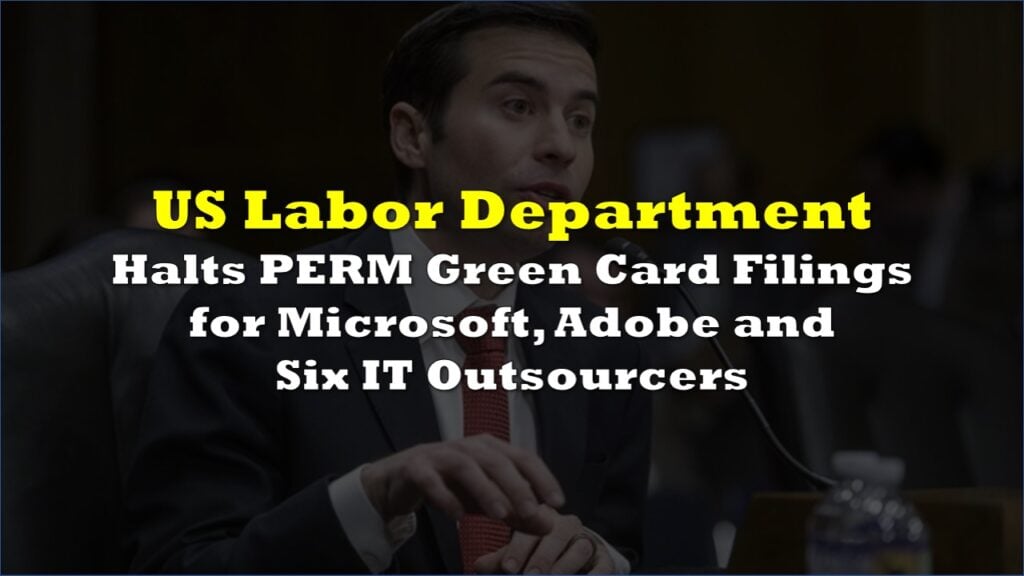
The Department of Labor is pursuing changes to the Permanent Labor Certification program, or PERM, under which employers generally must demonstrate that qualified American workers are unavailable before sponsoring foreign employees for permanent residence.
 Sponsored · Nord Precious Metals
The proposed overhaul would strengthen domestic recruitment requirements, safeguards involving layoffs, and employer compliance obligations.
The rule, identified as RIN 1205-AC29, entered White House regulatory review on September 14 and cleared that review on October 23. Its full provisions remain unpublished, meaning the precise financial and administrative burdens cannot yet be established.
Corporate sponsorship decisions are already changing. On November 10, International Business Machines announced it would discontinue US visa and green-card sponsorship for most positions in IBM Consulting, a business employing more than 150,000 people.
An IBM spokesperson told Reuters that evolving client requirements and workforce skills influenced the decision. The company did not attribute the move exclusively to government immigration policy.
Hiring costs could rise further
A separate Labor Department proposal would increase prevailing-wage requirements for H-1B employers. The department estimated that measure would add approximately $1.46 billion in first-year employer costs.
The final version entered White House review on November 6, although its final terms have not been published.
The administration also proposed an additional $103,265 fee for cap-subject H-1B petitions in August, separate from the earlier $100,000 payment requirement.
The accumulating measures create distinct hurdles for foreign hiring, from initial recruitment expenses and selection requirements to permanent residency sponsorship.
For employers, the unresolved issue is no longer simply the cost of recruiting foreign professionals. It is whether retaining them permanently will require navigating additional recruitment tests, higher wage obligations, and tighter federal oversight.