
Since the last FOMC meeting in March, much of the upheaval surrounding the US and Swiss banking crisis has subsided, giving Federal Reserve policy makers assurances that further emergency policy intervention likely isn’t warranted. Still, with labour market conditions historically tight and inflation well-above target, policy makers last month weren’t budging on their fight against inflation.
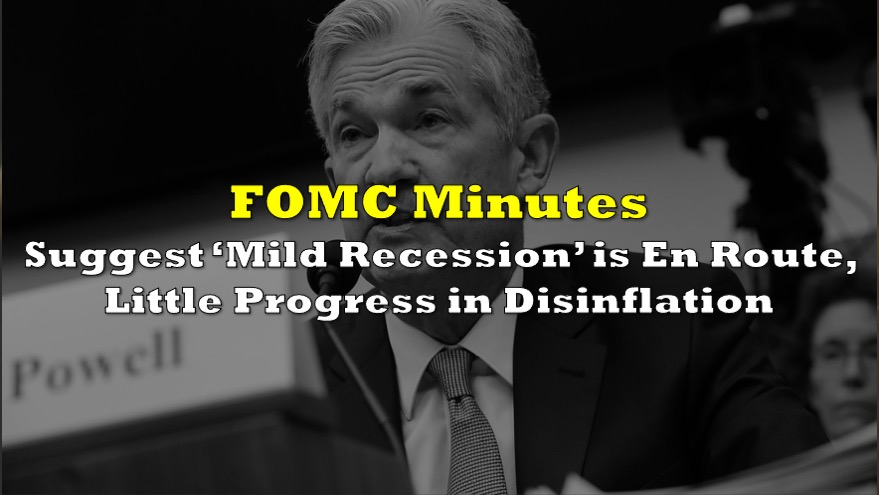
Members at the March 21-22 meeting applauded themselves for bringing calm to the recent banking sector fiasco, adding that the banking system is “sound and resilient.” However, “Participants commented that recent developments in the banking sector were likely to result in tighter credit conditions for households and businesses and to weigh on economic activity, hiring, and inflation,” agreeing “that the extent of these effects was uncertain.”
Moreover, the Fed’s pre-meeting data suggested “slower than expected progress on disinflation,” and “little evidence pointing to disinflation for core services.” FOMC members also pointed out that labour demand continued to “substantially” outweigh supply, while wage growth remains well above levels consistent with a 2% inflation target.
 Sponsored · Silver47 Exploration Inc.
The Fed now projects the US economy will slump into a “mild recession sometime this year, followed by at least two years of recovery. In fact, some FOMC members last month even thought the central bank shouldn’t have even raised rates by 25 basis-points and instead should have issued a pause.
“Several participants noted that, in their policy deliberations, they considered whether it would be appropriate to hold the target range steady at this meeting,” the FOMC minutes reveal. “They noted that doing so would allow more time to assess the financial and economic effects of recent banking-sector developments and of the cumulative tightening of monetary policy.”
However, policy makers also noted that the Fed’s actions brought calm to last month’s banking crisis, and ultimately lowered short-run risks to inflation and economic activity. “Consequently, these participants judged it appropriate to increase the target range 25 basis points because of elevated inflation, the strength of the recent economic data, and their commitment to bring inflation down to the Committee’s 2 percent longer-run goal.”
Information for this story was found via the Federal Reserve and the sources mentioned. The author has no securities or affiliations related to the organizations discussed. Not a recommendation to buy or sell. Always do additional research and consult a professional before purchasing a security. The author holds no licenses.