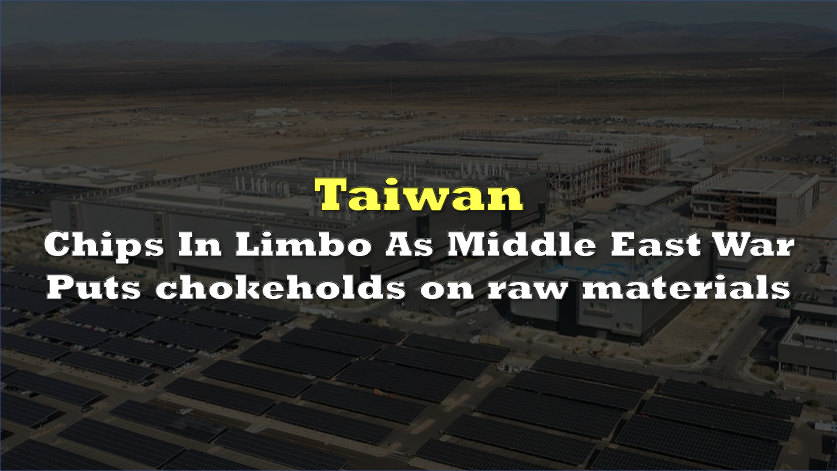

The longer the Middle East war runs, the greater the risk that global semiconductor supply will be constrained through Taiwan’s dependence on imported fuel and critical inputs.
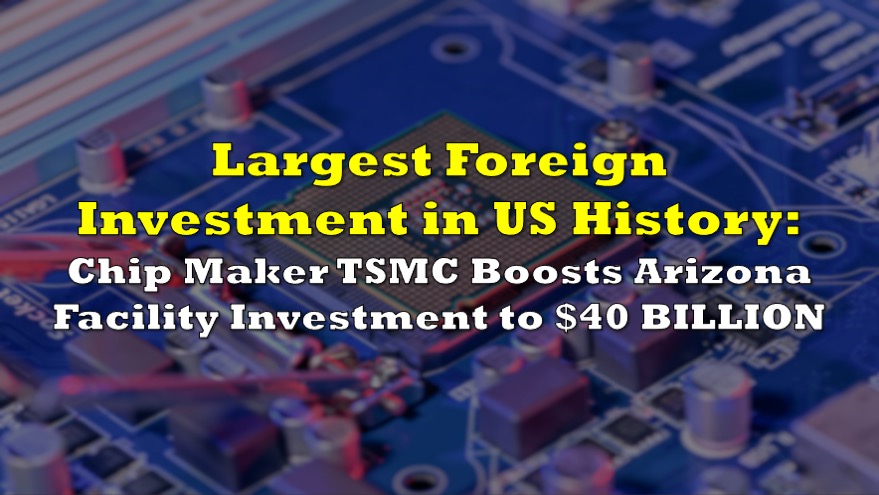
Taiwan Semiconductor Manufacturing Co. sits at the center of that risk. The company makes roughly 90% of the world’s most advanced logic chips and is the sole producer of advanced AI accelerators for Nvidia as well as iPhone processors for Apple. Any disruption would hit a semiconductor market projected to reach about $1 trillion in sales this year and complicate Big Tech’s planned $650 billion in AI spending.
Helium is one of the most exposed inputs, with about one-third processed in Qatar. Sulfur is another concern because it is produced through oil and gas refining. Taiwan’s electrical grid is also exposed because about one-third of its fuel comes from the Middle East. That combination means a prolonged disruption around the Strait of Hormuz can hit chipmaking through input shortages, freight timing and higher electricity costs even without a direct halt in fabrication.
The biggest vulnerability is liquefied natural gas. Taiwan relies heavily on seaborne LNG cargoes and holds only around 11 days of reserves, a thin buffer compared with South Korea’s storage capacity of at least 52 days and Japan’s roughly three weeks of stockpiles.
Goldman Sachs analysts estimate Taiwan depends on foreign imports for 97% of its energy needs, with about 37% of its LNG supply sourced from the Middle East. Their conclusion is that Taiwan will likely have to pay a significant premium for replacement cargoes if disruptions continue.
They said the core risk is no longer just headline oil prices, but physical gas availability, pricing and delivery timing as commercial transit through Hormuz remains severely disrupted and Qatar has declared force majeure.
Taiwan’s government has tried to calm markets. The Ministry of Economic Affairs said on Saturday that the island has secured LNG for March and April and has adequate power supply despite shipment constraints from Qatar. Officials also said local companies can procure helium from multiple sources including the US and Australia, reducing dependence on any single region.
Further, Energy Administration Deputy Director General Chen Chung-hsien said Taiwan will raise the statutory minimum natural gas inventory to 14 days from 11 starting next year and review the rule again in the future. He said Taiwan has secured more than half of its LNG needs for May and has started negotiations with the US for June supply.
But the markets are not fully buying the reassurance. TSMC shares have fallen about 7% since the war began in the Middle East, versus a roughly 6% decline in global stocks.
Europe is also vulnerable, though with a different profile. Poland is the EU’s only helium producer and covers only about 8% of regional demand. The EU sources roughly 40% of its helium from Qatar.
However, European chipmakers say there is no immediate helium threat. The European Semiconductor Industry Association said members do not currently see a broad availability problem, while Infineon Technologies AG said diversified sourcing and reserves reduce its exposure.
But logistics may become a faster stress point. Frank Bösenberg of Silicon Saxony said Cathay Pacific’s cargo arm handles 30% of global wafer transport, and its Dubai hub cannot currently be fully serviced, creating another route for disruption.
Information for this story was found via Bloomberg and the sources and companies mentioned. The author has no securities or affiliations related to the organizations discussed. Not a recommendation to buy or sell. Always do additional research and consult a professional before purchasing a security. The author holds no licenses.