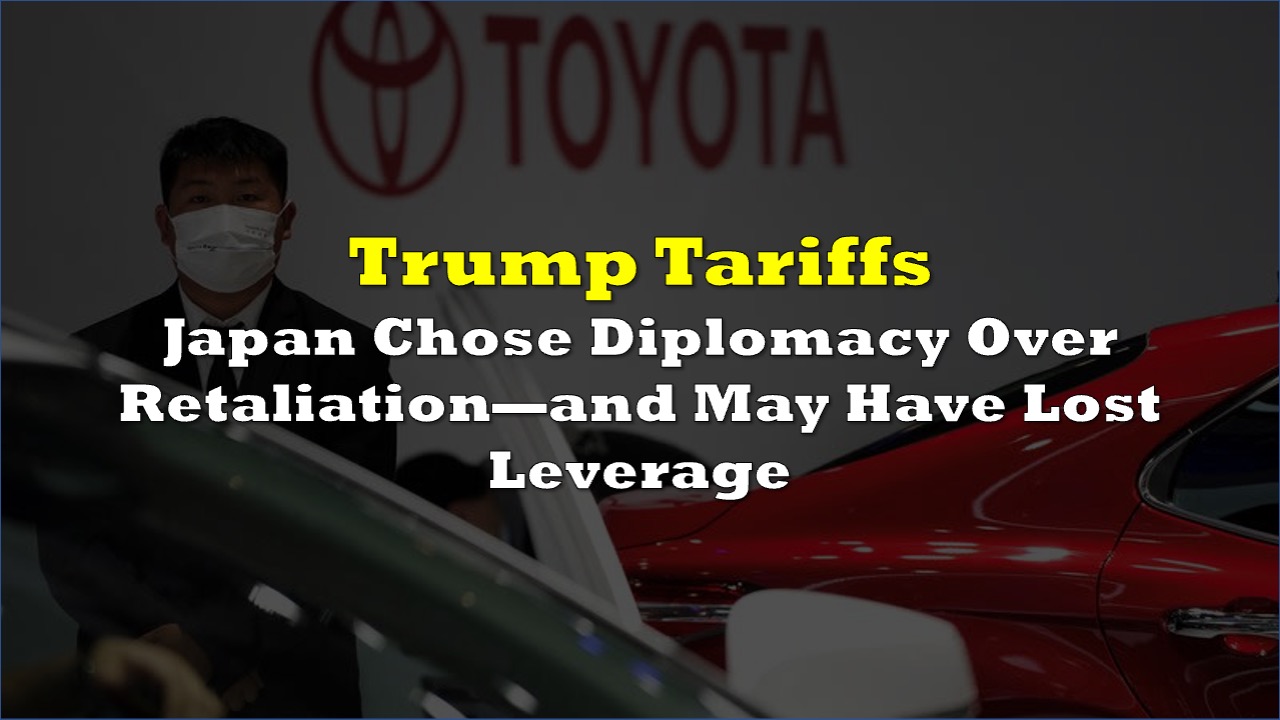

While China responded to President Donald Trump’s trade offensive with immediate retaliation against US farmers, Japan chose a starkly different path that industry analysts now say may have backfired in deadlocked negotiations.
Japanese automakers quietly absorbed most tariff costs rather than passing them to American consumers, a corporate decision that prevented the “sticker shock” political pressure that helped force Trump to reconsider policies elsewhere. This strategy, analysts suggest, may have inadvertently weakened Tokyo’s bargaining position ahead of Trump’s August 1 deadline to impose 25% tariffs on Japanese imports.
Among the nation’s six major automakers, Subaru was the only one that raised prices close to the 25% tariff rate. Toyota increased costs by only several hundred dollars on certain models, while Mitsubishi implemented a modest 2.1% average increase. Despite the substantial tariffs, new vehicle prices in the US climbed just 2.5% through April.
 Sponsored · Selkirk Copper Mines
“If prices continue to rise due to Trump’s tariffs, the government will realize it’s not a simple scenario where raising tariffs benefits the US economy,” Takeshi Miyao, an analyst at automotive consultancy Carnorama, told the Japan Times. “This may lead to changes in tariff negotiations.”
The strategy reflected Japanese carmakers’ determination to protect their crucial US market share, which represents 20% of total exports. A 25% yen decline since 2020 provided natural cost cushions, allowing manufacturers to absorb tariffs while maintaining competitive pricing.
But this financial flexibility also meant Japanese negotiators couldn’t point to immediate consumer pain as leverage in trade talks.
With negotiations now deadlocked over automotive tariffs and rice imports, Japanese automakers face a strategic choice: continue absorbing costs to protect market share, or begin passing expenses to consumers to preserve profitability and potentially create the political pressure that eluded negotiators.
Industry analysts say companies will likely raise prices soon, potentially creating the consumer backlash that could complicate Trump’s trade strategy going forward.
Information for this story was found via the sources and companies mentioned. The author has no securities or affiliations related to the organizations discussed. Not a recommendation to buy or sell. Always do additional research and consult a professional before purchasing a security. The author holds no licenses.