
Something big is happening in Japan. Investors have traditionally flocked to the Japanese yen when the economic landscape gets choppy, gripped with the belief that the currency will retain its value even amid global market volatility. However, with a war-torn Ukraine, inflation soaring to historic highs across developed nations, and stock markets sliding sharply downwards, investors’ appetite for a safe haven yen may be coming to an end.
Japan’s currency sunk to the lowest in 20 years against the US dollar last week, in downward unison with the world’s 10 other most-traded currencies. While the US Fed prepares to hike borrowing costs in face of 40 year-high inflation, the Japanese central bank is caught between a predicament of stagnating growth and low inflation. But, even though the US dollar index has risen considerably higher, the greenback is still not attractive enough for some Treasury buyers, even as confidence in their domestic currency falters.
Japanese institutional investors have traditionally embarked on US debt shopping sprees, becoming one of the biggest Treasury holders outside of American markets. However, that trend is no more, because as data cited by Bloomberg from BMO Capital Markets suggests, one of the largest holders of Treasuries has shed nearly $60 billion in just the past three months, with the potential for even further divestment.
 Sponsored · Cambria Gold Mines
What is driving Japan’s sudden distaste for US debt? For starters, the monetary gap between the Asian country and America has been on a diverging stretch as of recent, with the yen slumping to the lowest since the early 2000s, all meanwhile US markets prepare for aggressive policy tightening from the Fed. This has sent currency hedging costs soaring, making even higher nominal US yields less attractive, particularly among large life insurers.
As Fed Chair Jerome Powell prepares to embark on an inflation-taming battle that could see interest rates increase by 50 basis points at each of the FOMC’s policy meetings, the Bank of Japan is stuck in a rout of endless quantitative easing, In turn, the subsequent weakening of the yen is making buying Treasuries unattractive even as Japan’s bond yields remain firmly in place at around 0.25%.
Although the US 10-year was delivering a yield of around 2.98% at the time of writing, institutional investors paying a premium to protest themselves from yen-dollar exchange rate volatility have seen their yields slump to just above 1%, as hedging costs jump to 1.55%— the highest since early 2020. “Hedge costs are the issue for investing in U.S. Treasuries,” said Nissay Asset Management Corp general manager of fixed-income Eiichiro Miura, as cited by Bloomberg.
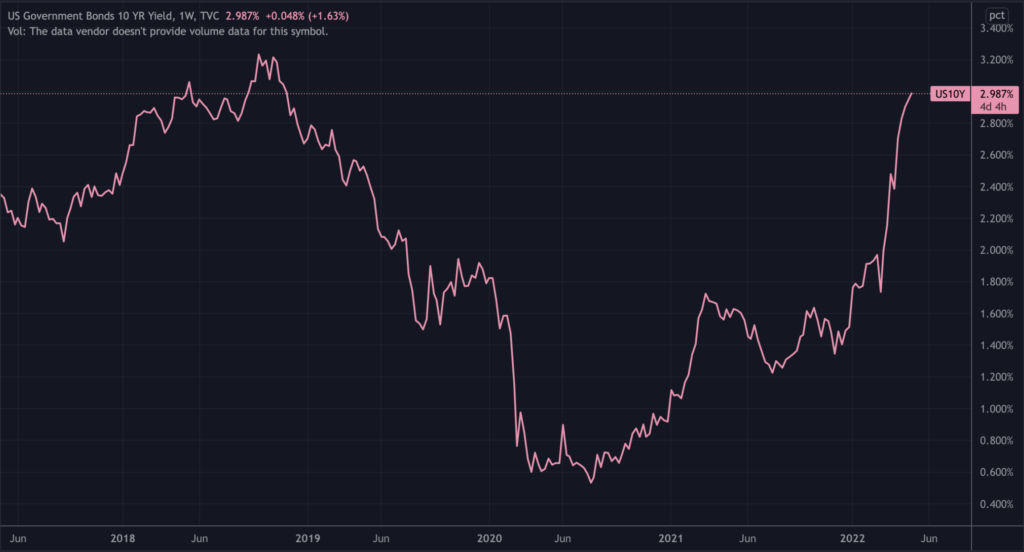
Although such events as the Fed’s hawkish tightening cycles and ensuring market volatility have turned Japanese investors away from Treasuries, the current economic landscape is vastly different. That is because there is a great amount of uncertainty surrounding the trajectory of inflationary pressures in the US, which may extend Japan’s absence from the Treasury market. At the same time, the availability of ulterior offshore bonds may become more attractive, especially since euro hedging costs are relatively lower.
“In the span of next six months or so, investing in Europe is better than the U.S. as hedge costs are likely to be low,” said Mitsubishi UFJ Kokusai Asset Management Co. executive chief fund manager Tatsuya Higuchi. “Among the euro bonds, Spain, Italy or France look appealing given the spreads.” Commonly, Japanese bond buyers have focused on the middle part of the yield curve, such as the 5-year and 10-year bonds, while pension funds and life insurers prefer the 30-year bonds. However, given the sudden shift towards hawkish monetary policy by the US central bank, some Japanese investors have been forced to rethink their overseas debt holdings.
“Japanese investors will wait for some stabilization in long-dated yields before they sense a buying opportunity,” explained MUFG head of macro strategy George Goncalves to Bloomberg. “If the 10-year settles during May, that will help attract buyers and at those yield levels you are getting compensated now.”
Information for this briefing was found via Bloomberg. The author has no securities or affiliations related to this organization. Not a recommendation to buy or sell. Always do additional research and consult a professional before purchasing a security. The author holds no licenses.