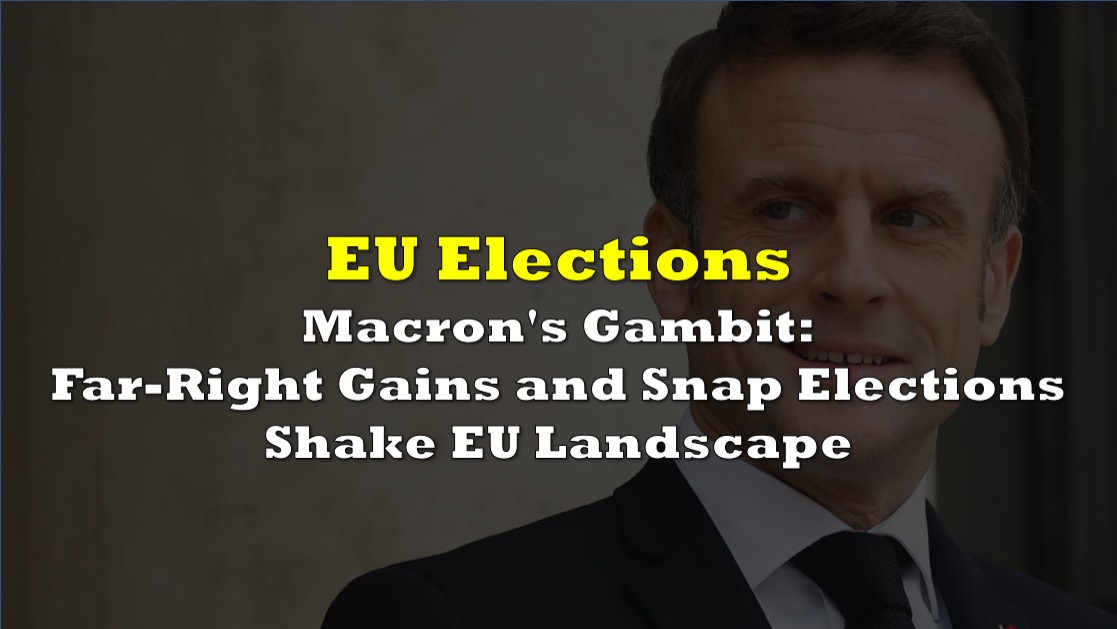

French President Emmanuel Macron has been accused of gambling with France’s democracy after announcing the dissolution of parliament and calling snap legislative elections. This follows the crushing defeat of his centrist allies by Marine Le Pen’s far-right National Rally (RN) in the European Parliament elections.
On a night of significant gains for far-right parties across Europe, the RN secured about 32% of the French vote, more than double the 15% garnered by Macron’s allies, with the Socialists just behind at about 14%. Macron’s decision to dissolve the National Assembly and hold new elections on June 30 (first round) and July 7 (second round) represents a high-stakes move three years before the end of his second presidential term.
Macron acknowledged the gravity of the European election results, stating, “The outcome was not a good result for parties who defend Europe.” He emphasized the need for a clear mandate from the French electorate, adding, “I cannot act as if nothing had happened. I have decided to give you the choice… Therefore I will dissolve the National Assembly tonight.”
Critics have accused Macron of endangering French democracy. Raphaël Glucksmann, head of the Socialist party’s list, said Macron had “given in” to RN’s lead candidate Jordan Bardella, calling it “a very dangerous game to play with democracy and the institutions.” Valérie Pécresse of the conservative Les Républicains warned that the move was “playing Russian roulette with the country’s destiny.”
 Sponsored · Selkirk Copper Mines
Sandrine Rousseau, a Green party MP, remarked, “Emmanuel Macron is a poker player, we’ve seen that tonight.” Conversely, Le Pen welcomed the decision, saying, “We are ready to put the country back on its feet.”
Broader European context
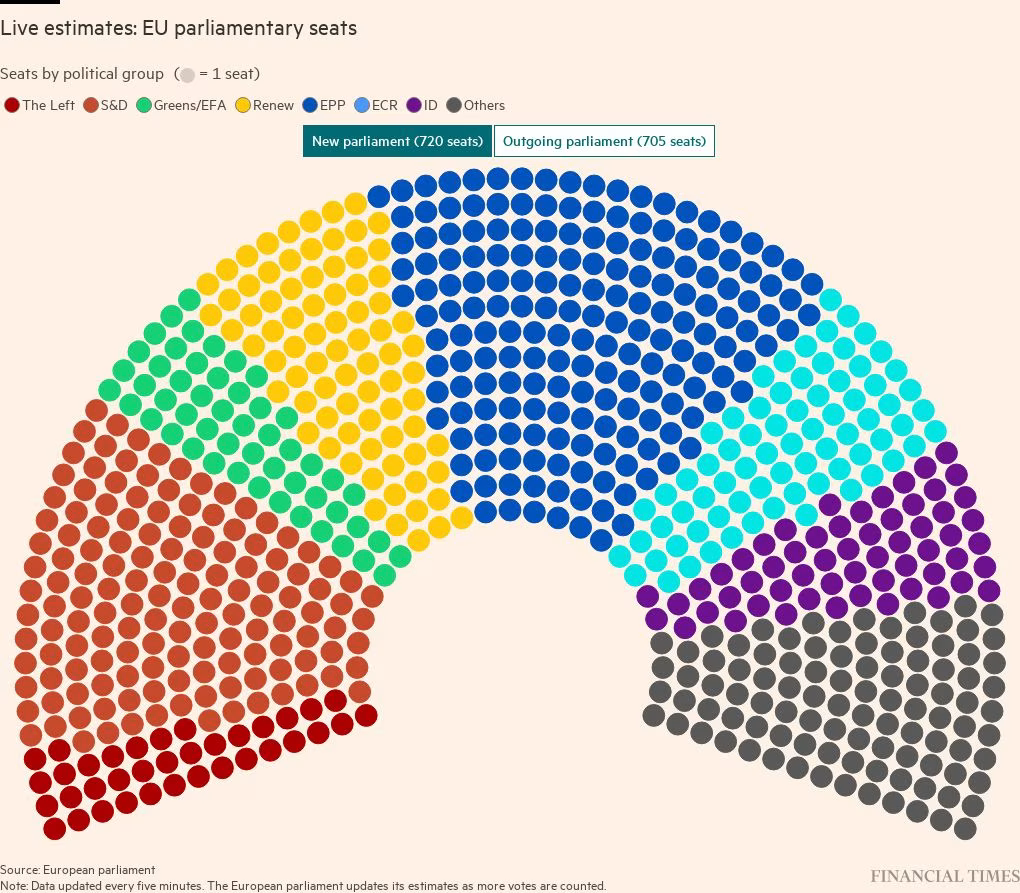
The European Parliament’s initial projections show far-right and hard-right parties on track to hold almost a quarter of the seats, an increase from a fifth in 2019. While this signifies a shift towards more nationalist and conservative politics, mainstream parties are expected to retain a majority.
In Germany, the Alternative for Germany (AfD) party gained 16.4% of the vote despite recent scandals. Co-leader Tino Chrupalla celebrated the outcome, describing it as “a super result… a record result.” The ruling coalition led by Chancellor Olaf Scholz suffered heavy losses, with the Social Democrats (SPD) and the Greens experiencing significant declines.
In Italy, Prime Minister Giorgia Meloni’s Brothers of Italy party secured 26-31% of the vote, strengthening her position within the coalition government. In the Netherlands, Geert Wilders’ far-right Freedom Party (PVV) won seven seats, although it fell short of expectations.
Ursula von der Leyen, President of the European Commission, noted that the center-right European People’s Party (EPP) had maintained its position as the largest bloc, stating, “There remains a majority in the centre for a strong Europe. The centre is holding.” However, she acknowledged that the rise of far-right parties could complicate efforts to advance the European Green Deal.
Political analysts have emphasized the potential consequences of Macron’s decision. Céline Bracq, director general of the Odoxa polling agency, described it as a “poker move” during a period of strong anti-Macron sentiment. Luc Rouban, a political scientist at Sciences Po, suggested that Macron aims to “trap” the RN, predicting difficulties for the far-right in fielding quality candidates for the National Assembly’s 577 seats. Mujtaba Rahman of Eurasia Group called it a “major gamble,” predicting potential fragmentation and deadlock in French politics.
The European Parliament elections are held every five years, allowing EU citizens to vote for their representatives. Each member state holds its own election, with the number of seats allocated based on population. The voting system varies by country, with some using proportional representation and others employing a single transferable vote system. The elections determine the composition of the European Parliament, which plays a key role in EU legislation, budget approval, and the election of the European Commission President.
Information for this briefing was found via Financial Times, The Guardian, and the sources mentioned. The author has no securities or affiliations related to this organization. Not a recommendation to buy or sell. Always do additional research and consult a professional before purchasing a security. The author holds no licenses.