
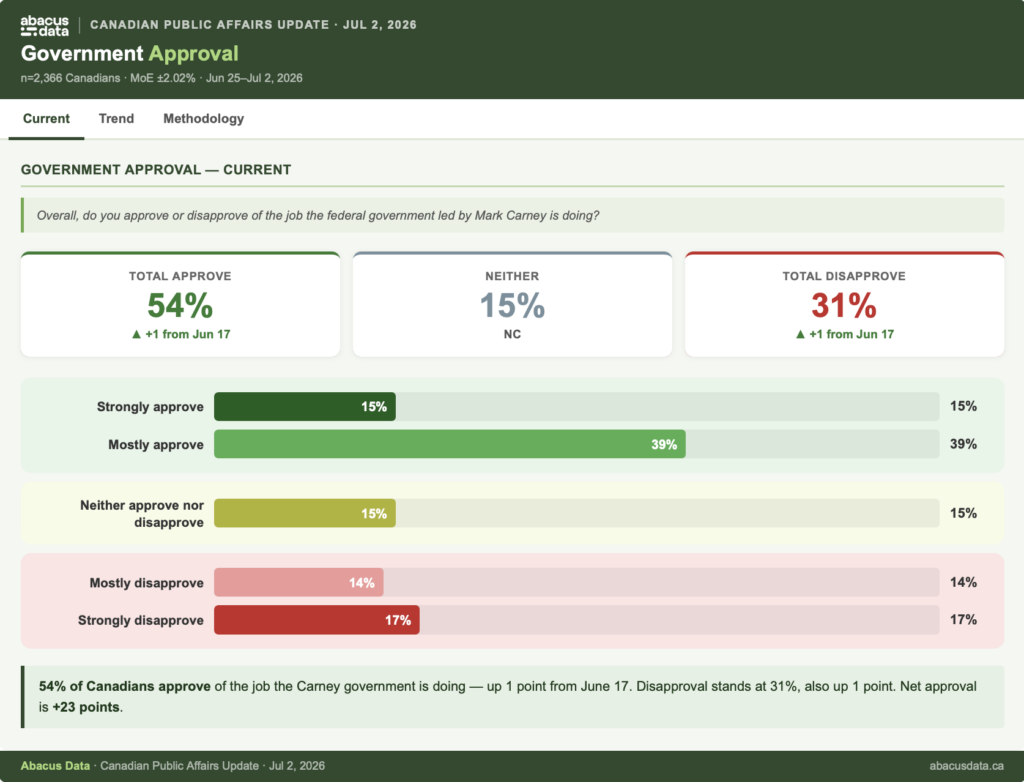
Prime Minister Mark Carney is entering Canada’s recession debate with an unusual political buffer. Abacus Data’s latest polling found 54% of Canadians approve of the job the Carney government is doing, while 31% disapprove, giving the government a net approval score of +23.
The Liberals also led the Conservatives by eight points nationally, 44% to 36%, among committed voters.
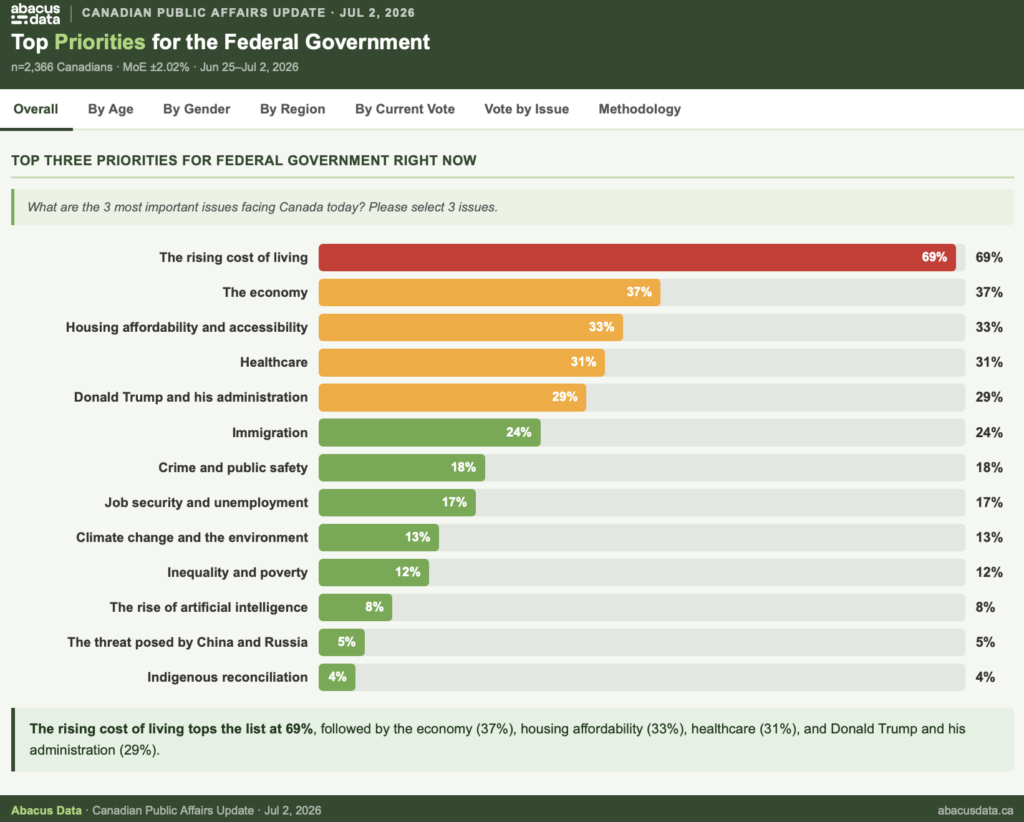
But the same poll also shows why that advantage is fragile. Almost seven in ten Canadians, or 69%, named the rising cost of living as one of the country’s top three issues. The economy followed at 37%, housing affordability at 33%, and health care at 31%.
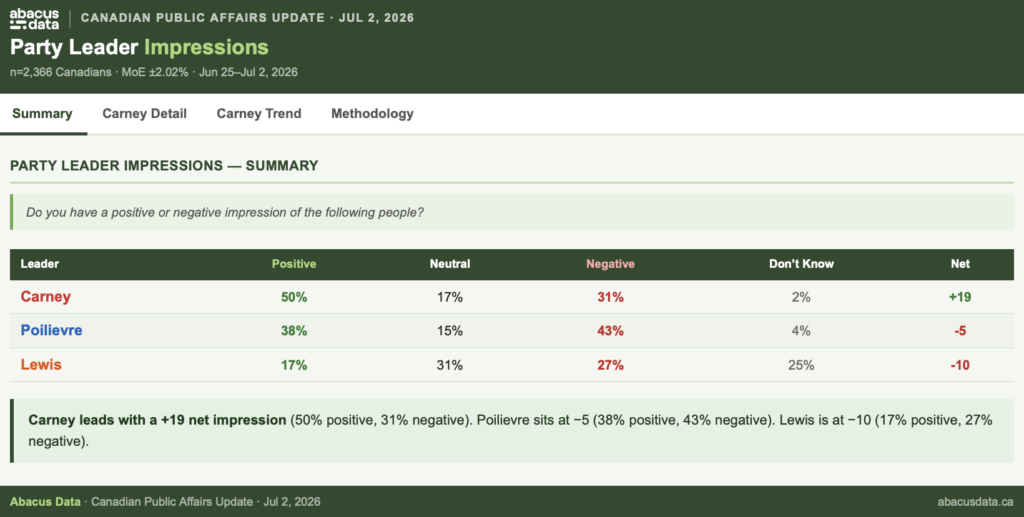
In normal political gravity, those numbers should be brutal for an incumbent. Instead, Carney is still outperforming Conservative Leader Pierre Poilievre on personal impressions. Abacus found 50% of Canadians had a positive view of Carney, compared with 31% negative. Poilievre was underwater, with 38% positive and 43% negative.
That makes the current moment less a referendum on whether Canadians feel economic pain, and more a test of who they hold responsible for it.
 Sponsored · Cambria Gold Mines
Statistics Canada said real GDP was unchanged in Q1 2026 after declining 0.2% in the fourth quarter of 2025. The agency said higher goods imports, especially gold, were offset by business inventory accumulation, while lower business and government capital investment was counterbalanced by higher household spending.
Business capital investment fell 0.7% in Q1, the fifth consecutive quarterly decline. Residential investment also fell 2.0%, led by weak resale activity. Household spending rose 0.4%, but the household saving rate fell to 3.5%, its lowest level in two years.
The Bank of Canada’s latest business survey adds another warning light. The central bank said business sentiment deteriorated in Q2 after improving over the previous three quarters, and the share of firms planning or budgeting for a recession over the next 12 months rose from 9% to 17%. The Bank said the figure remained below 2025 levels, but the direction is politically inconvenient for an economy-first prime minister.
Angus Reid data points to the same vulnerability from another angle. Its June survey found Carney approval at 55%, but only 31% of Canadians said the country was on the right track. Cost of living led the issue agenda at 61%, ahead of health care at 39% and housing affordability at 25%.
For Poilievre, the opening is obvious but not automatic. A recession message only lands if it connects Carney personally to declining living standards. So far, Abacus data suggests the Conservatives have not fully closed that loop. The Liberal accessible voter universe remains larger, with 57% saying they would consider voting Liberal versus 48% who would consider voting Conservative.
The political market is pricing Carney like a defensive asset: not exciting, not immune to macro shocks, but still preferred in a volatile environment. The next move depends on whether Canadians continue to buy the hedge.