
A petition calling for Prime Minister Mark Carney’s resignation has gained traction online, but the political risk it poses is not legal removal.
The most direct resignation demand appears on Change.org under the title “Demand Mark Carney’s Resignation and Call for an Immediate Election.” The page showed 3,771 verified signatures when reviewed and accused Carney of failing to produce a budget during the session, closing Parliament too quickly and requiring a new election. The petition also includes an allegation that the April 28 election was rigged, a claim presented by the petition starter without supporting evidence on the page.
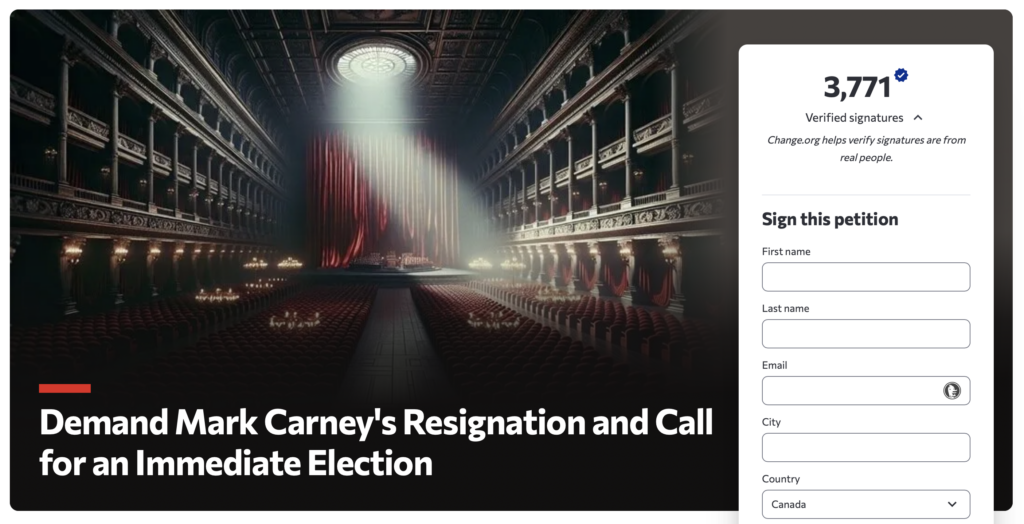
“The goal of this petition is to get over 10,000 signatures possibly up to an estimate 150,000 or more signatures so that our voices can be heard and parliament can expel Mark Carney, once and for all,” the explanation said.
 Sponsored · Selkirk Copper Mines
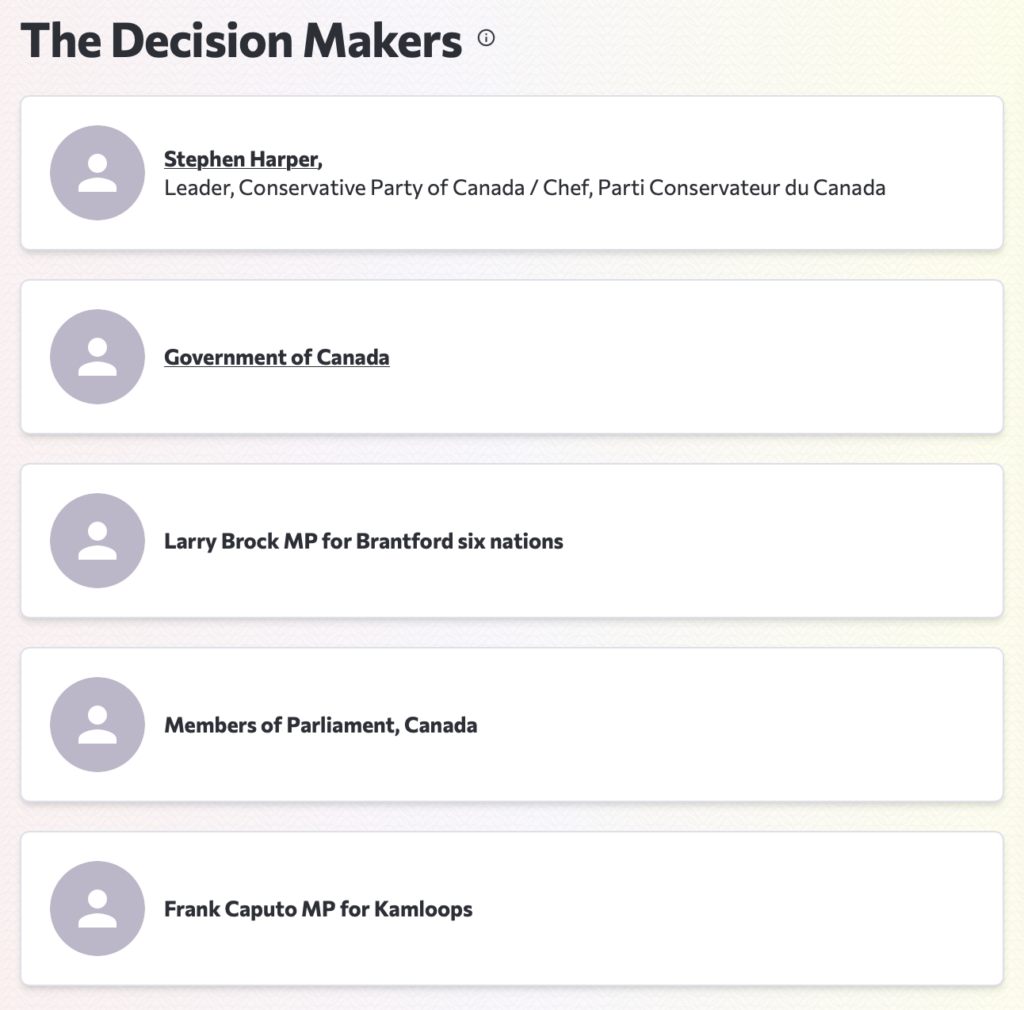
The petition lists as “decision makers”, or what the website refers to as the individuals responsible for the change being advocated, former Prime Minister Stephen Harper—mislabelled as the leader of the Conservative Party—and MPs Larry Brock of Brantford—Brant South—Six Nations and Frank Caputo of Kamloops—Thompson—Nicola.
Petition starter who goes by the name Tristan Arychuk from Kamloops said the petition signees went from 800 to over 2,000 in just 24 hours.
This comes after a separate official House of Commons e-petition, e-7382, was filed earlier this year. It does not explicitly demand Carney’s resignation but it asks the government to take action to “restore public trust and confidence in federal leadership… and pursue democratic processes that let Canadians express confidence in the current government.”
The petition was initiated by MP Brian Robart of Steinbach, Manitoba, and sponsored for publication by Ted Falk, Conservative MP for Provencher. It opened for signatures on May 8, 2026, and is scheduled to close on August 6, 2026. It had 2,843 validated signatures when checked, led by 1,183 signatures from Ontario.

While a private petition can build political momentum but not trigger a resignation, an official Commons e-petition can be presented through parliamentary channels. But the House of Commons itself says neither the House nor the sponsoring MP endorses the views in a petition posted on the site. The government responds to presented petitions, but petitions do not function as confidence votes.
The timing is what gives the campaign its edge. Carney’s Liberals are not operating as a visibly cornered minority. The party secured a parliamentary majority after wins in three special elections, bringing the Liberals to 174 seats in the 343-seat House of Commons. That majority, if it holds, gives Carney far more room to pass legislation without relying on opposition support.
However, Carney is recently being tagged in a hot mic incident where he was caught saying the MPs are “useful for votes”, which is kindling in itself but incendiary combined with these petitions.
This comes after Conservative leader Pierre Poilievre criticized the Liberal majority as the result of political maneuvering, not a fresh general-election majority. The Change.org petition leans into a sharper version of that argument, combining budget criticism, calls for Parliament to return, and unsupported claims about the April 28 vote.