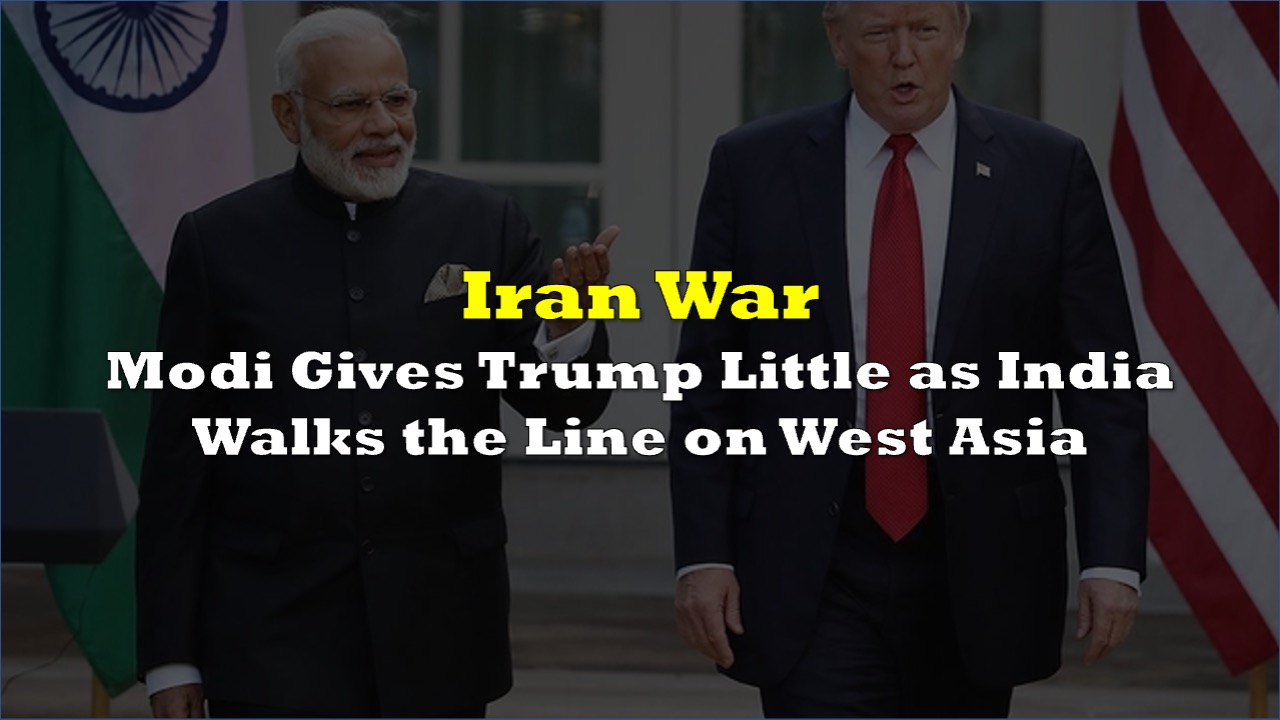

US President Donald Trump called Indian Prime Minister Narendra Modi on March 24 to discuss the West Asia crisis — but India’s response suggested New Delhi has no intention of becoming Washington’s instrument of pressure against Tehran.
Trump initiated the call, which came a day after he extended Washington’s deadline by five days for Iran to reopen the Strait of Hormuz — a move widely read as a climbdown after Iran refused to comply with his ultimatum. US Ambassador to India Sergio Gor confirmed the conversation, saying the two leaders discussed “the importance of keeping the Strait of Hormuz open.”
Modi’s public response was carefully calibrated. In a post on X, he called for “de-escalation and restoration of peace at the earliest” — language that conspicuously avoids assigning blame — and said keeping the Strait “open, secure and accessible is essential for the whole world.”
Received a call from President Trump and had a useful exchange of views on the situation in West Asia. India supports de-escalation and restoration of peace at the earliest. Ensuring that the Strait of Hormuz remains open, secure and accessible is essential for the whole world.…
— Narendra Modi (@narendramodi) March 24, 2026
He made no mention of the US-Israeli strikes, issued no demands of Tehran, and stopped well short of endorsing Washington’s position.
Hours later, External Affairs Minister S. Jaishankar met Iranian Ambassador to India Mohammad Fathali in New Delhi — a quiet but pointed signal that India is keeping its lines to Tehran firmly open.
Modi separately told Parliament that he had spoken twice since the start of the war with heads of most countries in West Asia, including Gulf nations, and that the government remained in contact with Iran, Israel, and the US simultaneously.
India cannot afford to pick a side. The Strait of Hormuz serves as a passage for roughly 40% of India’s crude oil imports, and its near-closure has triggered a domestic LPG shortage, hitting households, restaurants, and industry nationwide. Modi told Parliament that India is actively sourcing energy from alternative suppliers and holds adequate reserves of crude oil, petroleum, fertilizers, and coal.
As of Monday, 20 Indian-flagged vessels carrying approximately 540 seafarers remained stranded in the western Persian Gulf, though two LPG tankers — Pine Gas and Jag Vasant — managed to cross the Strait on Monday evening.
Trump has claimed productive talks with Tehran and announced a five-day delay on planned strikes against Iranian power infrastructure, contingent on the Strait reopening. Iranian parliament speaker Mohammad Bagher Ghalibaf rejected those claims as false, alleging they were designed to manipulate global oil and financial markets — leaving Washington’s account of the situation directly contradicted by Tehran.
Read: Sen. Murphy: Trump’s Iran ‘Pause’ Was a Message to Markets, Not Tehran
Information for this story was found via the sources and companies mentioned. The author has no securities or affiliations related to the organizations discussed. Not a recommendation to buy or sell. Always do additional research and consult a professional before purchasing a security. The author holds no licenses.