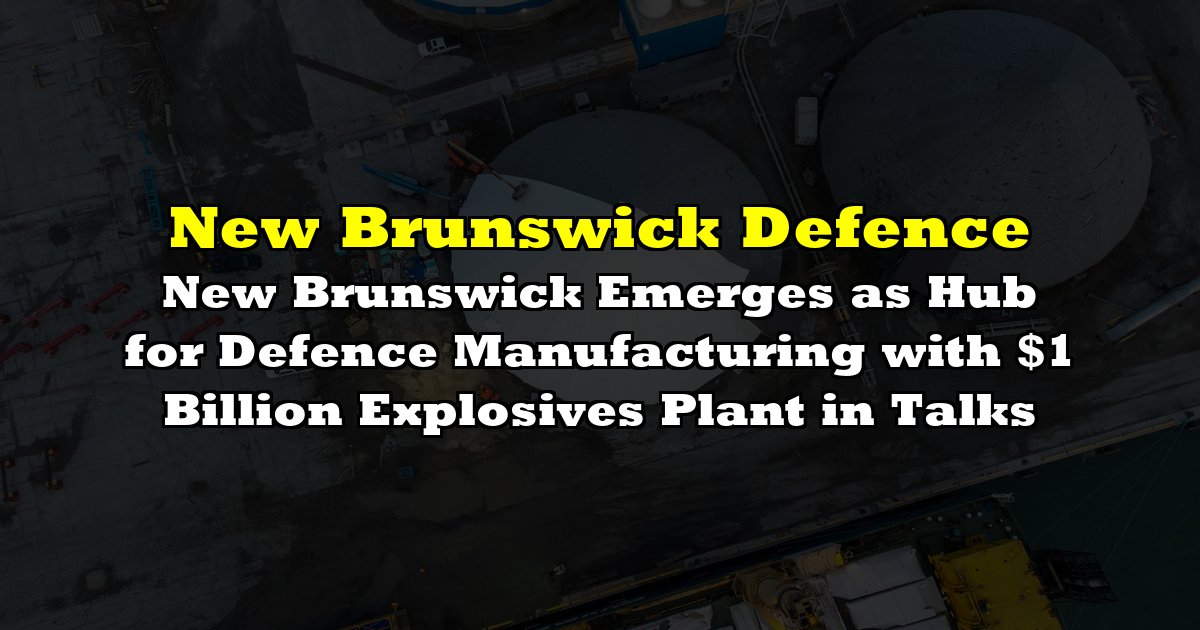

New Brunswick is positioning itself as a key player in Canada’s defense industry, with Premier Susan Holt engaging in talks with Nalagx Corp, a Canadian firm partnered with France’s Eurenco, to build what could be the country’s largest explosives factory since World War II. The proposed US$1-billion project promises 500 direct jobs and aims to supply energetic materials for military munitions and civilian mining needs, primarily for export to NATO countries in Europe.
The industrial campus, slated to be operational by 2029, would produce a range of materials essential for shells and heavy artillery. Nalagx, led by managing partner Patrick Gagnon, a former Liberal MP, will own the facility, while Eurenco, Europe’s top producer of propellants and explosives, will handle operations. The project’s location is still under evaluation, with New Brunswick being a strong contender due to its proximity to eastern ports and rail links—critical for export logistics.
Gagnon has emphasized the strategic importance of the facility, noting it will bolster Canada’s defense manufacturing sector and enhance supply chain resilience for North American and European munitions producers. The initiative aligns with billions in federal defense spending planned over the next five years, alongside provincial efforts under Holt’s government to attract such investments. Opportunities NB, led by Minister Luke Randall, is conducting due diligence, with any public support contingent on secured financing, market demand, and community engagement.
New Brunswick in talks to build Canada's largest explosives factory since WWII, with Premier Susan Holt meeting companies planning the massive energetics plant.
— The Dive Feed (@TheDeepDiveFeed) March 24, 2026
Adding to the province’s growing defence profile, South Korean conglomerate Hanwha is considering New Brunswick for a torpedo manufacturing plant as part of its bid to secure a multibillion-dollar contract for Canada’s next-generation submarines. Hanwha’s proposal, which prioritizes Canadian job creation, also includes plans for a hydrogen-fuel infrastructure hub, aligning with regional aspirations for green energy development, particularly at the Port of Belledune.
Hanwha Defence Canada’s head, Glenn Copeland, highlighted the alignment with Canada’s innovation and energy goals, pointing to the province’s interest in hydrogen technologies. The Port of Belledune’s vision includes power generation from biomass, wind, and solar, with potential integration of small modular nuclear reactors.
New Brunswick’s industrial landscape could see transformative growth if both projects materialize. The Nalagx-Eurenco facility alone is projected to generate economic benefits exceeding US$1 billion, marking a significant step in the resurgence of Canada’s defence sector.
Information for this story was found via the sources and companies mentioned. The author has no securities or affiliations related to the organizations discussed. Not a recommendation to buy or sell. Always do additional research and consult a professional before purchasing a security. The author holds no licenses.