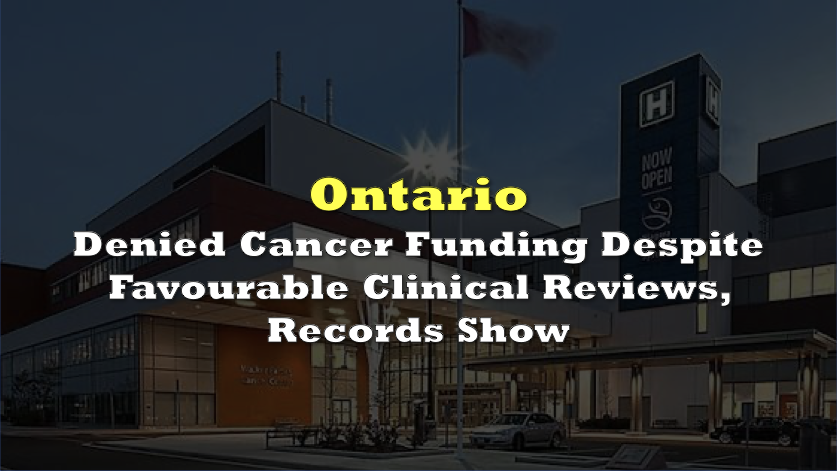

Ontario’s cancer-treatment funding system can reject applications despite favourable clinical recommendations, while its appeals tribunal has limited authority to overturn the administrative decisions behind those refusals.
The distinction is drawing renewed scrutiny after The Trillium reported Thursday that Ontario Health and two clinical reviewers supported paying for US treatment for Sabrina Apitz-Grossman, a 31-year-old Toronto woman with advanced synovial sarcoma.
Freedom-of-information records obtained by the outlet show Ontario Health initially opposed the request in April but reversed its position in June. Despite the favourable assessments, the senior Ministry of Health executive officer responsible for the decision did not approve funding.
 Sponsored · Selkirk Copper Mines
Apitz-Grossman told The Trillium she was never informed of those recommendations during her appeal.
Her requested treatment, Tecelra, costs approximately US$650,000. Its manufacturer has indicated that it does not intend to seek Canadian approval.
The case highlights restrictions on Ontario’s Health Services Appeal and Review Board, which reviews disputes involving provincial health insurance. The board previously identified factual errors and unclear reasoning in Apitz-Grossman’s funding assessment, according to The Trillium’s October 20 reporting.
Nevertheless, it dismissed her appeal because it could not overturn a negative recommendation from the responsible executive officer.
 Sponsored · Cambria Gold Mines
In an analysis, Tribunal Watch Ontario reported reviewing 40 published board decisions from the first 10 months of 2026. Thirty-eight appeals were dismissed, one OHIP appellant obtained partial relief, and one case did not involve OHIP.
The organization argues that the tribunal’s inability to consider compassionate circumstances leaves patients with limited recourse even when medical evidence supports their applications.
The legal framework became more restrictive on October 6, when Ontario amended its out-of-country drug-funding regulation following a successful court challenge by another cancer patient, Alex Shved.
A September 23 Divisional Court ruling had overturned Shved’s funding denial after finding the province’s justification inadequate. The court ordered reconsideration rather than approval.
Ontario subsequently introduced Regulation 326/26, requiring qualifying out-of-country drug treatments to involve therapies already publicly funded in Ontario but temporarily unavailable. The amendment applies retroactively to October 1, 2011, including certain pending applications and appeals. Previously approved treatments receive specified protections.
The government says the changes preserve pharmaceutical pricing negotiations and could prevent up to $5.2 billion in additional annual health-system costs.
Health Minister Sylvia Jones told the legislature on October 27 that funding decisions are made by clinicians, surgeons, and ethicists, “and not by politicians.”
Apitz-Grossman’s next step is an expedited judicial review, which she requested on October 6 to overturn Ontario’s funding denial and obtain a new decision. No hearing date has been publicly confirmed.