
The federal government’s plan to privatize Trans Mountain Corp. is quietly dying, and the executives running the pipeline and its Crown parent spent a Toronto luncheon on May 11 making the case for keeping it that way.
Elizabeth Wademan, head of Canada Development Investment Corp., the Crown corporation that holds Trans Mountain as a subsidiary, acknowledged the old playbook directly. “The prior narrative had been that this should be returning to private hands,” she told the Canadian Club Toronto audience. “That was in a different market and that was in a different time.”
What the current time calls for, in her view, is something else entirely. “There’s absolutely a case to be a long term holder,” she added. “I personally would love to see it owned by Canadians.”
 Sponsored · Altamira Gold Corp.
Trans Mountain Corp. president and CEO Mark Maki made the strategic argument in starker terms. “It is a sovereign pipeline. It starts in Canada. It really ends in Canada. This is an incredibly strategic asset.” That framing positions the Edmonton-to-Burnaby route less as a commercial property ripe for sale and more as national infrastructure.
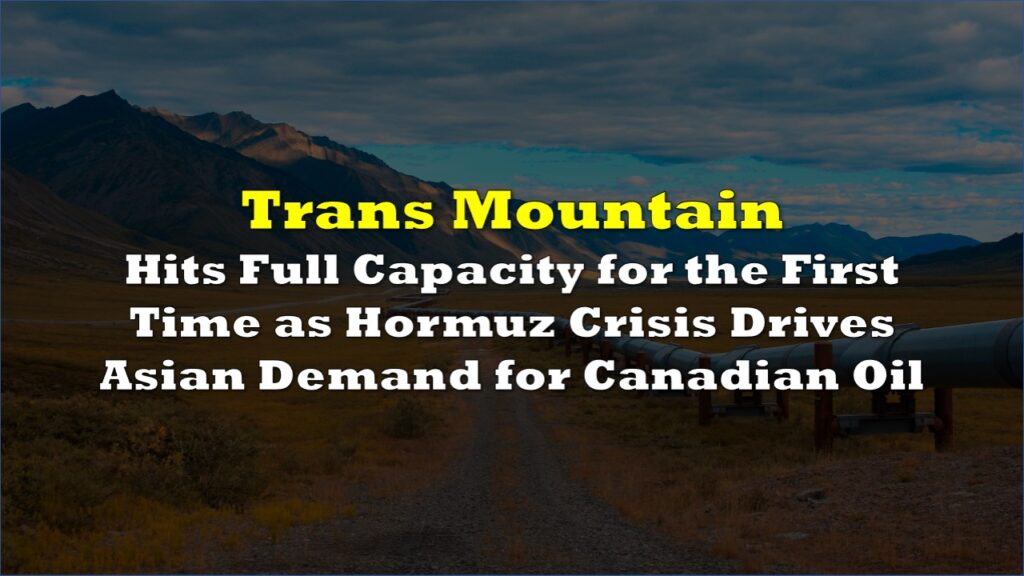
The operational reality gives that argument weight. The expanded system, which came online in May 2024 after total expansion costs ballooned to more than $34 billion — a figure that dwarfs the $3.3 billion Ottawa paid Kinder Morgan to acquire the original pipeline in 2018 — is now running at between 85% and 96% of its 890,000-barrel-per-day capacity. Current throughput sits at 850,000 barrels per day.
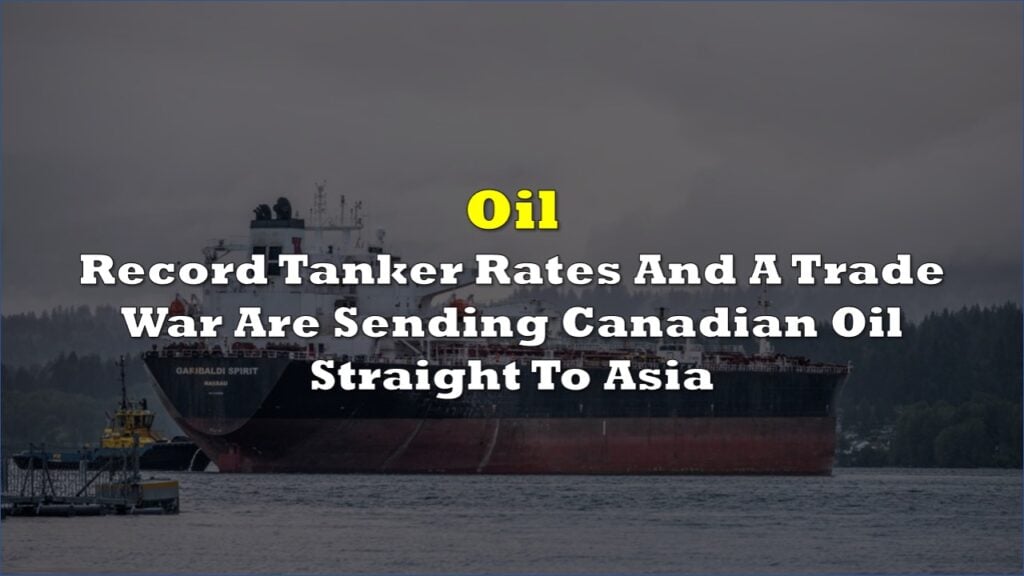
What flows through it matters as much as how much. Between launch and spring 2025, average exports to China reached 207,000 barrels per day, outpacing the 173,000 barrels per day heading to the United States. By October 2025, as much as 70% of Canadian crude shipped from the British Columbia coast was going to Chinese buyers. The Westridge Marine Terminal in Burnaby has effectively become a Pacific gateway Canada did not have before.
The push for permanent public ownership doesn’t resolve every open question. Indigenous economic participation negotiations connected to the pipeline remain ongoing and complex. A regulatory dispute over tolls has yet to be settled. And Alberta is advancing plans for a potential second West Coast pipeline, a development that would eventually reshape the competitive picture for Westridge.
The original Trans Mountain pipeline has operated since the 1950s, giving Ottawa’s stake a lineage longer than most of the policy debates now swirling around it. For Wademan, that history reinforces the case for patience over a rushed sale. For now, at least, Ottawa seems inclined to agree.
Information for this story was found via the sources and companies mentioned. The author has no securities or affiliations related to the organizations discussed. Not a recommendation to buy or sell. Always do additional research and consult a professional before purchasing a security. The author holds no licenses.