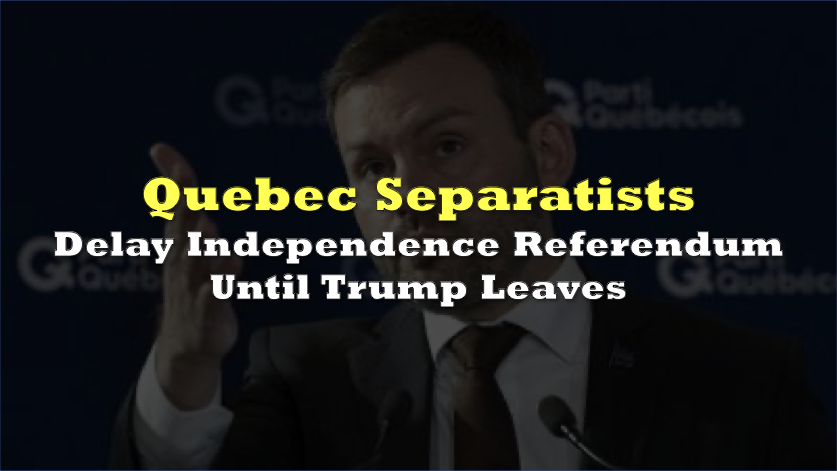

The Parti Québécois is putting more than two years between its campaign to take power in Quebec and any vote to take Quebec out of Canada, formally ruling out an independence referendum before President Donald Trump leaves the White House.
PQ leader Paul St-Pierre Plamondon said Tuesday that a government led by his party would not hold a referendum before January 20, 2029, while maintaining his longstanding commitment to hold one during its first term in office.
The announcement comes less than seven weeks before Quebec’s provincial election, scheduled for October 5.
 Sponsored · PTX Metals Inc.
The new timeline gives voters a clearer distinction between electing a sovereigntist government this fall and immediately facing another vote on separation.
In an official statement, St-Pierre Plamondon said the referendum should take place under conditions allowing an informed and calm debate, rather than one dominated by US political turmoil or what he described as the actions of an unpredictable president.
“I have chosen to completely defuse the argument that this would be the worst possible time to reflect on our future because of Trump,” St-Pierre Plamondon said, according to CityNews.
St-Pierre Plamondon reiterated that a PQ government would consult Quebecers on independence during its first mandate. Instead, the party has now eliminated the first roughly two years of that mandate as a possible referendum window if it wins in October.
 Sponsored · Cambria Gold Mines
An August Léger poll found the PQ leading with 30% support among decided voters. The Quebec Liberal Party followed at 24%, the governing Coalition Avenir Québec at 20%, the Conservative Party of Quebec at 13%, and Québec solidaire at 11%.
Yet when the same 998 respondents were asked how they would vote in a sovereignty referendum, only 31% backed independence after undecided voters were redistributed, compared with 69% opposed.
The referendum is also well below voters’ immediate policy priorities. Just 8% of respondents identified holding a sovereignty referendum as one of the issues most likely to influence their provincial vote. Health and social services ranked first at 48%, followed by the cost of living and purchasing power at 42%, affordable housing at 28%, and the economy and jobs at 23%.
St-Pierre Plamondon said the period before 2029 would instead be used to govern on public services, affordability, housing, homelessness, and public finances.
Quebec has held two sovereignty votes: the 1980 proposal was defeated with 59.56% voting No, while the 1995 referendum was much closer, with 2,362,648 votes against sovereignty and 2,308,360 in favour.
The next referendum, if the PQ wins and keeps its pledge, will now have to wait until Trump’s presidency is over.