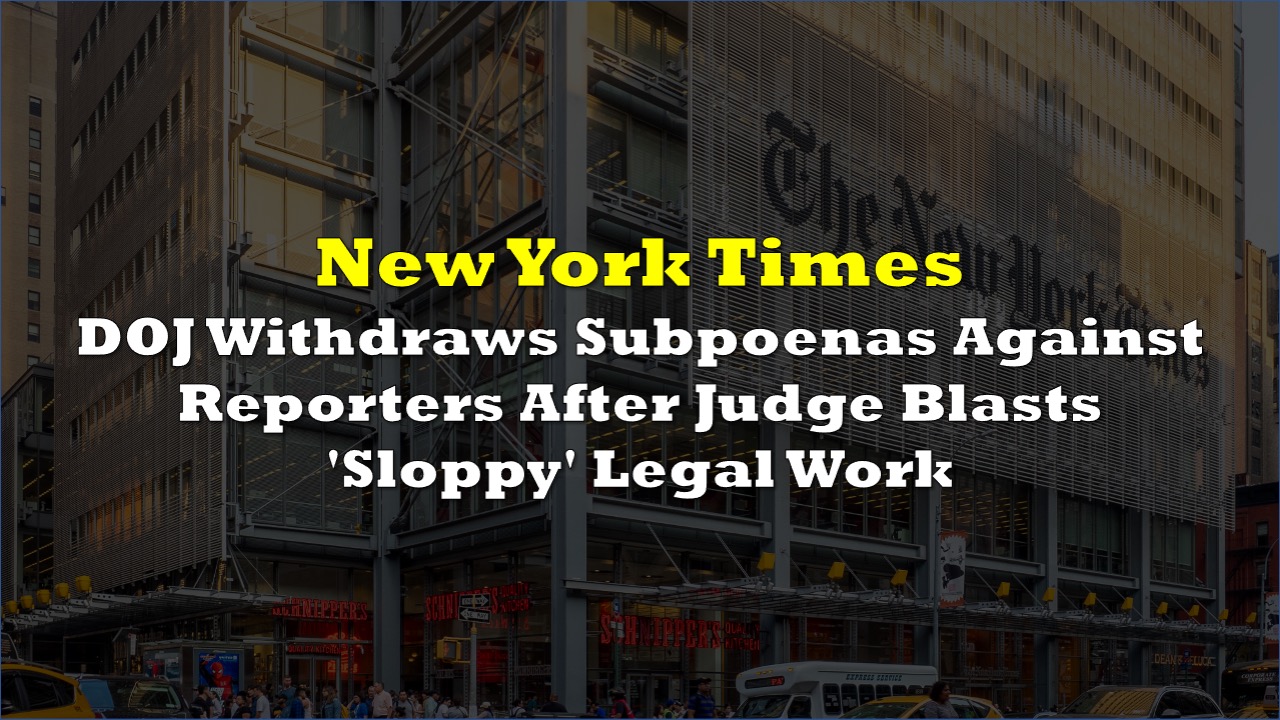

The Justice Department withdrew grand jury subpoenas against New York Times reporters Thursday after a federal judge repeatedly questioned why prosecutors sought their testimony and phone records before exhausting other investigative options.
The subpoenas trace back to a July 8 Times report that Trump flew from a NATO summit in Turkey on the older Air Force One rather than his new $400 million retrofitted jet, citing anonymous sources who said the Secret Service urged the switch because the newer plane lacked some of the older model’s security features, including antimissile capabilities.
Read: Trump Swaps Air Force Ones Mid-Trip, Citing Iranian ‘Kill List’
 Sponsored · Altamira Gold Corp.
Two days later, the DOJ issued grand jury subpoenas to Times reporters seeking their testimony and phone records. Agents personally served several at reporters’ homes. The Times had anticipated as many as five reporters would be targeted, but the government ultimately served three. A later unsealed motion showed investigators had also sought phone records for the reporters’ relatives, with demands stretching over a longer period than the two stories themselves.
US District Judge Arun Subramanian cited “profound First Amendment” concerns on Thursday and pressed government lawyers on what steps investigators had taken before compelling journalists to testify, saying prosecutors should have exhausted other sources first.
He noted prosecutors had gone after the reporters just two days after the first story ran, and revealed they’d separately asked another judge to bar phone carriers from telling the reporters their records had been subpoenaed, even after the DOJ had already made the first round of subpoenas public.
Subramanian made clear the government would either withdraw the subpoenas voluntarily, or he’d quash them himself, and raised the possibility of sanctions over what he called inaccurate statements in the government’s application to obtain them.
 Sponsored · Silver47 Exploration Inc.
DOJ lawyer Sean Buckley spent nearly an hour defending the subpoenas as lawfully issued, but conceded some had mistakenly sought records from a parent and spouses of the reporters, calling the error “a consequence of trying to move too quickly.” The government offered to hold the subpoenas in abeyance for 14 days while pursuing other steps, but Subramanian showed little interest, and Buckley ultimately told the court the government was prepared to withdraw them outright.
Times attorneys countered that the government’s real target was broader than the specific articles at issue, arguing the subpoenas’ scope and timing suggested prosecutors were fishing for the reporters’ source relationships generally, and calling the government’s conduct “deeply troubling.” Subramanian’s written order confirmed the subpoenas were no longer in effect and noted that any renewed attempt must first come back before the court.
A Justice Department spokesperson pushed back afterward, saying the judge had overstepped and blocked the government from laying out its process, arguing that the grand jury had a right to hear from material witnesses and that Subramanian’s ruling “overrides clear longstanding principles and common sense.” The spokesperson added that the leak investigation remains active and that the government intends to pursue whoever disclosed classified information to the press.
Times general counsel David McCraw said the paper was pleased prosecutors had “finally conceded that the subpoenas violated the law,” though he argued they should never have been issued in the first place. Bruce Brown, president of the Reporters Committee for Freedom of the Press, said the outcome is part of a growing number of subpoena efforts against journalists collapsing once they reach federal court.
Related: Trump Must Open His Books to the BBC, Florida Judge Rules
Adam Steinbaugh of the Foundation for Individual Rights and Expression welcomed the withdrawal but warned against a repeat attempt, saying journalists shouldn’t have to choose between protecting confidential sources and facing government threats.