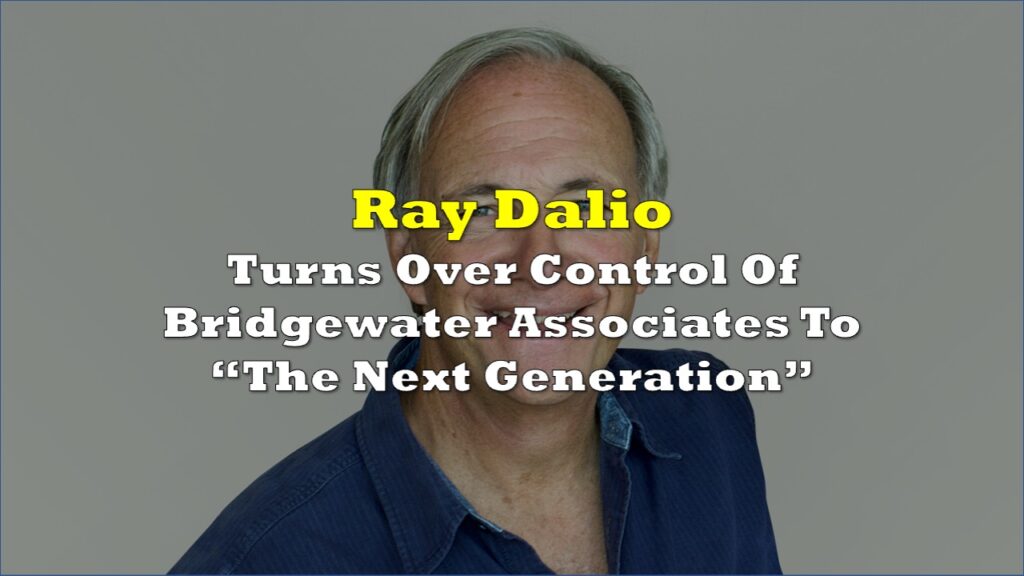

Legendary investor Ray Dalio issued a stark warning to global markets on Tuesday, cautioning that escalating geopolitical tensions have pushed the world to the edge of a new type of financial conflict. Speaking at the World Governments Summit in Dubai, the Bridgewater Associates founder stated that nations are now “on the brink” of a capital war.
According to Dalio, the global economy is dangerously close to a scenario where money itself is weaponized through trade embargoes, the blocking of market access, and the leverage of debt ownership.
“We are on the brink,” Dalio told CNBC’s Dan Murphy. “That means not in, but it means we are quite close to [capital war], and it would be very easy to go over the brink into a capital war, because there are mutual fears.”
The warning comes amid a volatile geopolitical landscape. Since President Donald Trump returned to the White House last year, his administration has engaged in aggressive tariff policies and a contentious push to bring Greenland under Washington’s control. These moves have rattled allies and adversaries alike.
Dalio highlighted a specific “fear” among European investors, who Citi research indicates accounted for 80% of foreign U.S. Treasury purchases between April and November, that they could face sanctions. Conversely, he noted “a reciprocal fear on the part of the United States that it could not get the capital, or not get the buy [from Europe].”
“Capital, money, matters,” Dalio emphasized. “We’re seeing capital controls … taking place all over the world today, and who will experience that is questionable.”
Dalio, a student of economic history, drew parallels to the period preceding World War II. He noted that before the U.S. formally entered the war, it imposed severe sanctions on Japan, weaponizing capital in response to a “contentious relationship.”
He sees similar patterns today, noting that central banks and sovereign wealth funds are already making “provisions” for potential foreign exchange and capital controls.
“One could imagine an analogous situation here… between China and the United States, or even… U.S. and European dependency,” Dalio said. “Because the reverse of a trade deficit … is capital… and capital could be used as war.”
Despite the ominous outlook, Dalio’s investment advice remains consistent: diversification is key, and gold remains a critical asset. While precious metals have seen a recent sell-off, with gold down roughly 16% from its high, it remains up approximately 65% from a year ago.
Dalio urged investors not to get caught up in daily price fluctuations. “Because gold is a diversifier, when the bad times come along it does uniquely well,” he explained. “I’d say the most important thing is have a well-diversified portfolio.”
Information for this briefing was found via the sources mentioned. The author has no securities or affiliations related to this organization. Not a recommendation to buy or sell. Always do additional research and consult a professional before purchasing a security. The author holds no licenses.