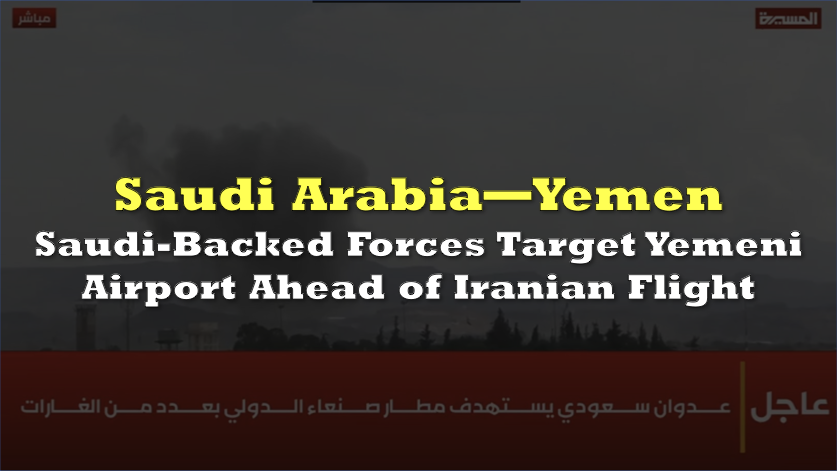

Airstrikes hit the runway at Sanaa International Airport on Monday as an Iranian aircraft approached Yemen’s Houthi-controlled capital, opening a new confrontation between the Iran-aligned group and Saudi-backed forces after years of uneasy de-escalation.
Yemen’s internationally recognized government said its forces targeted the runway to prevent the Mahan Air flight from landing, according to AP News. The Houthis blamed Saudi Arabia for the strikes, declared that the attack had ended the de-escalation phase, and threatened retaliation.
Riyadh had not publicly confirmed involvement.
 Sponsored · Selkirk Copper Mines
The Iranian aircraft ultimately diverted to Hodeidah, another Houthi-controlled city on Yemen’s Red Sea coast, according to both sides. There were no immediate confirmed reports of casualties or significant damage at Sanaa airport.
From land to air
Rather than fighting over territory, both sides are now contesting who controls access to northern Yemen. For Yemen’s internationally recognized government, allowing direct Iranian flights into Houthi-held territory risks creating a regular air corridor between Tehran and the Iran-backed movement. Officials argue those flights violate Yemen’s sovereignty and could strengthen Iranian political and logistical influence inside the country.
Defense Minister Taher al-Aqili warned before the operation that authorities would confront aircraft entering Yemeni airspace without authorization.
“Our patience has run out,” al-Aqili said in a statement quoted by AP News, adding that hostile aircraft would be confronted “by all available means.”
De-escalation is over
The Houthis framed the strike differently, portraying it as direct Saudi aggression rather than an action by Yemen’s armed forces.
 Sponsored · Silver47 Exploration Inc.
Military spokesperson Yahya Saree said the attack represented “an end to the de-escalation phase” and declared that “this aggression will not go unanswered or unpunished.”
The warning follows an earlier dispute this month after another Mahan Air flight reached Sanaa despite objections from the internationally recognized government. Following that incident, the Houthis threatened Saudi airports and strategic infrastructure if future Iranian civilian flights were intercepted.
The latest confrontation reflects a broader shift in Yemen’s conflict. Reuters reported that military activity between Saudi Arabia and the Houthis had declined substantially over the past several years as Riyadh pursued negotiations aimed at ending its direct involvement in the war. Saudi officials have repeatedly expressed hopes for a political settlement before the end of 2026.
Instead of renewed ground offensives, disputes have increasingly centered on airports, ports, shipping routes, and international access to Houthi-controlled territory.
Sanaa International Airport has become particularly sensitive after previous Israeli strikes heavily damaged its infrastructure during the broader regional conflict involving Iran and its allies. Additional restrictions on civilian flights further isolate northern Yemen while increasing the political value of every successful international arrival.
The immediate military impact of the strike appears limited. Its political consequences may prove more significant. After several years in which cross-border attacks between Saudi Arabia and the Houthis had largely subsided, a dispute over a single civilian flight has reopened one of the region’s most volatile fault lines.