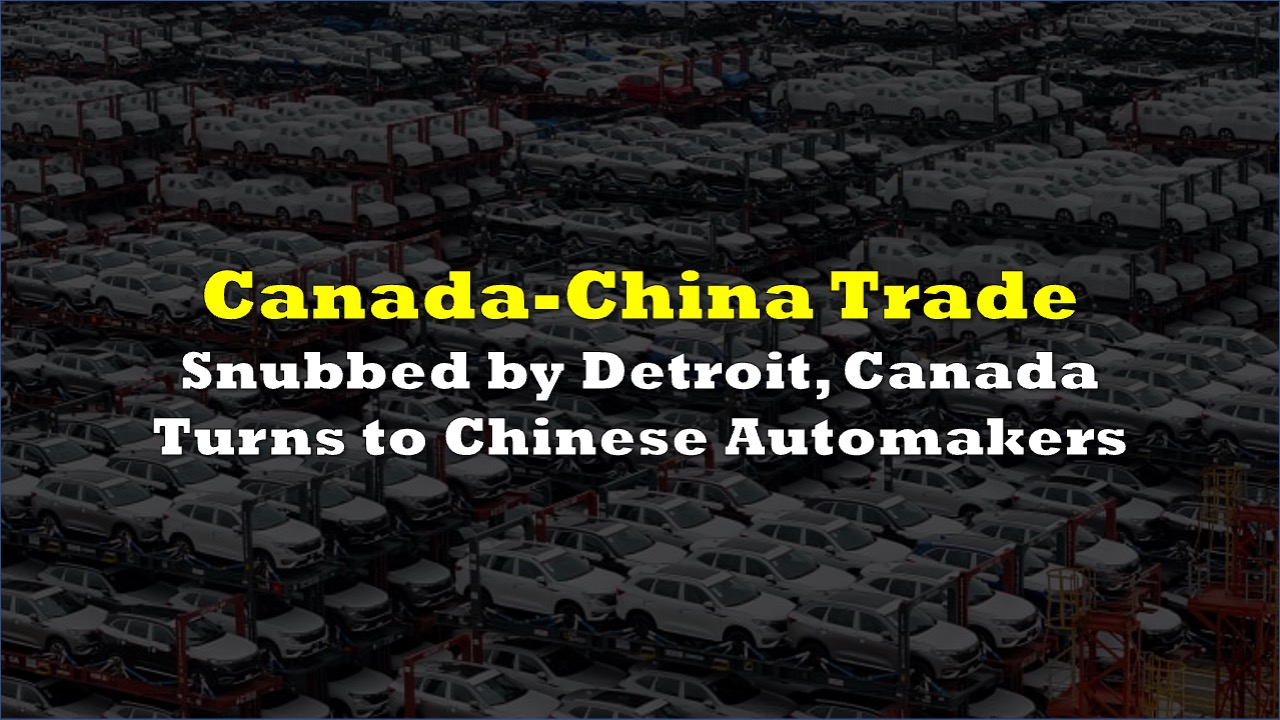

Canada courted Chinese electric vehicle manufacturers in January after American automakers reduced their Canadian operations, signaling a strategic reorientation as the country seeks new partners for its struggling auto sector.
Prime Minister Mark Carney traveled to Beijing and negotiated an agreement lowering tariffs on Chinese electric vehicles to 6.1% for an annual quota of 49,000 vehicles. The deal requires Chinese manufacturers to establish joint ventures for vehicle or battery production in Canada within 3 years.
“We’ve had direct conversations directly from the Chinese companies with explicit interest and intention to partner with Canadian companies,” Carney said in Doha following the Beijing trip.
The pivot comes as Ford, General Motors, and Stellantis cut their share of Canadian vehicle production to 23% last year from 56% in 2016, according to the Trillium Network for Advanced Manufacturing. Honda and Toyota now account for 77% of Canadian auto manufacturing.
“If we keep our horse hitched to the US automakers, our industry will suffer,” McMaster University automotive researcher Greig Mordue told reporters.
GM eliminated approximately 1,200 jobs by canceling electric van production at its Ingersoll, Ontario plant and cutting a shift in Oshawa. Stellantis moved Jeep Compass production from Brampton, Ontario to Illinois, idling about 3,000 workers despite receiving over $1 billion in government funding to maintain Canadian operations.
Read: Canada Seeks to Recover Millions From GM After Plant Layoffs
Industry Minister Mélanie Joly threatened to recover hundreds of millions of dollars from both companies. Ottawa issued Stellantis a formal notice of default in December.
Read: Canada to Recover Hundreds of Millions from Stellantis Over Plant Closure
Canada announced on February 5 that it will introduce a tradeable import credit system rewarding companies for Canadian production. Manufacturers earn credits they can use to offset tariffs or sell to competitors. The policy particularly affects General Motors, which sells approximately 300,000 vehicles annually in Canada but imports most from the US.
Brian Kingston, CEO of the Canadian Vehicle Manufacturers’ Association representing GM, Ford, and Stellantis, urged Ottawa to focus on negotiating with Washington. “While I understand the measures that Canada has taken in response to the US, we cannot lose sight of the fact that these tariffs should not be in place at all,” he said.
The Chinese agreement drew criticism. Ontario Premier Doug Ford initially called for Canadians to boycott Chinese electric vehicles, warning the deal would harm Ontario’s auto sector. He later praised the government’s broader automotive strategy following a meeting with Carney.
Unifor President Lana Payne said allowing Chinese manufacturers greater market access puts autoworkers at risk. “China-owned auto companies are not creating Canadian jobs, and vague promises of future investment offer no meaningful protection for workers facing immediate job loss,” she said.
The deal concerns Washington. Commerce Secretary Howard Lutnick warned it could jeopardize negotiations over the United States-Mexico-Canada Agreement scheduled for later this year.
President Donald Trump imposed 25% tariffs on non-US automotive content last year and repeatedly stated he opposes US purchases of Canadian-made vehicles. Canada maintains matching counter-tariffs.
Brampton Mayor Patrick Brown said Canada faces limited alternatives. “If those divorce papers actually happen, what other choice does Canada have?” he said.
Canadian auto production dropped to 1.2 million vehicles in 2025 from 2.3 million in 2016, driven primarily by declining output from US-owned factories. Honda and Toyota maintained stable production throughout the period.
Information for this story was found via Bloomberg, and the sources and companies mentioned. The author has no securities or affiliations related to the organizations discussed. Not a recommendation to buy or sell. Always do additional research and consult a professional before purchasing a security. The author holds no licenses.