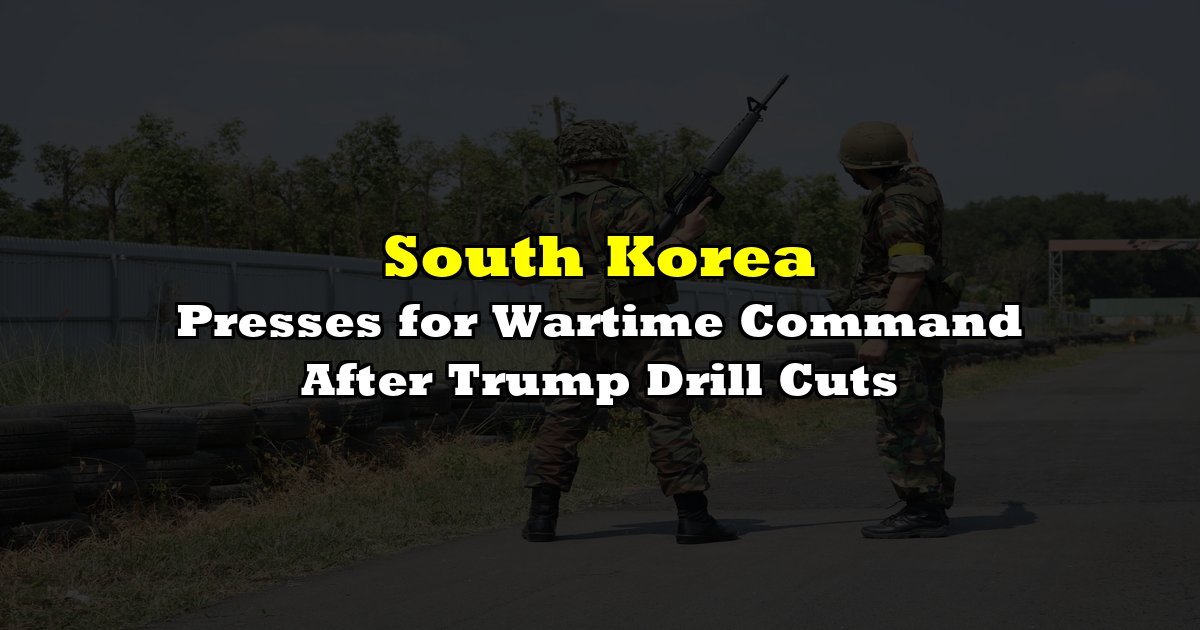

Reclaiming command of its own troops in the event of war is back at the top of Seoul’s agenda, with President Lee Jae Myung pressing to loosen South Korea’s reliance on the United States after Donald Trump ordered joint exercises scaled back.
At a cabinet meeting on Tuesday, Lee argued that the alliance and an independent defence capability reinforce one another rather than pull in opposite directions, and said the planned transfer, during his term, of wartime operational control, or Opcon, of South Korean forces from the US should go ahead without disruption.
“A strong alliance makes the foundation of security stronger, and strengthening our own capabilities increases our value and necessity as an ally,” Lee said.
 Sponsored · Altamira Gold Corp.
Faster progress on South Korea’s nuclear-powered submarine programme and on developing officers capable of integrated operations for future conflicts were also among Lee’s demands.
The authority to direct South Korean forces if fighting resumes, wartime Opcon, has stayed with the US since the Korean war began, run through the head of the allies’ Combined Forces Command, a post always filled by an American four-star general. Peacetime control returned to Seoul in 1994, yet winning back the wartime authority has ranked among the country’s foremost security goals for more than two decades, delayed repeatedly under successive governments.
Trump lit the fuse on Sunday, instructing the Pentagon to “substantially reduce” this week’s exercises. He cited what he called a “very good relationship” with North Korean leader Kim Jong Un, described the North as “unthreatening and respectful,” and faulted Seoul for declining to join US efforts against Iran.
Known as Ulchi Freedom Shield, the now-curtailed drills began Monday and were scheduled to run through Aug. 27, drawing about 18,000 South Korean troops alongside US forces and personnel from 11 of the 18 member states of the United Nations Command. This year’s edition was meant in part to certify South Korea’s readiness to finally take over Opcon.
Lessons from North Korea’s battlefield experience in the Russia-Ukraine war, including drone use, were also to be folded into the exercises. US and South Korean officials have warned that Pyongyang’s troops are picking up new tactics through their deployment supporting Moscow.
Seoul’s presidential office stressed that the drills carried no “intention to attack North Korea or escalate tensions,” describing their purpose as safeguarding “the safe and peaceful daily lives of the people.”
Gen. Xavier Brunson, commander of the roughly 28,500 US troops stationed in the country, met South Korean Defense Minister Ahn Gyu-back on Tuesday, with talks reported to focus on adjusting this year’s drills.