
Republicans entered the 2026 US midterms with a $360 million advantage in outside political spending from conservative groups and a redistricting landscape projected to create nine additional Republican-favorable House districts. Neither prevented a congressional defeat that included the first reversal of a newly won Senate majority in 72 years.
The November 3 elections returned both chambers of Congress to Democrats, making 2026 the first midterm election since 2006 in which Republicans lost control of the House and Senate simultaneously. The outcome also produced historic Senate victories in longtime Republican states, first-ever gubernatorial wins for several demographic groups, and unprecedented representation in Congress.
According to Ballotpedia’s analysis, Democrats gained at least seven Senate seats and 18 House seats. The seven-seat Senate swing ranked among the largest 20% of election-year losses by a president’s party.
 Sponsored · Silver47 Exploration Inc.
READ: Trump Says He ‘Wasn’t on the Ballot’ as Democrats Flip Texas, Iowa and Kansas Senate Seats
A 72-year Senate reversal record
The shortest-lived Senate control reversal since 1954. Republicans took control of the Senate in 2024 with 53 seats, ending Democratic control of the chamber. Their defeat two years later marks the first time since 1954 that a party won the Senate in one even-year election and lost it in the next.
The previous instance followed Republican victories in 1952 and Democratic gains in 1954, during President Dwight Eisenhower’s first term.
Kansas ends a 94-year Democratic Senate drought. Democrat Adam Hamilton defeated Republican incumbent Roger Marshall, becoming the first Democrat elected to the Senate from Kansas since 1932. The victory ended one of the longest Republican winning streaks in modern Senate elections.
 Sponsored · PTX Metals Inc.
Texas elects its first Democratic senator in 38 years. James Talarico defeated Republican Ken Paxton, delivering the party’s first Senate victory in Texas since Lloyd Bentsen won reelection in 1988. Talarico also became the first Democrat to win any statewide election in Texas since 1994.
South Carolina ends a 28-year Republican Senate streak. Democrat Annie Andrews defeated Republican incumbent Darline Graham, who filled the vacancy created by the death of her older brother, Lindsey Graham. The last Democratic Senate victory in the state occurred in 1998.
Andrews also became the first woman elected to the US Senate from South Carolina.
North Carolina breaks a 52-year open-seat precedent. Former Democratic Gov. Roy Cooper defeated Republican Michael Whatley, becoming the first Democrat since 1974 to win an open Senate seat in the state. It was North Carolina’s first Democratic Senate election victory of any kind since 2008.
Maine removes a five-term incumbent. Democrat Troy Jackson defeated Republican Susan Collins. According to Ballotpedia, Collins became the first senator since 2000 to lose a general election while seeking a sixth term.
Iowa elects its first Democratic senator since 2008. Josh Turek defeated Republican Ashley Hinson, contributing to the seven Republican-held Senate seats that Democrats flipped nationwide.
The Senate outcome creates a Democratic majority capable of blocking presidential nominations, controlling committee investigations, and determining which legislation reaches a floor vote during the remaining two years of President Donald Trump’s term.
READ: Can Trump Really ‘Veto Everything’ as Democrats Take Both Chambers?
Democrats regain the governor’s advantage after 16 years
Democrats also won a majority of state governorships for the first time since 2010, reversing a Republican advantage that had persisted through four presidential elections.
Ballotpedia identified at least 27 Democratic governorships in the incoming political lineup, with several races still outstanding when its initial results analysis was published.
The election ended Republican control of governor’s offices in Georgia, Iowa, Ohio, and Texas.
Women on the rise. Texas Gov. Greg Abbott’s defeat by Democrat Gina Hinojosa ended his effort to secure a fourth term. Hinojosa became the first Latina elected governor of Texas and the first Democrat elected to the office since Ann Richards won in 1990.
Georgia elected former Atlanta mayor Keisha Lance Bottoms, the first Black woman ever elected governor of a US state. Her victory also made her Georgia’s first woman governor and first Black governor. She became the state’s first Democratic gubernatorial winner since 1998.
Ohio elected Democrat Amy Acton, the state’s first woman elected governor and its first Jewish governor, defeating Republican Vivek Ramaswamy. Nancy Hollister previously held the governorship for 11 days through succession in 1998 and 1999, making Acton’s distinction specific to election.
Minnesota elected Democratic Sen. Amy Klobuchar as its first woman governor, while Tennessee elected Republican Sen. Marsha Blackburn as its first.
New Mexico elected former Interior Secretary Deb Haaland, the country’s first Native American woman governor.
Meanwhile, California elected Democrat Xavier Becerra, succeeding the term-limited Gov. Gavin Newsom. Becerra becomes the first Latino to win the state’s governorship since Romualdo Pacheco in 1875.
Nevada also elected a Democratic governor, Aaron Ford, after he defeated Republican incumbent Joe Lombardo.
Most Black governors. The country will have five Black governors serving at the same time when the newly elected officials take office, surpassing the previous record for simultaneous representation.
Joining Georgia’s Lance Bottoms and Nevada’s Ford, the group includes Maryland Democrat Wes Moore who won reelection, Wisconsin Democrat David Crowley, and Florida Republican Byron Donalds.
Donalds became Florida’s first Black elected governor and the first Black Republican elected governor in US history. Crowley and Ford became the first Black governors elected in Wisconsin and Nevada, respectively.
Before this election, only three Black politicians had been elected governor in the country’s history, excluding those who assumed office through succession.
Congress: First Muslim senator, first native woman senator, and first gay male senator
Three separate Senate victories established national representation milestones.
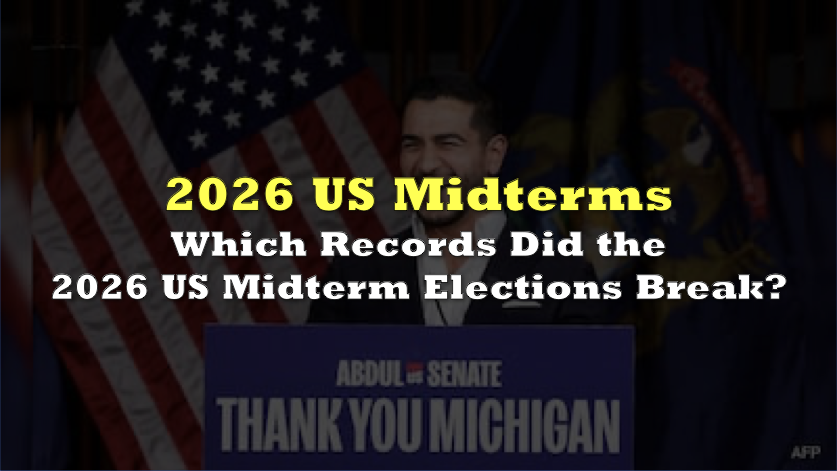
Michigan elected Democrat Abdul El-Sayed, making him the first Muslim American elected to the US Senate. The former public health official defeated Republican Mike Rogers.
Minnesota elected Democratic Lt. Gov. Peggy Flanagan, a citizen of the White Earth Band of Ojibwe, as the first Native American woman to serve in the Senate. She defeated Republican Michele Tafoya.
New Hampshire elected Democratic Rep. Chris Pappas, who became the first openly gay man elected to the Senate after defeating Republican John E. Sununu. Tammy Baldwin of Wisconsin was the first openly gay person elected to the chamber, winning her seat in 2012.
Illinois Democrat Juliana Stratton also won an open Senate seat, creating two additional records. Her election means three Black women will serve simultaneously in the Senate for the first time as Stratton joins Angela Alsobrooks of Maryland and Lisa Blunt Rochester of Delaware.
The state will also become the first represented simultaneously by two women of color in the Senate, with Stratton joining incumbent Tammy Duckworth.
A new generation sets House representation records
Several House elections produced milestones beyond the national Senate and gubernatorial contests.
Colorado Democrat Melat Kiros became the first woman from Generation Z elected to Congress after winning the state’s 1st Congressional District.
New York elected Claire Valdez, a citizen of the Ysleta Del Sur Pueblo, as the state’s first Native American woman member of Congress.
New Jersey elected Democrat Adam Hamawy in the 12th Congressional District, making him the state’s first Muslim member of Congress.
Michigan elected Democrat Jeremy Moss, the state’s first openly gay man elected to the US House.
Nebraska elected Democrat Denise Powell, becoming the state’s first Latina elected to Congress.
New York also elected Adrienne Adams as its first Black woman lieutenant governor, joining reelected Gov. Kathy Hochul on the state’s first successful all-woman gubernatorial ticket.
Record female candidacies, costliest midterm campaign
Several records associated with the 2026 election were established before ballots were counted.
The Center for American Women and Politics at Rutgers University recorded 590 women filing to run for US House seats, surpassing the previous record of 583 set in 2020 and matched in 2022.
Of those candidates, 402 were Democrats, another record for the party, while 188 were Republicans. Women represented approximately 27% of all House candidates.
The organization also recorded 85 women running for governor, surpassing the previous high of 69 set in 2022.
Meanwhile, campaign finance watchdog OpenSecrets projected total federal election spending of $11.9 billion for the 2026 midterms, up from $8.9 billion in 2022. The increase amounts to approximately 34% in nominal dollars.
Outside spending was expected to reach $3.9 billion, compared with $2 billion in 2022. The organization estimated an 85% increase after adjusting for inflation.
As of October 30, conservative outside groups had spent approximately $2.03 billion, compared with $1.67 billion by liberal groups. Their $360 million advantage contrasted with Democrats’ election-night gains.
OpenSecrets also identified approximately $1.47 billion in dark-money contributions to outside spending groups, already exceeding the $1.35 billion tracked during the 2024 presidential election cycle. The organization said the 2026 figure was a lower-bound estimate because classification and disclosure were incomplete.
The midterm wave
Voters also established a record for early participation before Election Day. The University of Florida Election Lab had recorded more than 53 million early ballots by November 1, exceeding approximately 45.9 million in the 2022 midterms.
The election also tested an unusually extensive campaign of mid-decade congressional redistricting. Nine states redrew congressional boundaries between the 2024 and 2026 elections, including six that acted voluntarily and three that made changes because of litigation.
Ballotpedia found that, based on 2024 presidential voting patterns, the revised boundaries collectively created a net nine additional districts more favorable to Republicans.
Nevertheless, Democrats were on course to gain a net 15 seats across those states if outstanding leads held.
The combination of a projected $11.9 billion federal campaign, a 72-year Senate precedent, and Democratic gains across traditionally Republican territory leaves the incoming Congress with a substantially different balance of power.
For Republicans, the loss extends beyond the House and Senate. The party will enter the second half of Trump’s presidency with fewer governors, diminished congressional authority, and the challenge of rebuilding electoral support in states where its recent dominance had appeared secure.