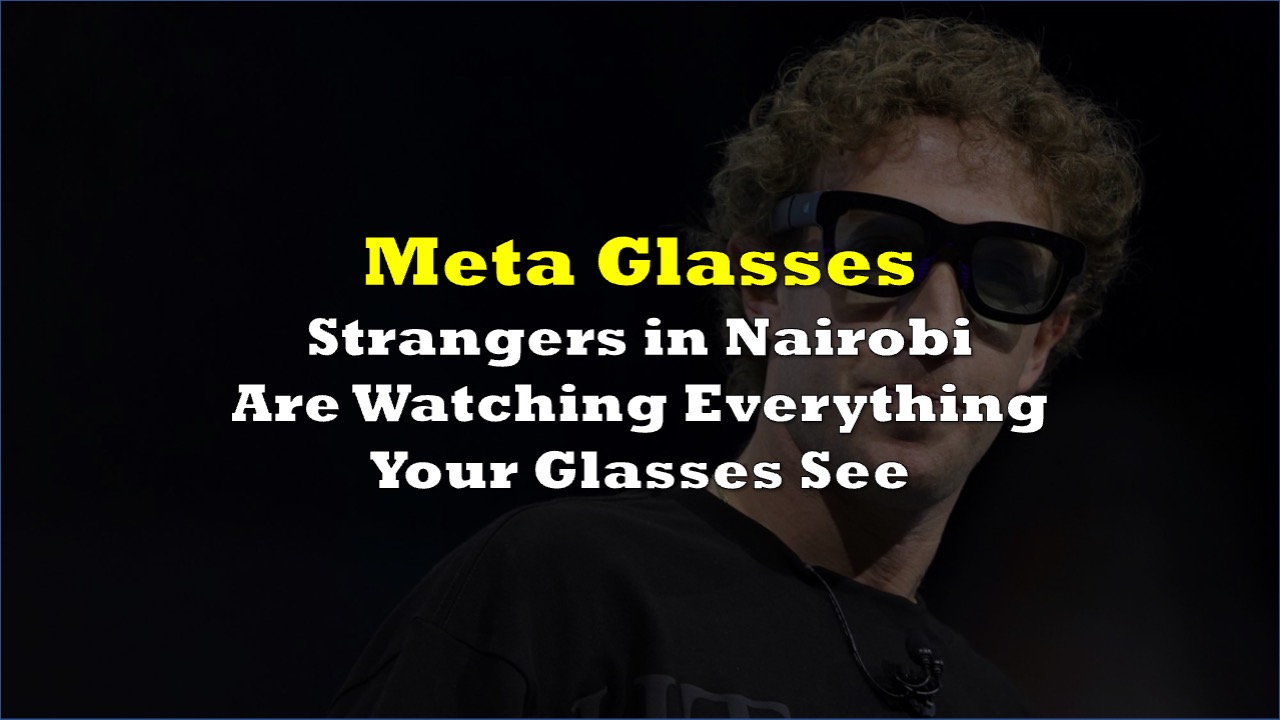

Meta Platforms (Nasdaq: META) faces mounting legal and regulatory pressure over its Ray-Ban AI glasses after a joint investigation by Swedish newspapers Svenska Dagbladet and Göteborgs-Posten found that data annotators at Sama, a Kenya-based subcontractor, reviewed sensitive footage from users’ glasses — including people undressing, using the toilet, and engaging in sexual activity — without consistent privacy protections in place.
Workers told the newspapers they felt unable to refuse the work. “You understand that it is someone’s private life you are looking at, but at the same time you are just expected to carry out the work,” one Sama employee said. “If you start asking questions, you are gone.”
Context:
— CG (@cgtwts) March 6, 2026
> Meta Platforms’s Ray-Ban Meta Smart Glasses send user video data to company servers
> footage is manually reviewed by contractors at Sama in kenya
> workers reportedly see private moments and sensitive personal details
> face blurring does not always work in certain… https://t.co/8HL6MzVrKr pic.twitter.com/cU9VC9nMpg
The investigation detailed one incident in which a man left his glasses on a bedside table and left the room; his wife later entered and changed clothes, unaware that the camera was still transmitting. The footage was routed to overseas contractors for annotation.
Meta pointed to terms of service language permitting “automated or manual (human)” review of user interactions, and said it blurs faces in footage sent to reviewers — a claim the investigation’s sources disputed.
The disclosures prompted a US class action lawsuit filed on March 4 against Meta and manufacturing partner Luxottica of America in the Northern District of California.
Plaintiffs Gina Bartone of New Jersey and Mateo Canu of California, represented by the Clarkson Law Firm, allege the companies violated privacy laws and engaged in false advertising — specifically, Meta’s marketing promise that the glasses, which retail between $299 and $799, were “designed for privacy, controlled by you.”
The UK’s Information Commissioner’s Office has also opened an investigation.
The glasses also drew scrutiny in February, when Judge Carolyn Kuhl admonished members of Zuckerberg’s legal team for wearing Ray-Ban Meta glasses into a Los Angeles courtroom during a landmark social media trial over harm to children — a venue where recording devices are prohibited.
Kuhl ordered the glasses removed immediately and warned that any captured footage must be destroyed or the team would face contempt charges.
Meta plans to introduce facial recognition to the glasses later in 2026. The feature, internally called “Name Tag,” would let wearers identify people around them in real time.
Internal documents cited by The New York Times suggest Meta viewed the current political climate as an opening to advance the feature, expecting opposition groups to be occupied elsewhere. Meta had previously abandoned facial recognition for the original Ray-Ban Stories glasses and for Facebook’s photo-tagging system over ethical and technical concerns.
Critics say the same questions remain — compounded now by glasses that are nearly indistinguishable from ordinary eyewear.
Meta and EssilorLuxottica sold more than 7 million Ray-Ban and Oakley AI frames in 2025, more than triple the prior year’s 2 million units, with capacity talks targeting 20 million annually by the end of 2026.
Information for this story was found via the sources and companies mentioned. The author has no securities or affiliations related to the organizations discussed. Not a recommendation to buy or sell. Always do additional research and consult a professional before purchasing a security. The author holds no licenses.