
The distance between Washington’s proposed Canadian auto relief and President Donald Trump’s latest tariff threat is now just five days.
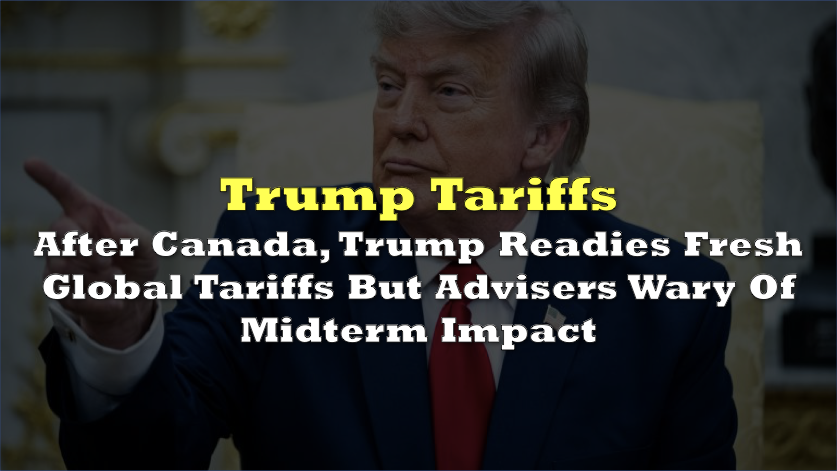
Trump said Monday that US tariffs on “all Cars, Trucks… Automotive Parts, and Steel” would rise to 50% on January 1, 2027, after US-Canada trade negotiations collapsed.
The shift is especially sharp for autos. On August 19, Reuters reported, citing a source familiar with the talks, that Washington and Ottawa were discussing cutting the top-line tariff on Canadian-built cars and trucks to 15% from 25%. The proposed deal would also have reduced steel and aluminum tariffs to 25% from 50%, subject in steel’s case to a quota structure.
 Sponsored · Cambria Gold Mines
Five days later, Trump is threatening to double the auto rate instead.
“Build in the U.S. and there are ZERO TARIFFS,” Trump wrote. “Canada will be treated like a State no longer!”
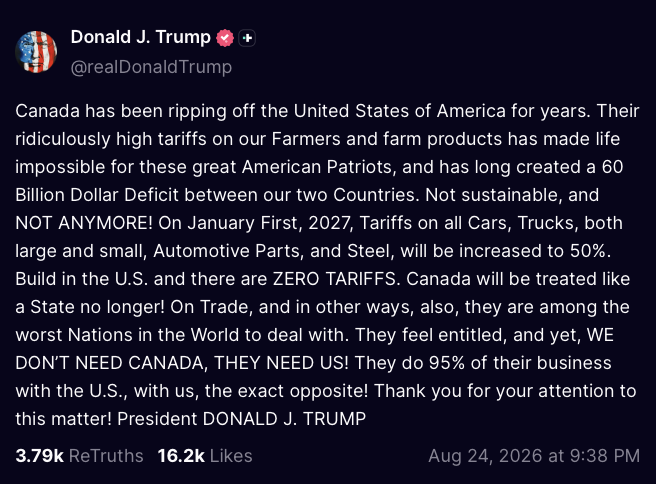
Despite his recent post, Canadian steel is already subject to a 50% US tariff, meaning Trump’s post appears to reinforce the existing steel rate rather than increase it.
The threat lands two days after a separate 50% tariff package took effect on Canadian goods under Section 338 of the Tariff Act of 1930. Reuters valued the affected Canadian exports at about US$20 billion, while Prime Minister Mark Carney described them as roughly $28 billion. The measures cover products including dairy, wine, furniture, cement, clothing, fishing rods, and hockey equipment.
Canada has promised dollar-for-dollar countertariffs beginning September 8. Ottawa said its response will target sectors including steel, dairy, appliances, agricultural equipment, pulp and paper, and electronics.
The auto escalation carries particular exposure for Canada. Statistics Canada says more than 93% of Canadian motor vehicle exports went to the USin 2025. In 2024, motor vehicles and parts were Canada’s most US-dependent major export category, with 94.1% of domestic exports going south of the border.
Markets reacted quickly Monday. Ford shares down 3% and General Motors down 1.2%, while several US auto-parts retailers moved higher.