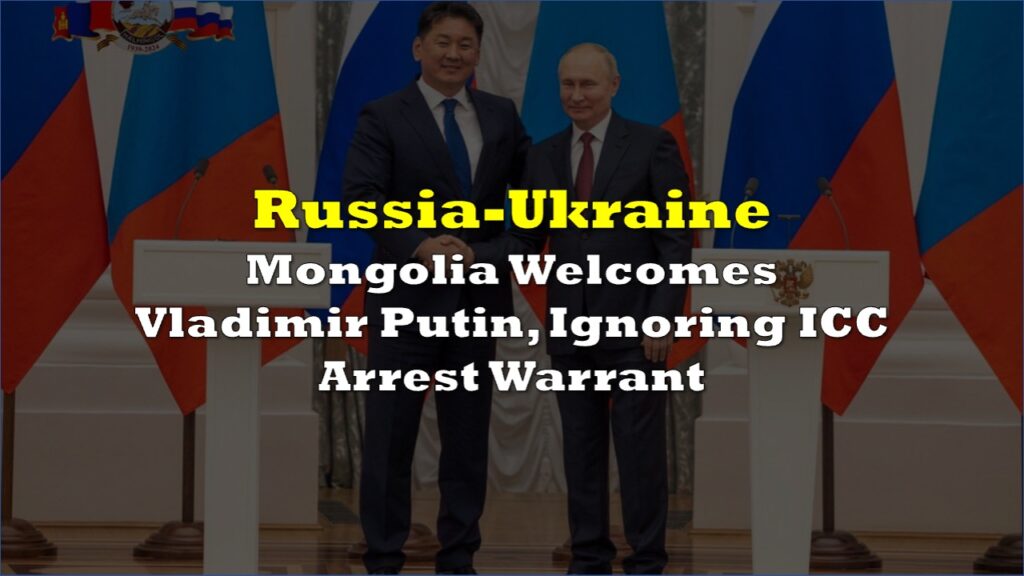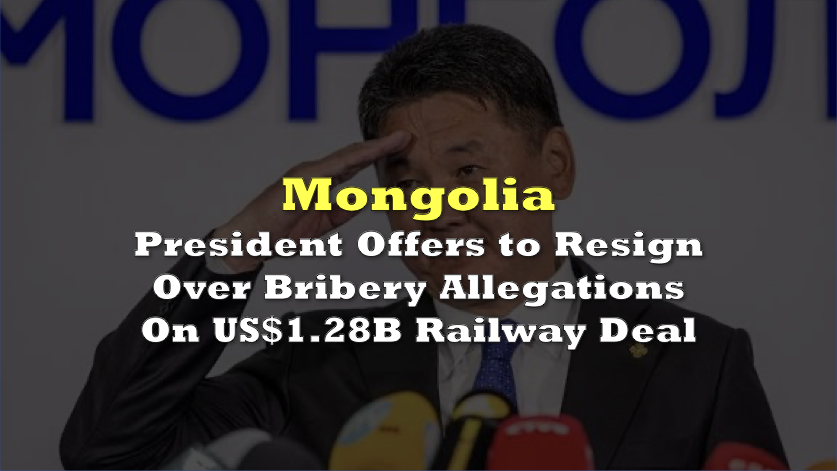

A US$1.28 billion railway agreement once flagged in an International Monetary Fund review of Mongolia’s opaque coal-backed financing arrangements has become the center of a presidential crisis, after President Khurelsukh Ukhnaa offered to resign Tuesday over allegations that he accepted US$25 million in bribes connected to the project.
The controversy concerns the Tavantolgoi-Gashuunsukhait railway, a strategic route connecting Mongolia’s coal-producing region with the Chinese border. The project was awarded to Bodi International in 2019, when Khurelsukh was prime minister.
According to the IMF’s October 2023 assessment, the railway carried a contractual value of US$1.282 billion, comprising US$386 million in cash payments and US$896 million backed by coal deliveries from state-owned mining company Erdenes Tavan Tolgoi.
 Sponsored · Cambria Gold Mines
The railway was part of four infrastructure financing agreements valued at approximately US$3.4 billion. The IMF identified transparency concerns and pricing arrangements that reduced the proceeds Mongolia could obtain from its coal exports.
US$3.4 billion in coal deals
The IMF’s 2023 assessment documented how Mongolia financed infrastructure through agreements backed by future commodity exports rather than relying exclusively on conventional funding.
Under the four agreements, Erdenes Tavan Tolgoi was expected to meet approximately US$2.3 billion of its obligations through coal shipments and US$1.1 billion through cash payments.
The IMF found that contractual pricing mechanisms produced coal prices averaging approximately 10% below market levels across the projects. Because repayment obligations were fixed in US dollars, discounted prices meant larger quantities of coal were required to satisfy those obligations.
 Sponsored · Selkirk Copper Mines
This reduced the volume available for sale at market prices and weakened export earnings.
The IMF also reported that the agreements were originally protected by confidentiality provisions and had not been submitted to parliament for approval. Following protests in December 2022 over alleged coal theft, Mongolia moved to disclose contracts and commission external examinations of the state miner’s operations.
Five contracts involving Bodi International were subsequently declassified, while confidentiality restrictions prevented full disclosure of agreements involving Chinese contractor NORINCO.
The IMF estimated that infrastructure imports associated with the agreements had contributed to an approximately US$800 million drain on Mongolia’s gross international reserves by the end of 2022.
US$25 million allegation reopens railway controversy
The latest confrontation began on November 14, when former Ulaanbaatar mayor Khishgee Nyambaatar, a member of a rival faction within the ruling Mongolian People’s Party, accused Khurelsukh of receiving US$25 million linked to the railway contract.
According to the AP News, the allegations include claims that the contract was awarded without competitive bidding and that Bodi International provided payments to senior officials. Khurelsukh has denied the allegations.
Bodi International also rejected the accusations in a statement Monday, saying the claims about cash bribes were unfounded.
The company maintained that a 286 billion tögrög advance payment was used for its intended construction purposes. It also denied increasing the project’s agreed costs during implementation and said it had cooperated with previous audits and investigations.
The company disputed allegations involving US$110 million in cash payments, saying its project financing had been spent on construction.
Investigators previously rejected US$110 million cash claim
The presidential resignation announcement followed an earlier finding that complicates the wider corruption accusations. On November 9, Mongolia’s anti-corruption agency said investigators had found no evidence supporting claims that US$110 million in railway advance payments had been withdrawn and distributed in US-dollar cash.
According to Mongolian outlet iKon.mn, investigators identified a 286 billion tögrög advance-payment transaction instead.
The agency said two internationally licensed auditing firms had reviewed Bodi International’s financial activities for 2020 through 2025. Investigators had obtained those reports and were conducting a financial investigation.
The November 9 disclosure concerned an earlier allegation that US$110 million was distributed to politicians. It did not conclusively resolve the newer US$25 million accusation against Khurelsukh.
The distinction became politically significant after Mongolia’s opposition Democratic Party escalated its demands on November 16.
All 42 members of the party’s parliamentary caucus supported establishing a temporary investigative committee. The opposition also demanded publication of Erdenes Tavan Tolgoi’s coal offtake agreements and investigations into officials implicated in the allegations.
President offers to step down
Khurelsukh announced on Tuesday that he would relinquish his presidential duties and cooperate with investigators.
“The Democratic Party has said that I should step down from my duties so that the truth can be established. I agree with this,” he said in remarks carried by state news agency MONTSAME.
“I will therefore hand over my duties as President of Mongolia. I will be investigated and will have my honor restored.”
Khurelsukh has served as president since 2021, following his previous term as prime minister.
Deputy Justice and Home Affairs Minister Munkh-Erdene Dembereltseren and Cabinet Secretariat chief Enkhbayar Battumur, both named in the accusations, also announced plans to resign, according to the AP News.
The president’s announcement does not immediately remove him from office. Mongolia’s 126-member parliament, the State Great Khural, must approve the resignation. If accepted, parliamentary speaker Sandag Byambatsogt would assume presidential duties until a successor is inaugurated.
A presidential election would need to take place within four months.
The latest political crisis comes as Mongolia continues efforts to strengthen oversight of its mining sector. In its August 2026 assessment, the IMF again identified weaknesses in public-sector governance, resource-sector contract transparency, and anti-corruption safeguards.
The institution reported that auction-based coal sales accounted for 24% of Mongolia’s coal exports in 2025, reflecting progress toward more transparent pricing while calling for further governance reforms.