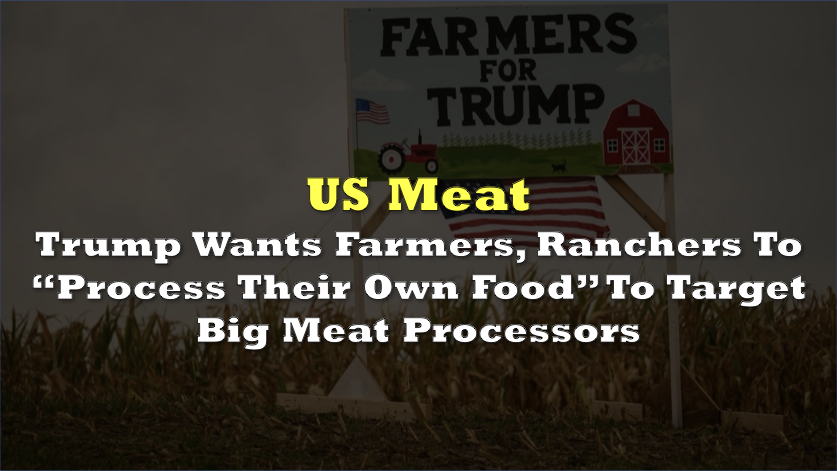

President Donald Trump is moving to loosen the link between American ranchers and the handful of companies that dominate beef processing, but the economic significance of his plan will depend on whether the administration goes beyond a right farmers already possess.
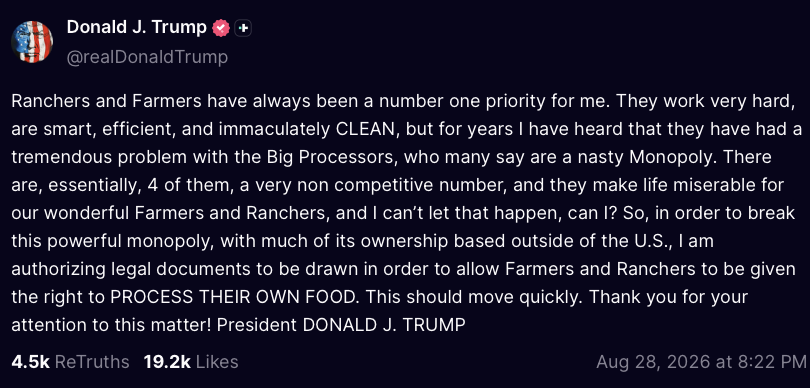
Trump said Friday that he had authorized legal documents to be drafted allowing farmers and ranchers to “PROCESS THEIR OWN FOOD,” while accusing large processors of operating what he called a “nasty Monopoly.”
The distinction matters because federal law already exempts farmers from federal meat inspection when they slaughter livestock they raised for their own household, employees, and nonpaying guests.
 Sponsored · Selkirk Copper Mines
The commercial barrier sits elsewhere. Under the Federal Meat Inspection Act and USDA regulations, meat produced through the livestock custom exemption must remain separate from products intended for sale and be marked “Not for Sale.” Meat entering the normal commercial market is generally subject to federal or qualifying state inspection requirements.
The announcement escalates an existing administration campaign against the four largest beef processors. The White House identifies JBS, Cargill, Tyson Foods, and National Beef as the “Big Four,” saying they collectively control about 85% of the US beef processing market, compared with 36% in 1980.
Trump directed the Justice Department in November 2025 to investigate major meatpackers for potential collusion, price fixing, and price manipulation.
DOJ Deputy Assistant Attorney General Nicole Sarrine said in June that the investigation was “well under way,” while stressing that investigators had not reached conclusions about wrongdoing.
The administration’s competition push is unfolding alongside a physical shortage of cattle. USDA counted 94.2 million cattle and calves on US farms as of July 1. Beef cows fell 1% from a year earlier to 28.5 million, while the projected 2026 calf crop dropped 2% to 32.5 million head.
USDA now forecasts beef and veal prices will rise 9.8% in 2026, after federally inspected beef production fell nearly 5% in July. Consumer prices for beef and veal were already 9.4% higher year over year in July, including a 13.5% increase for uncooked beef roasts.
Trump has simultaneously moved to increase beef supply through imports. On Wednesday, he expanded the 2026 tariff-rate quota for lean beef trimmings by 300,000 metric tons, split into three monthly tranches beginning September 1.