
U.S. President Donald Trump escalated tensions with Iran to a boiling point, warning in a social media post that ‘a whole civilization will die tonight, never to be brought back again’ if Iran fails to reopen the Strait of Hormuz by his 8 p.m. ET deadline on Tuesday. The ultimatum comes as the U.S. and Israel intensify military strikes, including a recent attack on Kharg Island, Iran’s critical energy hub responsible for 90% of its oil exports.
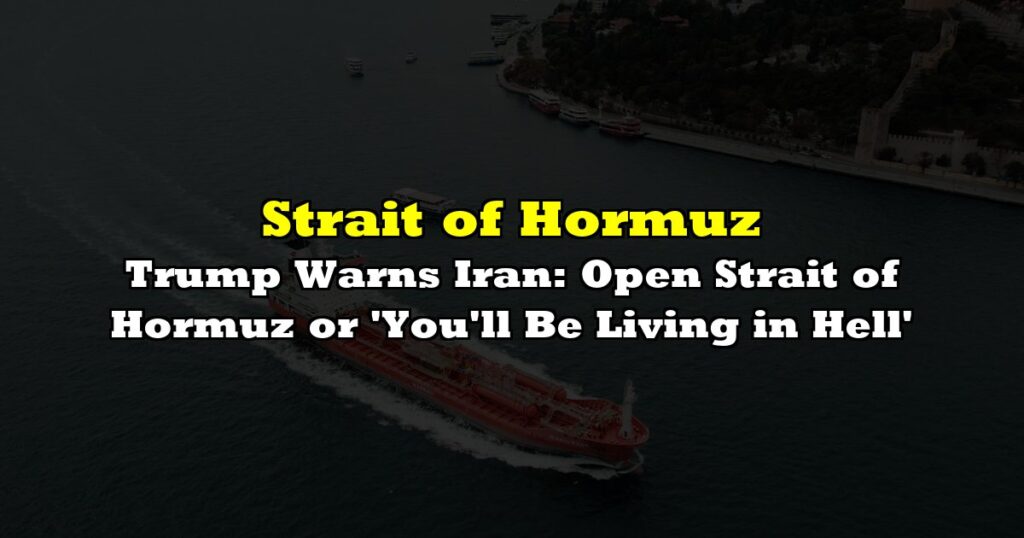
The Strait of Hormuz, a vital chokepoint for global oil shipments, remains a flashpoint in the conflict. Iran has rejected a 45-day ceasefire proposal from the U.S., instead mobilizing civilians to form human chains around potential targets. Meanwhile, Iranian state media has threatened retaliation against Saudi oil infrastructure and other Gulf facilities if the U.S. targets Iran’s power plants, signaling a potential widening of the conflict with ‘heavy costs’ for American interests.
Iranian state media threatens to target Saudi oil infrastructure and Gulf facilities if the US strikes Iran's power plants, warning of "heavy costs" for the United States.
— The Dive Feed (@TheDeepDiveFeed) April 7, 2026
The human toll of the war continues to mount. Over 1,900 deaths have been reported in Iran, alongside 1,400 in Lebanon and 23 in Israel, with additional casualties across the region, including 13 U.S. service members and 11 Israeli soldiers. World leaders, including Canadian Prime Minister Mark Carney and UN Secretary General António Guterres, have urged all parties to adhere to international law and avoid targeting civilians or civilian infrastructure.
Military preparations are ramping up as the deadline approaches. B-52 bombers have been observed departing RAF Fairford in the UK, with flight times placing them within striking range of Iran by evening. The Pentagon has also developed strike options for Trump that include dual-use military and civilian infrastructure, raising concerns about the scope of potential attacks.
Pentagon has developed military strike options for Trump targeting both dual-use military and civilian infrastructure, per NBC reporting.
— The Dive Feed (@TheDeepDiveFeed) April 7, 2026
The White House has denied that VP Vance's recent Iran military remarks implied a potential US nuclear strike.
— The Dive Feed (@TheDeepDiveFeed) April 7, 2026
Despite the saber-rattling, there are glimmers of diplomatic maneuvering. Trump indicated in a Fox News interview that he might delay escalating sanctions on Iranian infrastructure targets for a fourth time, citing progress in ongoing negotiations. The White House has also pushed back against speculation of nuclear involvement, denying that recent remarks by Vice President Vance implied such a drastic measure.
Trump told Fox News he may delay escalating sanctions against Iranian infrastructure targets based on ongoing negotiation progress, marking a potential fourth extension.
— The Dive Feed (@TheDeepDiveFeed) April 7, 2026
B-52 bombers continue departing RAF Fairford with ~7 hour flight times placing them in striking range of Iran by evening.pic.twitter.com/H9Sxdy9x47
— The Dive Feed (@TheDeepDiveFeed) April 7, 2026
On the international stage, efforts to secure the Strait of Hormuz have hit a wall. China and Russia vetoed a UN Security Council resolution aimed at protecting commercial shipping in the waterway, with 11 members voting in favor and two abstaining. U.S. Ambassador Mike Waltz condemned the vetoes, accusing Iran of blocking medical aid and supplies to humanitarian crises in Congo, Sudan, and Gaza by shutting the strait.
Pressure is mounting on Trump from multiple fronts. While some in Congress and his administration push for any deal to de-escalate, Israeli Prime Minister Benjamin Netanyahu advocates for continued strikes to extract a harsher agreement from Iran. With Kharg Island already under fire, a sustained attack on Iran’s oil infrastructure could spike global gas prices for years, reshaping energy markets worldwide.
The stakes couldn’t be higher as the clock ticks toward 8 p.m. ET. A failure to reopen the Strait of Hormuz could trigger a cascade of economic disruption, with over 20% of the world’s oil supply at risk of being choked off in the narrow waterway.
Information for this story was found via the sources and companies mentioned. The author has no securities or affiliations related to the organizations discussed. Not a recommendation to buy or sell. Always do additional research and consult a professional before purchasing a security. The author holds no licenses.