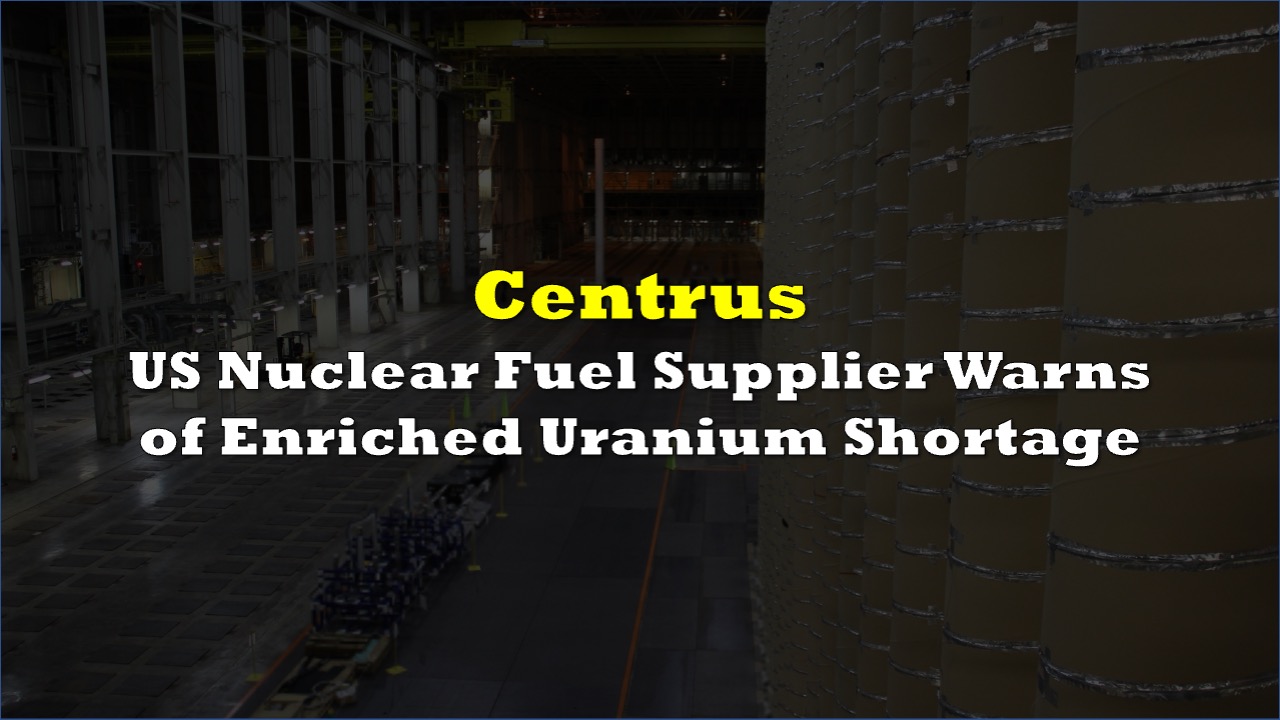

Centrus Energy CEO Amir Vexler warned that surging nuclear demand and a hard ban on Russian imports threaten to open a critical “supply gap” in the country’s enriched uranium supply chain.
Russia controls roughly 44% of global uranium enrichment capacity. It supplies approximately 35% of US nuclear fuel imports — a dependence rooted in the post-Cold War Megatons to Megawatts program, which converted decommissioned Soviet warheads into commercial reactor fuel.
President Biden signed the Prohibiting Russian Uranium Imports Act on May 13, 2024, with limited waivers permitted until the full ban takes effect on January 1, 2028.
There might not be enough time to catch up with the demand. Industry experts say replacing Russian enrichment capacity will take six to seven years — several years longer than the window before the 2028 cutoff.
That gap widens further as President Trump signed four executive orders directing the Department of Energy to facilitate 5 gigawatts of power uprates and have 10 new large reactors under construction by 2030, with an overarching goal of quadrupling US nuclear capacity from roughly 100 gigawatts today to 400 gigawatts by 2050.
Tech companies have added more pressure, staking significant portions of their data center power strategies on new or reactivated nuclear facilities.
Congress allocated $3.4 billion and selected six companies to expand domestic enrichment capacity. Centrus secured a $900 million award to scale up its American Centrifuge Plant in Piketon, Ohio — the only US facility licensed to produce high-assay low-enriched uranium, the advanced fuel required for next-generation reactors.
The Department of Energy does not expect new enrichment capacity to come online until 2029, with peak production not projected until the early 2030s. Some international producers have compounded the outlook further by signaling production cuts, citing insufficient returns on the capital required to scale quickly.
Centrus currently holds a $2.9 billion contract backlog extending to 2040, underscoring how aggressively utilities are already moving to lock in long-term fuel supply.
Information for this story was found via the sources and companies mentioned. The author has no securities or affiliations related to the organizations discussed. Not a recommendation to buy or sell. Always do additional research and consult a professional before purchasing a security. The author holds no licenses.