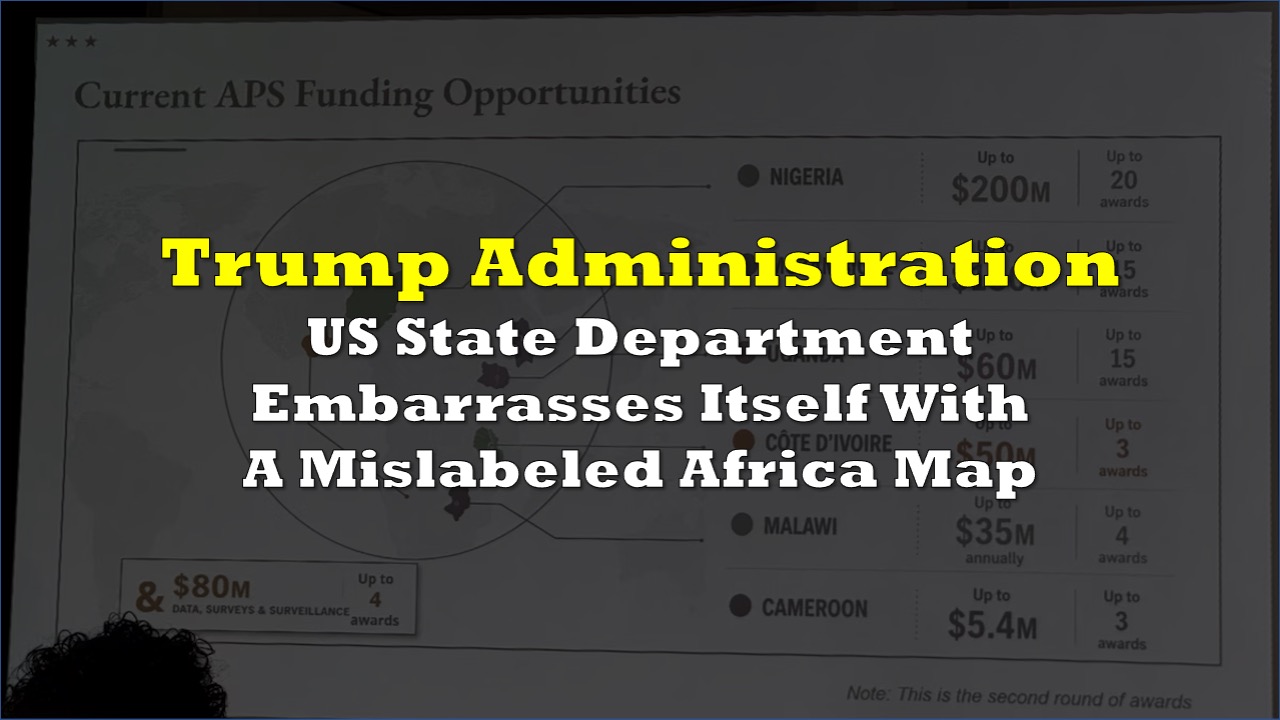

A State Department presentation at the AIDS 2026 conference in Rio de Janeiro showed a map of Africa meant to highlight six countries receiving new US health funding. It got every single one wrong.
Nigeria, which in real life has a coastline, showed up landlocked in the Sahara. Mozambique, a southeastern nation, got moved up to the Horn of Africa. Côte d’Ivoire landed on the continent’s opposite side from where it really is. Cameroon got a mention, but it wasn’t on the map.
Reuters traced a watermark on the image back to OpenAI’s tools. Matt Petit, who studies AI and geopolitics at the Atlantic Council, said whoever built the slide “did not know where countries in Africa are.”
 Sponsored · Selkirk Copper Mines
Jeff Graham, the acting US Global AIDS Coordinator who leads the State Department’s PEPFAR program, delivered the presentation himself. He didn’t respond to requests for comment.
The map appeared partway through a presentation about the department’s Annual Program Statement funding for African AIDS prevention programs. The session was attended by Nigeria’s Director General. Emily Bass, the AIDS policy expert whose Substack post first surfaced screenshots of the slide, called the error “not only disrespectful to African collaborators, it’s also a significant tell.”
A State Department spokesperson said the error came from “a team member who hastily altered the slide deck immediately before the presentation,” and that the department takes full responsibility for the confusion it caused, including for the African partners in the room.
DOGE gutted USAID starting in early 2025, separating all roughly 10,000 of its staff by July, while the State Department absorbed what remained of the agency’s foreign aid programs.
Cameron Hudson, a former State Department and National Security Council official who worked on Africa policy, said the map reflects what happens when you fire a third of the department’s staff, strip out layers of bureaucracy, and leave junior employees producing work with no real oversight.