
The US is turning tungsten scrap and recycled battery material into captive domestic feedstock, ordering sellers to direct 100% of covered monthly sales to US buyers for one year. The policy also leaves a path for material to be processed abroad and returned, preserving foreign refining access while Washington attempts to pull strategic resources back inside its borders.
The Bureau of Industry and Security rule, scheduled for publication on August 6, requires tungsten waste, tungsten scrap, and qualifying lithium-ion battery black mass to remain physically in the United States unless BIS grants an adjustment or exception. The sales mandate begins 21 days after publication, placing the expected start date on August 27, 2026. It is scheduled to expire on August 27, 2027, unless extended or replaced.
The intervention does not create a conventional export prohibition under the Export Administration Regulations. Instead, Commerce is using the Defense Priorities and Allocations System to require US persons selling covered materials to allocate their supply domestically.
 Sponsored · Cambria Gold Mines
Any separate export-control licenses that may be required will still apply. US Customs and Border Protection may detain covered shipments while BIS reviews them, and Commerce may investigate violations, seek injunctions, or pursue penalties under the Defense Production Act framework.
BIS will consider exemptions when compliance would cause exceptional hardship, irreparable harm, or an outcome contrary to the Defense Production Act. Sellers may also seek authorization to ship material overseas for processing or refining when the recovered material will be returned to the US.
Commerce said it intends to respond to requests within 14 days, although submitting a request does not suspend the domestic-sales requirement unless BIS grants temporary relief.
That foreign-processing provision is central to the policy’s structure. The US can prevent scrap from leaving more quickly than it can establish every refining and conversion stage needed to transform waste into battery-grade chemicals, tungsten powder, or finished carbide products.
 Sponsored · Silver47 Exploration Inc.
The Energy Department opened up to $500.0 million in additional funding in March to expand domestic critical-material processing, battery manufacturing, and recycling. The program specifically supports facilities recovering lithium, graphite, nickel, copper, aluminum, and other battery materials from scrap and end-of-life products.
The new rule does not announce a federal purchase commitment, a price floor, or compensation for sellers that lose access to higher-paying foreign bidders. Commerce classified the measure as a significant regulatory action, but not an economically significant one, and did not publish a dollar estimate of affected trade, compliance costs, or expected domestic investment.
The tungsten order lands in a market where the US has not commercially mined the metal since 2015. China accounts for about 80% of global mined production and introduced export controls covering selected tungsten products in February 2025. The US Geological Survey said tungsten prices rose sharply throughout 2025 following those restrictions.
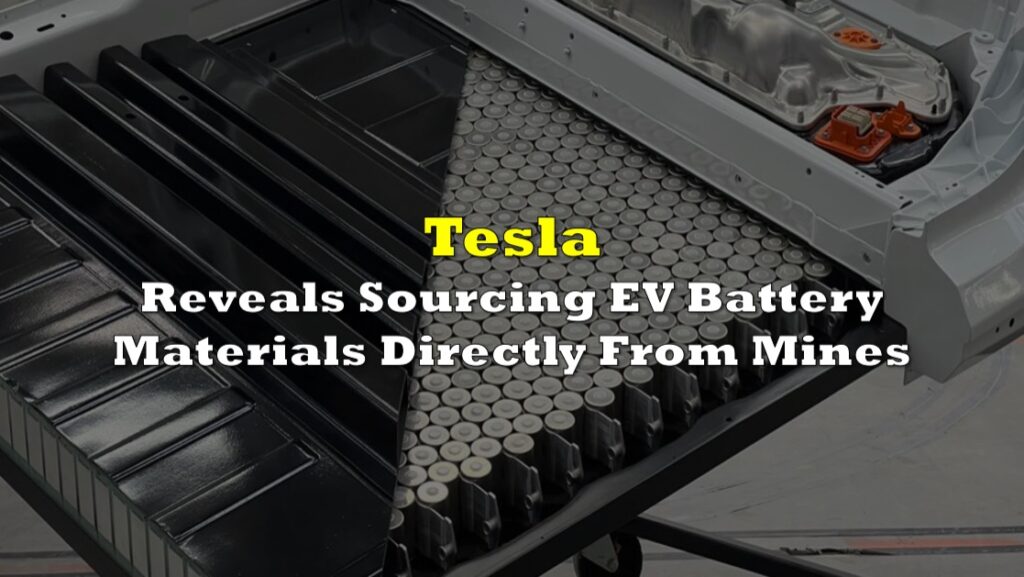
For batteries, BIS defines black mass as shredded lithium-ion battery scrap containing cathode materials, anode materials, or residual cell components. Those materials may include lithium, cobalt, nickel, manganese, graphite, silicon, aluminum, copper, and iron.
Reuters previously reported that the US exports nearly 33,000 metric tons of electronic waste per month, citing Basel Action Network data.
The policy could expand. President Donald Trump’s July 30 determination covers a wider category of recoverable critical materials, including end-of-life rare-earth permanent magnets, manufacturing swarf, and other mineral-containing waste.
BIS said it may add more materials through later Federal Register notices.