
On December 7, the National Electric Highway Coalition (NEHC) announced ambitious plans to build a U.S. coast-to-coast fast-charging network for electric vehicles (EVs) by year-end 2023. The coalition consists of fifty investor-owned electric utilities and two large non-publicly owned utilities. Together the group serves much of the population of the U.S.
While on its surface, such an announcement sounds more like positive PR than an effective plan, we think the Coalition’s action could provide an important boost for the EV industry. The key is that all utility stakeholders seem likely to be in favor of the concept, which could entail billions of dollars of spending.
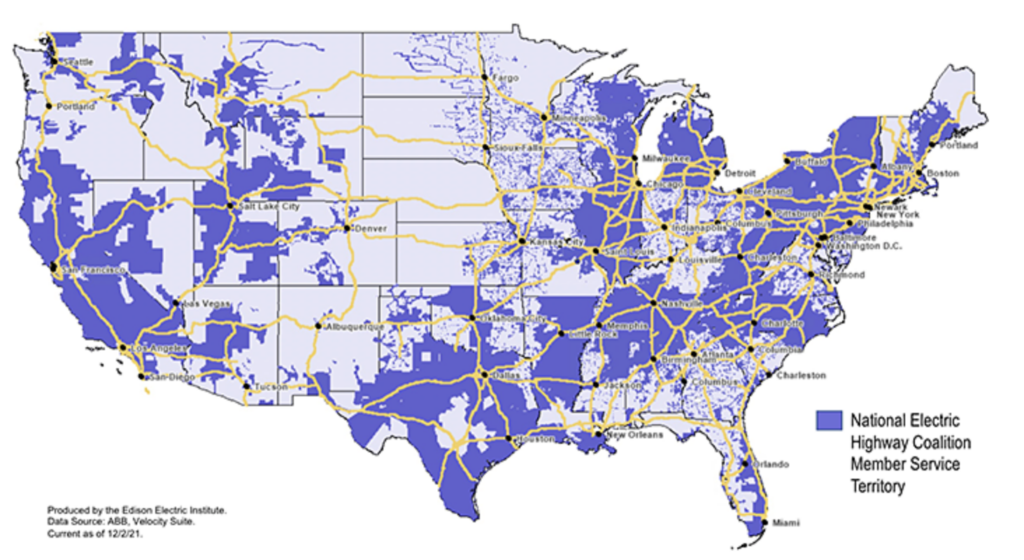
In more detail, each utility would need to seek approval from the state regulatory commissions that govern their rates and spending to make such investments and to earn a return of and on those investments. Earning such returns would boost a utility’s operating cash flow and earnings power so the utility would be incented to make the capital expenditures. In addition, the utility would sell incremental kilowatt-hours of electricity to the network as drivers use the charging devices, further boosting its earnings.
 Sponsored · Selkirk Copper Mines
State regulatory authorities seem likely to approve the spending as the move toward EVs and away from gasoline-powered cars has been enthusiastically embraced by many types of government authorities and consumers. Indeed, commissions have already granted regulatory approval to electric utility companies in more than 35 states and the District of Columbia for pilot projects with aggregate spending budgets of around US$3 billion.
Importantly, U.S. politicians do not need to approve the spending and the network investment would in effect by paid for via fairly modest increases in the electric bills of a huge number of ratepayers. A politician does not need to make a possibly politically-charged vote to build out the network.
The US$1.2-trillion infrastructure bill that President Biden recently signed into law includes about US$7.5 billion in federal spending earmarked for charging networks, but the overall build-out cost is likely to be much higher. For example, the International Council on Clean Transportation estimates that 2.4 million chargers, including 180,000 direct-current fast chargers, will be needed to cover the U.S. by 2030. Since a fast charger’s all-in cost, including installation, is in the vicinity of US$75,000, the total U.S network build-out cost by 2030 could amount to about US$28 billion.
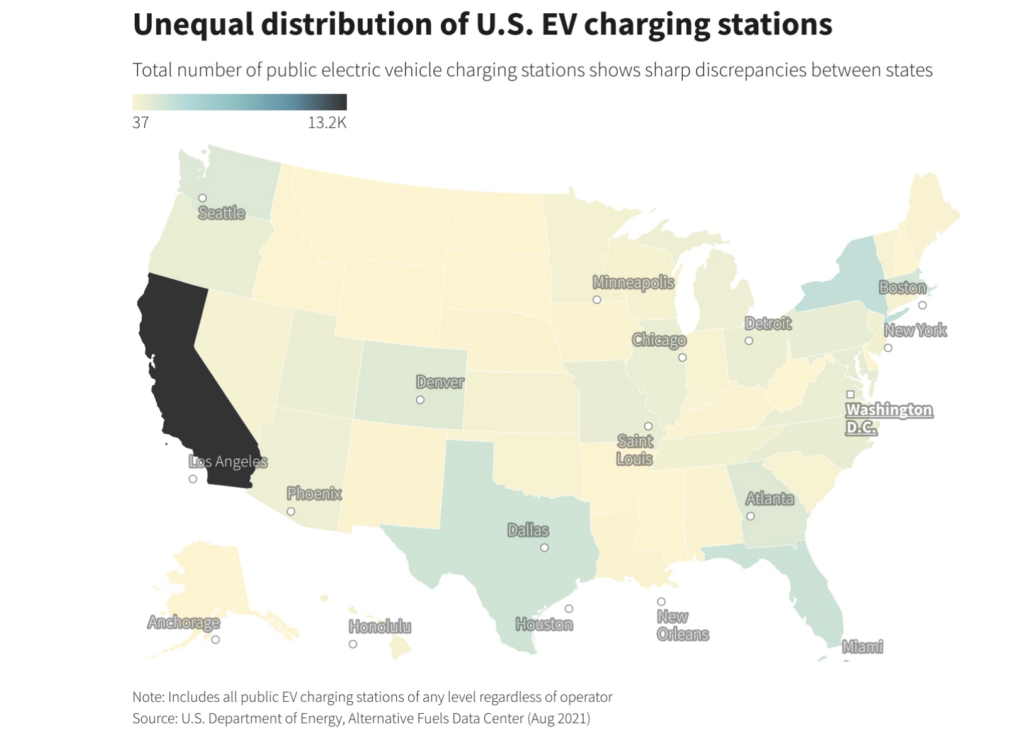
As of mid-2021, the U.S. Department of Energy estimated that around 42,000 public charging stations were operating in the U.S., including only 5,000 direct-current fast chargers. As might be expected, most charging stations are concentrated in California.
The plan articulated by the NEHC should be considered a long-term positive for all participants in the EV industry — OEMs, materials suppliers like lithium and nickel miners, and of course manufacturers of charging technology such as ChargePoint Holdings, Inc. (NYSE: CHPT) and Blink Charging Co. (NASDAQ: BLNK).
Information for this briefing was found via Edgar and the companies mentioned. The author has no securities or affiliations related to this organization. Not a recommendation to buy or sell. Always do additional research and consult a professional before purchasing a security. The author holds no licenses.