
Oil’s drop below $80 is a cleaner headline than it is a clean market signal.
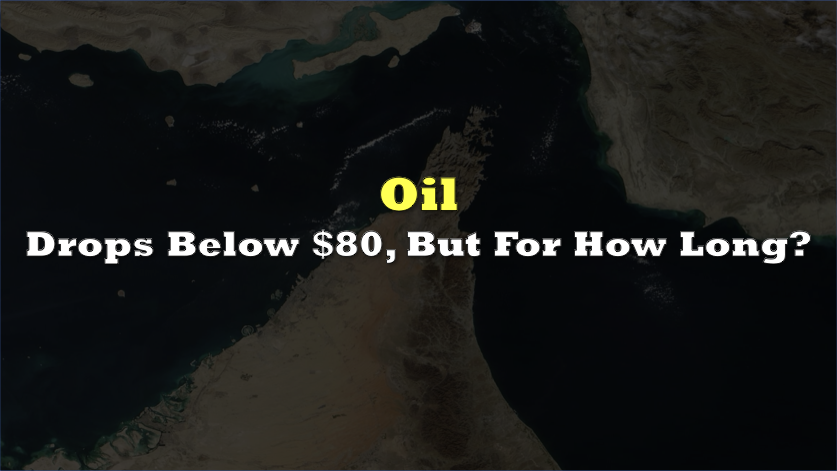
WTI fell to $78.27 a barrel on Tuesday, breaking below the psychological level for the first time since early March, according to Reuters. Brent also fell but remained above the same line at $80.69.
The immediate trade was built around the US-Iran peace framework. Reuters reported that crude fell nearly 3% as markets weighed a preliminary agreement that could lead to the reopening of the Strait of Hormuz, a route that normally carries about one-fifth of global oil shipments.
 Sponsored · Altamira Gold Corp.
But the more important question is no longer whether traders believe the worst-case scenario has become less likely, it is whether the oil market has already priced a smoother recovery than the shipping system, inventories, and demand outlook can support.
Prices moved but can the ships?
A futures contract can remove a war premium in seconds. A tanker route cannot reopen that way.
Iran and the US are expected to hold further talks in Switzerland toward a final agreement. However, Reuters report said full tanker traffic through the Strait of Hormuz has not yet resumed and remains dependent on mine-clearing and safety assurances. It also reported that some oil has been moving covertly with US military assistance.
READ: No Tolls, Just Fees: Iran’s Hormuz Play
 Sponsored · Cambria Gold Mines
That is the core risk in the current selloff. The market has not only priced peace, but the logistics of peace.
But the drop is not being driven by diplomacy alone. The US Energy Information Administration said in its June Short-Term Energy Outlook that it expects global oil demand to fall in 2026, limiting the price impact from Hormuz disruptions. The agency also expects oil shipments through the strait to resume in Q3 2026, but not to return to pre-conflict traffic levels until early 2027.
Reuters also reported weakening physical demand and sharply lower Chinese oil imports as part of the market backdrop.
The same report said that Citi cut its Brent crude forecasts to $75 a barrel for Q3 2026 and $70 for Q4. The bank also lowered its 2027 Brent forecast to $65 from $80.
Citi’s view is built around a 60% probability that the US-Iran memorandum leads to normalized trade flows through Hormuz by mid-to-late July, according to Reuters.
The longer the process drags, prices may have to rebuild some of what traders just removed.
For now, oil below $80 signals that traders have reduced the price of geopolitical fear. The next confirmation will come from ship-tracking data, inventory reports, insurance conditions, and whether Brent follows WTI lower without needing a fresh diplomatic push.
Information for this story was found via the sources and companies mentioned. The author has no securities or affiliations related to the organizations discussed. Not a recommendation to buy or sell. Always do additional research and consult a professional before purchasing a security. The author holds no licenses.