
Canada’s housing affordability crisis has a price tag now. Had the country’s construction industry responded to demand as fluidly as its American counterpart, housing starts between 2006 and 2024 could have been nearly 30% higher and home prices close to 10% lower over the same period, according to CMHC analysis released Thursday.
The figures come from scenarios run through CMHC’s Integrated Housing Model, calibrated using OECD research. The central variable was housing supply elasticity. Analysts raised it to levels closer to those observed in the U.S. and measured what Canadian outcomes might have looked like.
Two structural forces explain the gap. The first is regulation. Tighter zoning and land use rules, particularly in major urban centres, have made it materially harder to add new supply quickly. The U.S. faces fewer such constraints across many of its metropolitan areas. The second is geography. Canadian housing demand clusters in a small number of large cities, which leaves households with fewer comparable alternatives when they want to move and reduces competitive pressure on developers to respond fast.
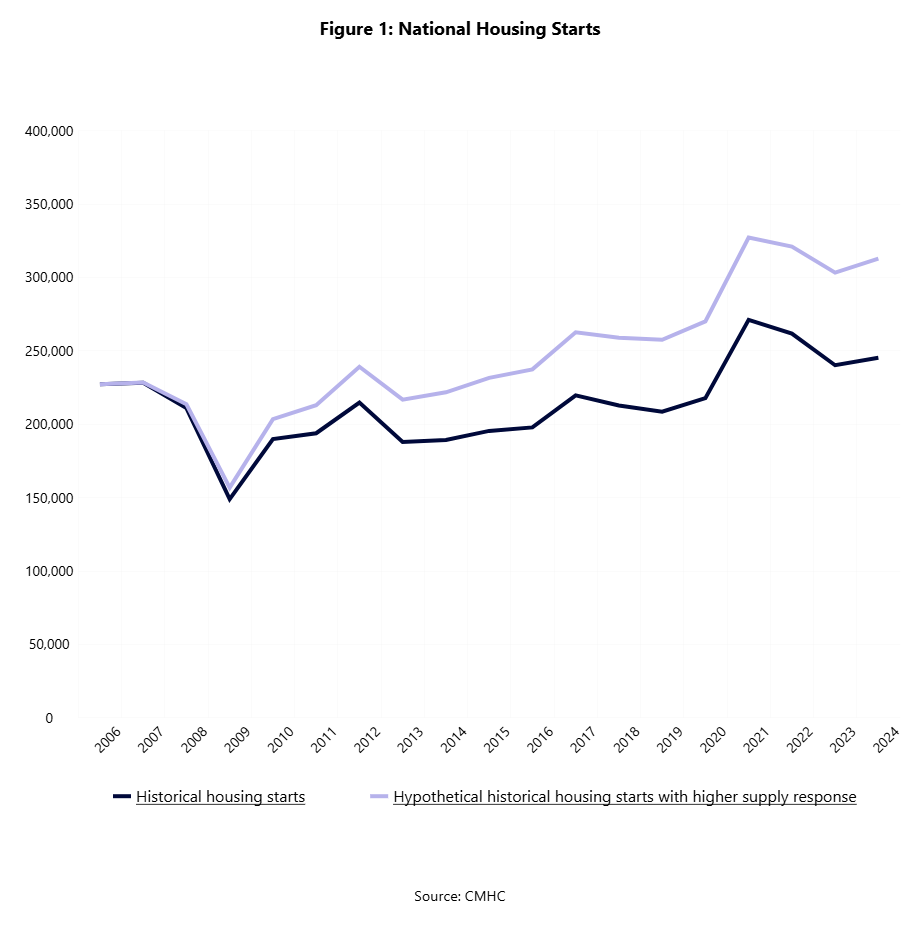
The U.S. benefits from a broader network of major cities with comparable job markets. That distribution spreads demand more evenly and supports a more reactive construction industry.
 Sponsored · Altamira Gold Corp.
One area where both countries look alike is labour productivity. American residential construction has suffered long-term declines in output per worker that closely mirror Canada’s, except during the pandemic. That shared weakness points away from productivity as the culprit, and squarely toward zoning and urban concentration.
The analysis extends a body of work CMHC has built since a 2018 report on escalating house prices, with subsequent updates tracking the widening supply shortfall. The agency has also previously examined how demand-side initiatives erode affordability when supply fails to keep pace.
Information for this story was found via the sources and companies mentioned. The author has no securities or affiliations related to the organizations discussed. Not a recommendation to buy or sell. Always do additional research and consult a professional before purchasing a security. The author holds no licenses.