

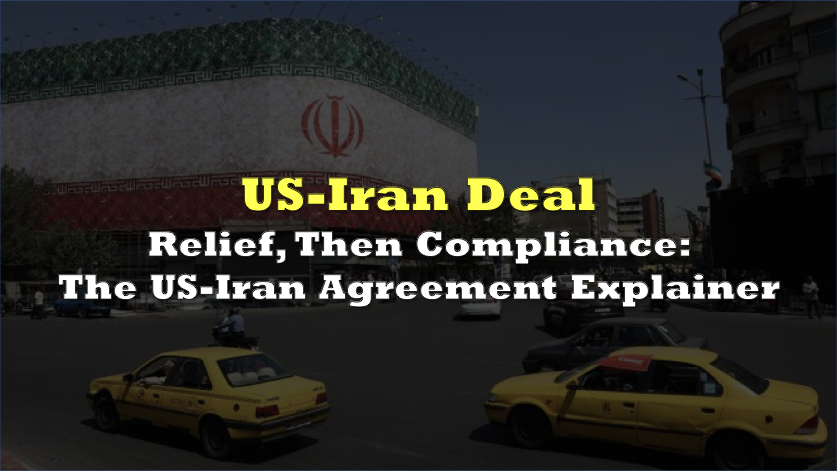

The US-Iran memorandum now circulating through official briefings and wire reports is not built like a final settlement but a down payment.
Iran would get access to the two things it needs fastest: energy-market reopening and financial relief. Washington would get a ceasefire framework, a promise that Iran will not produce a nuclear weapon, and a two-month runway to turn those commitments into something enforceable.
That tradeoff is the deal’s central risk. The first benefits are measurable in shipping, oil sales, insurance, banking channels, and frozen funds. The final concessions are still largely stuck in future-tense language.
 Sponsored · Selkirk Copper Mines
Reuters reported that it reviewed a 14-point draft of the memorandum:
- Immediate end to hostilities: The first point calls for an immediate and permanent halt to hostilities involving the US, Iran, and their allies.
On paper, this is the stabilizing clause. It gives both sides a way to step back without declaring defeat. For markets, it lowers the risk of a wider regional war. For governments, it creates the minimum condition for diplomacy to restart.
The weakness is enforcement. A ceasefire is only as strong as the parties’ shared definition of who counts as an ally, what counts as a violation, and who gets to respond if a proxy force, militia, or third country keeps fighting. - Sovereignty and non-interference: The second point commits both sides to respect sovereignty and avoid interference in domestic affairs.
For Iran, this is politically valuable. It allows Tehran to frame the agreement as recognition of regime authority, not capitulation under pressure.
For Washington, it is more complicated. The US has spent years framing Iran’s regional conduct, missile program, and security apparatus as direct threats. A non-interference pledge may help secure a truce, but it also risks narrowing Washington’s rhetorical space if unrest, repression, or proxy activity becomes part of the dispute. - A 60-day negotiating window: The memorandum gives the sides two months to turn the framework into a final comprehensive agreement. That is where the hard issues are supposed to be settled, including nuclear restrictions, sanctions relief, verification, and implementation.
That structure creates a leverage question. If Iran receives early relief and the final agreement stalls, Washington may have already surrendered part of its pressure campaign. If relief is tightly sequenced and reversible, the 60-day period becomes a controlled test. - US lifting of the naval blockade: The fourth point requires the US to end blockade measures affecting Iran.
Lifting it would reduce immediate pressure on Iran’s ports and maritime trade. It would also tell energy markets that Washington is moving from coercion to conditional accommodation. - Restoration of Strait of Hormuz traffic: The fifth point centers on the Strait of Hormuz, the most market-sensitive provision in the memorandum.
The reported framework would require traffic through the strait to return toward pre-war levels within 30 days, subject to safety and technical conditions.
That makes Hormuz more than a shipping clause. It is the memorandum’s market credibility test. If the strait remains unstable, the rest of the agreement becomes harder to price. - A $300 billion reconstruction and development fund: The sixth point is the largest headline figure of a proposed $300 billion reconstruction and economic development fund for Iran.
Reuters reported that the fund would be private-sector financed and not paid for with US taxpayer money. A private fund gives Iran a powerful economic narrative without requiring Washington to call it aid. It also gives the US a way to offer economic incentives while avoiding direct fiscal exposure.
But the number is not the same as deployed capital. The agreement still leaves questions about who contributes, who manages the fund, what projects qualify, how sanctions interact with disbursements, and whether Iran’s compliance determines access. - Negotiations toward full sanctions relief: The seventh point moves beyond temporary waivers and opens the door to broader sanctions removal. That includes US sanctions, possible UN measures, and restrictions tied to the International Atomic Energy Agency process.
But the agreement does not appear to grant all relief immediately. It sets up negotiations over how sanctions are lifted, in what order, and under what conditions. - Iran’s pledge not to produce nuclear weapons: The eighth point is the political centerpiece with Iran committing not to produce nuclear weapons.
That pledge matters, but it is not new in substance. Iran has long denied seeking nuclear weapons. The policy question is not whether Tehran repeats the commitment. It is whether the agreement creates a verifiable system that makes the commitment enforceable.
That means uranium stockpiles, centrifuges, inspections, enrichment levels, monitoring access, and penalties for violations.
The memorandum reportedly saves much of that for the final agreement. So while this gives Washington a headline, the technical settlement still has to be built. - No new sanctions or military escalation during talks: The ninth point prevents either side from using the negotiation window to escalate.
This clause is meant to preserve the diplomatic runway. It also freezes part of Washington’s pressure toolkit at the exact moment Iran may begin receiving relief. That is the political tradeoff. If talks stall, the US may need to decide whether to honor the pause or reapply pressure and risk blowing up the framework. - Temporary oil and petrochemical waivers: The reported framework would allow Iranian crude, petroleum products, petrochemicals, and related derivatives to move through temporary US waivers. Those waivers would also cover services needed to make trades work, including banking, insurance, transport, and payment systems.
- Frozen or restricted Iranian funds: The eleventh point concerns frozen or restricted Iranian assets. This is also one of the least settled parts of the reported deal. Iranian-linked reports have described near-term access to tens of billions of dollars. US-linked reporting has pushed back against claims that large sums would be released unconditionally before final negotiations.
- Final agreement to address nuclear technical issues: The twelfth point pushes unresolved nuclear details into the final agreement. That is where the memorandum’s biggest uncertainty sits. A final deal would need to address enriched uranium, enrichment capacity, monitoring access, site inspections, centrifuge limits, and how violations are detected and punished.
Without those details, the current memorandum is a diplomatic framework rather than a nuclear settlement. - Implementation and monitoring mechanism: The thirteenth point calls for an implementation mechanism to monitor and enforce the final agreement. This sounds technical, but it may become the most important clause in practice as this would ensure implementation and adherence to the agreement.
- UN Security Council endorsement: The final point would place the completed agreement before the UN Security Council. That would give the deal international weight and could help align sanctions, verification, and diplomatic obligations across governments, as well as internationalize the dispute.
The 14 points show a clear pattern. Iran’s early benefits are concrete: shipping relief, oil waivers, access to financial channels, possible asset availability, and a proposed reconstruction vehicle. Washington’s early benefits are political: a ceasefire, a nuclear pledge, a negotiating process, and a promise of future verification.
While that does not make the deal bad, it does make it fragile. If the 60-day window produces enforceable nuclear limits, reversible sanctions sequencing, and credible monitoring, the memorandum could become a durable de-escalation framework.
If it does not, Washington may have converted military and sanctions leverage into temporary calm while Iran gained time, revenue, and diplomatic space.
The agreement’s market upside is immediate. Its security payoff is deferred. That is the bet.
Information for this story was found via the sources and companies mentioned. The author has no securities or affiliations related to the organizations discussed. Not a recommendation to buy or sell. Always do additional research and consult a professional before purchasing a security. The author holds no licenses.

One Response
Good summary and so crazy the USA stoked this mess