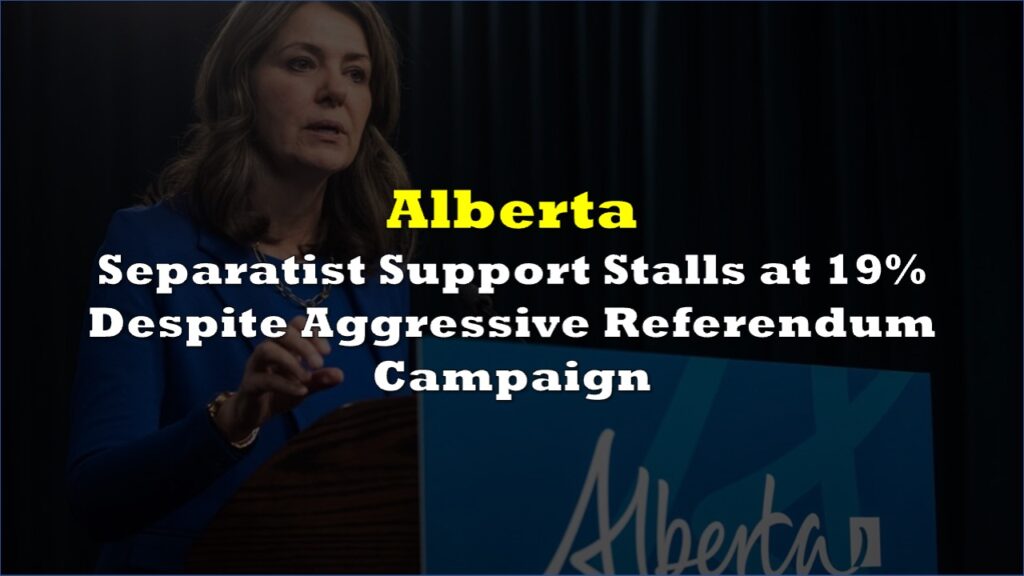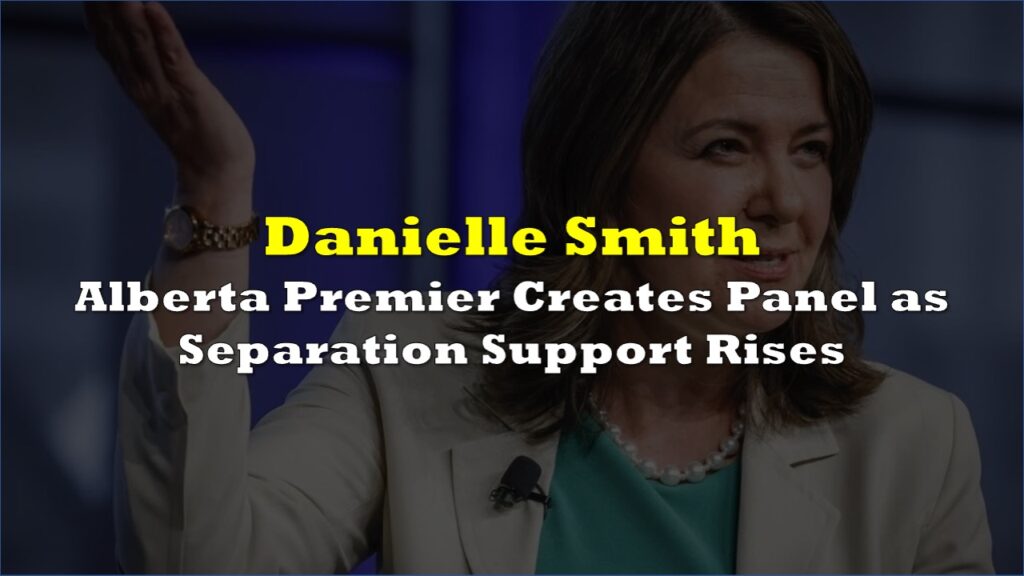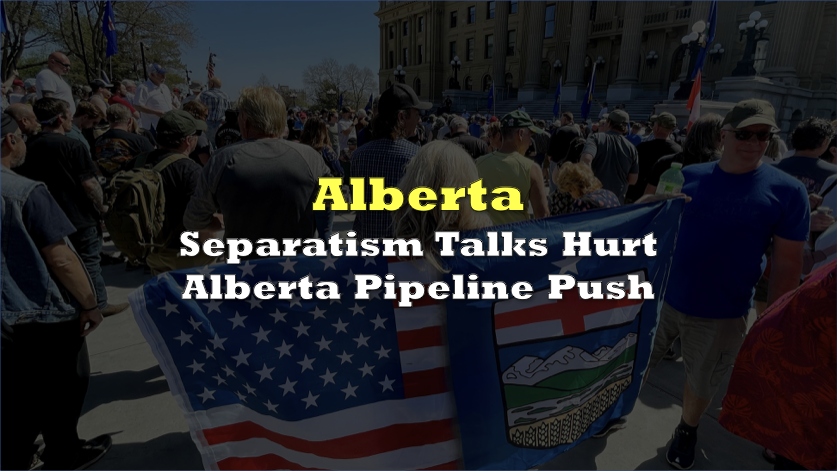

Alberta’s pipeline investment push is being hit by referendum-driven uncertainty that is reportedly stalling the province’s search for a major private investor to build a line to the West Coast, with separatism talk centered on a potential vote this fall.
A Edmonton Sun columnist argument circulating in Alberta politics frames the risk as straightforward capital discipline. Investors hesitate when the legal and fiscal country risk of the project jurisdiction might change, and they can wait rather than price that risk into a long-duration asset.
The cautionary case offered is Quebec, where the Parti Québécois won a majority in 1976, followed by a first independence referendum announced in 1980, after which business exits accelerated in the face of separation uncertainty.
"The provincial government’s search for a major private investor to build a pipeline to the West Coast is reportedly stalled by the uncertainty surrounding a potential separatism referendum this fall."
— Chris Berthelot 🇨🇦 (@DebatingChris) February 17, 2026
Separatism is bad for business & bad for Alberta.#ableg #abpoli #cdnpoli https://t.co/sVrV7qQi4K
The specific economic markers cited from that period are concentrated in Montreal’s corporate footprint. Before separatism rose, Montreal is described as Canada’s financial capital, hosting more head offices than the next three busiest cities combined, Toronto, Vancouver, and Calgary.
Real estate values then collapsed, nearly 700 businesses leaving Montreal, and Toronto took over as the country’s financial and professional hub. Montreal now ranked third in corporate headquarters behind Toronto and Calgary.
A sobering reality that support the argument is that financial assets and related businesses can move jurisdictions quickly, while oil and gas deposits cannot. Alberta currently holds the world’s third largest oil and gas reserves.
In addition, Alberta is framed as more likely to offer a low-tax, pro-business, less-red-tape environment than Quebec’s PQ government, which is characterized as left-leaning, hostile to business, and imposing language laws that allegedly added billions in costs for businesses.
On longer-run household and fiscal implications, the argument claims Albertans could end up with more money because they would not be “disproportionately taxed” to finance equalization, while Quebec is described as the largest recipient, implying Quebecers would face higher “full price” costs for social programs and tuition absent that support.
The biggest economic downside risk highlighted is not separation mechanics but the policy ideas of the Alberta Prosperity Project, including admiration for President Donald Trump and a proposal to underwrite a new Alberta dollar with gold, oil, and bitcoin.
Information for this briefing was found via Edmonton Sun and the sources mentioned. The author has no securities or affiliations related to this organization. Not a recommendation to buy or sell. Always do additional research and consult a professional before purchasing a security. The author holds no licenses.