
Alberta’s citizen-initiative law is becoming a pressure point on the province’s own resource agenda, with an anti-coal campaign claiming it has enough signatures to force the legislature to confront new mining restrictions in the Rocky Mountain foothills.
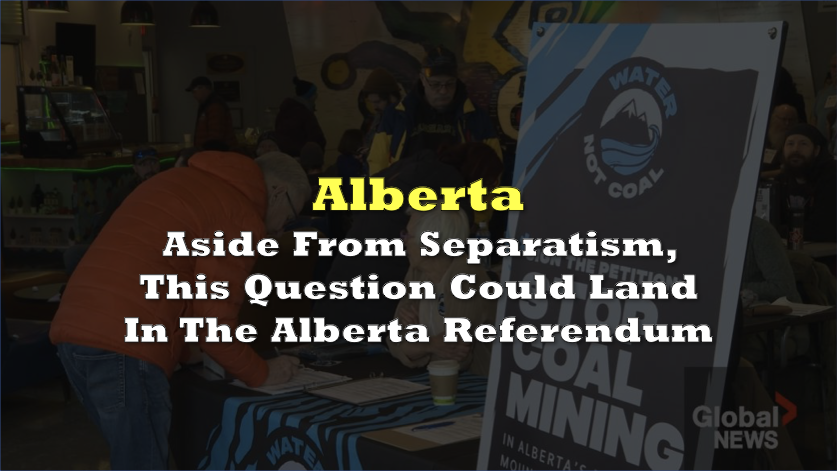
Water Not Coal, the campaign associated with musician and rancher Corb Lund, said it reached the minimum signature count needed to advance a proposed law blocking new coal exploration and mining activity in the Eastern Slopes of Alberta’s Rocky Mountains.
The required threshold is 177,732 signatures. The campaign said it would deliver the petition packages to Elections Alberta on June 10, the final day of the petition period. Elections Alberta must still review the signatures before the proposal can move forward.
The petition does not immediately add a coal question to Alberta’s Oct. 19 referendum. Under Elections Alberta’s initiative process, a successful legislative proposal is submitted to the Speaker of the Legislative Assembly. The government must then move to refer it to a legislative committee, which may recommend either a bill or a provincewide initiative vote.
 Sponsored · Selkirk Copper Mines
But the timing still matters. Alberta’s fall referendum is already built around questions about provincial power, including immigration, constitutional change and whether Alberta should remain in Canada or begin the legal process toward a future binding separation vote. Elections Alberta says 10 questions are currently set for Oct. 19, with each question on a separate ballot.
Water Not Coal introduces a different kind of autonomy fight. Instead of asking how much authority Alberta should wrest from Ottawa, the petition asks whether citizens can use Alberta law to constrain development decisions inside the province.
The proposed measure would prohibit coal exploration and mining in the Eastern Slopes, except for mines already in production as of Jan. 1, 2026. The campaign’s official petition language names Northback Holdings’ Grassy Mountain Project and Valory Resources’ Blackstone Project, along with expansions of producing mines.
Blackstone is described by Valory as an underground steelmaking coal exploration project in Clearwater County. The company says the project has a 339 million-tonne resource and estimates first-stage capital costs of US$400 million to US$500 million, with first coal targeted for Q3 2031.
Northback presents Grassy Mountain as a steelmaking coal project on previously mined land. Opponents have treated it as a test case for whether Alberta will permit new coal activity in areas tied to mountain watersheds and downstream communities.
Water Not Coal’s campaign argues the Eastern Slopes are central to drinking water, agriculture and river systems across the province. Its website says the petition seeks legislation rather than another policy promise, framing the measure as a statutory barrier against future reversals.
Global News, citing The Canadian Press, reported that Lund did not disclose the final number of signatures Monday, but said the campaign had collected enough to compel action under the petition rules. The same report said the group registered more than 3,000 canvassers.
For the Smith government, the risk is not only another possible referendum item. It is the collision of two political narratives in the same year: Alberta as a province demanding more control from Canada, and Albertans demanding more control over Alberta.
Information for this story was found via the sources and companies mentioned. The author has no securities or affiliations related to the organizations discussed. Not a recommendation to buy or sell. Always do additional research and consult a professional before purchasing a security. The author holds no licenses.