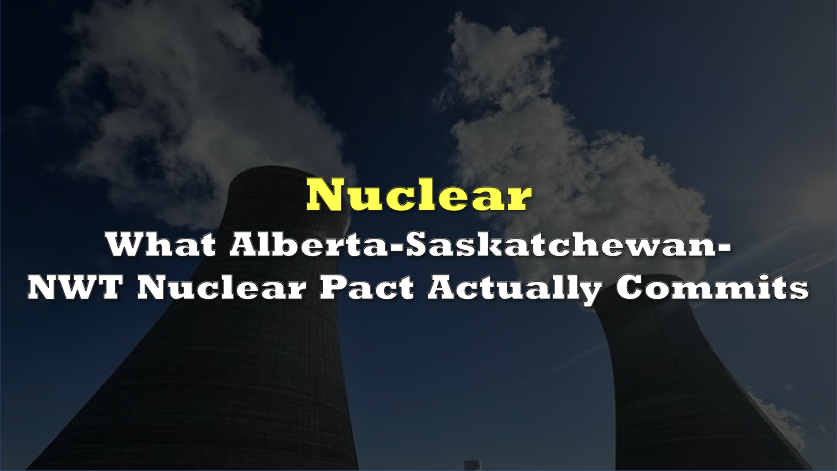

Alberta, Saskatchewan, and the Northwest Territories are moving nuclear power into a broader regional electricity strategy, signing an agreement that covers everything from reactor selection and uranium supply to new transmission links, while stopping short of committing any government to build a reactor.
The memorandum of understanding creates a framework for cooperation on conventional large reactors, small modular reactors, and microreactors. The jurisdictions also plan to coordinate on financing approaches, environmental assessments, federal and regulatory approvals, nuclear fuel transportation, and waste management.
No project cost, reactor site, financing commitment, or construction schedule was announced.
 Sponsored · Selkirk Copper Mines
The transmission side could become as significant as the nuclear planning. Alberta and Saskatchewan currently have only one electricity intertie, through the 150-megawatt McNeill converter station. Canadian Utilities, whose ATCO subsidiary operates the facility, said in February that an end-of-life replacement under consideration carried a preliminary cost estimate of approximately $1 billion.
The new MOU also follows a March agreement involving 10 provinces and territories to pursue additional interties and expand domestic electricity trade.
Saskatchewan already has a defined nuclear development track. SaskPower selected GE Hitachi’s roughly 300-megawatt BWRX-300 design for its SMR planning and has narrowed potential sites to the Boundary Dam and Rafferty reservoir areas near Estevan.
A final investment decision is not scheduled until 2029, with nuclear generation targeted as an option for the mid-2030s.
SaskPower also began evaluating large-reactor technologies in January, saying deployment of a conventional reactor could require at least 15 to 20 years.
Alberta remains earlier in the process. Its nuclear advisory panel delivered its final report in April, with the province now developing a broader nuclear roadmap and regulatory framework.
For the Northwest Territories, the agreement is primarily exploratory. Its government said stronger connections could allow the territory to benefit from generation projects being considered near its southern border while assessing potential new grid links.