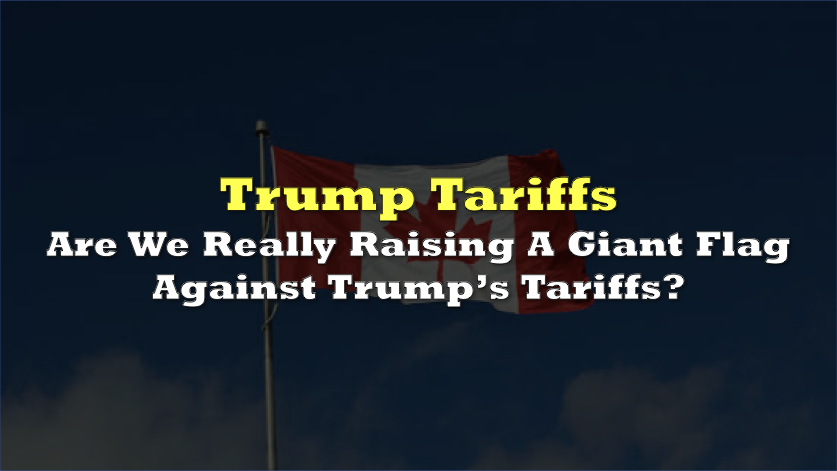

A giant Canadian flag going up at Ottawa City Hall has become an easy target for frustration over US tariffs, but the display is neither Ottawa’s negotiating strategy nor a federal government initiative.
It is a municipal gesture ordered by Ottawa Mayor Mark Sutcliffe, who asked city staff to reinstall the flag normally displayed for Canada Day. The announcement arrived as the federal government pursued negotiations over a planned 50% US tariff on selected Canadian goods scheduled to take effect on August 19.
“Given the punitive new tariffs recently imposed on many businesses in Ottawa and throughout Canada, I think it’s more important than ever that we show our city and our country are strong and united,” Sutcliffe wrote.
 Sponsored · Selkirk Copper Mines
The mayor’s description was technically premature. The tariffs have been announced, but they have not yet taken effect.
On the other hand, Prime Minister Mark Carney said Canada and the US would intensify discussions after Washington announced the 50% levy on July 20.
The proposed duties cover products including alcohol, dairy, cement, honey, some wood goods, and hockey equipment. Energy, potash, fish, and critical minerals are excluded. Desjardins estimated that approximately $28 billion in annual exports would be affected, equal to about 5% of US imports from Canada.
Carney has not announced immediate retaliation. He told reporters that responding before August 19 would be counterproductive, while maintaining that “everything’s on the table” if negotiations fail.
 Sponsored · Altamira Gold Corp.
Ottawa has separately described the measure as a violation of the CUSMA and said it has submitted proposals intended to resolve the dispute and modernize the trade pact.
The economic costs would not fall exclusively on Canadian producers. Research published by the Federal Reserve Bank of New York found that 94% of the cost of US tariffs during the first eight months of 2025 was borne inside the United States, largely by importers, businesses, and consumers. A separate Federal Reserve analysis estimated that tariffs implemented through November 2025 had increased U.S. core goods prices by 3.1% through February 2026.
Canadian exporters would still face weaker demand, lower margins, disrupted contracts, and pressure to find alternative buyers.
The flag debate has also redirected attention toward a problem Canada can address without Washington’s approval. Nine premiers announced an agreement on July 21 allowing Canadian alcohol producers to ship directly to consumers in participating provinces. Quebec and the three territories did not sign, although Quebec and Yukon were reported to be working toward joining.
The agreement was presented as a major reduction in interprovincial barriers. However, it does not automatically eliminate provincial liquor-board markups, registration costs, administrative requirements, or restrictions on retail distribution.
That leaves Canada pursuing two responses at once. One is diplomatic, aimed at preventing a 50% tariff from closing portions of the US market. The other is domestic, aimed at turning ten provincial markets into something closer to one national economy.
The flag can signal unity. Whether that unity translates into lower internal barriers will depend on the regulations provinces adopt after the cameras move on.