
A fatal New Jersey collision involving Tesla has renewed scrutiny of a category of crash data that a federal judge questioned keeping confidential months earlier, raising fresh concerns about what the public can learn from government reports involving driver-assistance technology.
The latest disclosure concerns an August 22, 2026, crash involving a 2021 Tesla Model Y in Vineland. Electrek reported that it matched the collision to a National Highway Traffic Safety Administration filing identifying the vehicle’s driver-assistance system as “Verified Engaged.”
The publicly available record withholds whether the vehicle was operating within the system’s operational design domain, a technical designation covering the conditions under which a driving system is designed to operate.
 Sponsored · Selkirk Copper Mines
The same information was disputed in a March 25 ruling by US District Judge Tanya Chutkan in a Freedom of Information Act lawsuit brought by The Washington Post against NHTSA. Tesla had intervened to defend confidential treatment of information contained in its federal crash reports.
The court determined that Tesla routinely treated its operating-domain information as confidential but found the defendants had not adequately demonstrated that disclosure would cause foreseeable commercial harm.
The judge examined the limited information contained in the disputed field, which could indicate that a vehicle was operating within its designated domain, outside that domain, or under unknown conditions.
The ruling left that withholding issue unresolved while accepting the government’s arguments for protecting Tesla’s software-version information and accident narratives.
 Sponsored · Altamira Gold Corp.
Tesla had argued that disclosing detailed technical information could allow competitors to evaluate its software performance, examine development practices, and gain insights into internal engineering processes.
The court accepted those commercial concerns for certain categories of information but found the justification insufficient to resolve the dispute over the narrower operating-domain field.
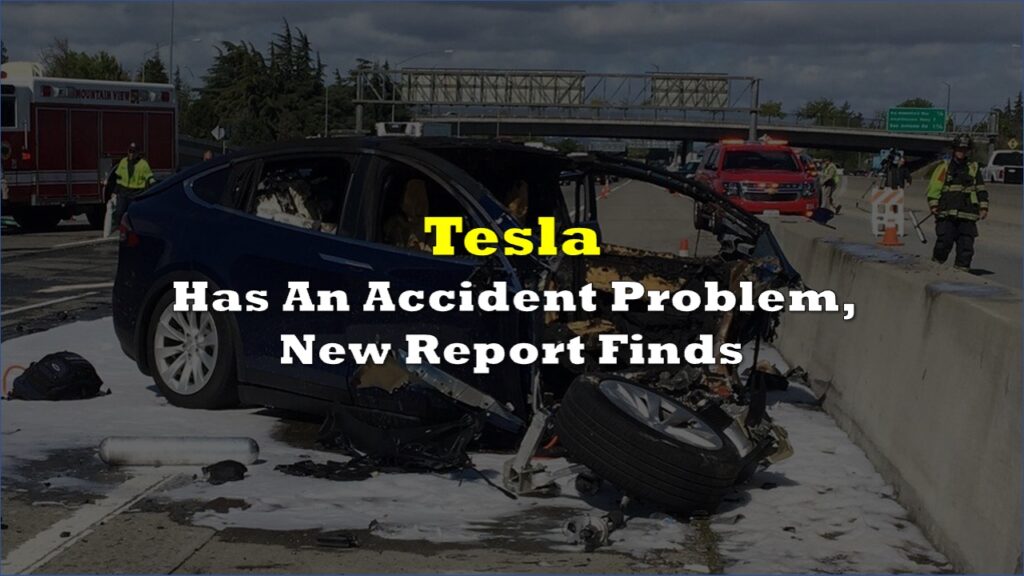
According to New Jersey State Police, the Tesla crossed the median of Route 55 around 8:31 a.m. on August 22 and collided with a northbound Chevrolet SUV. The SUV’s driver, 68-year-old Phillip Eastman, died, while the Tesla driver and a passenger in the Chevrolet sustained moderate injuries.
The federal record, identified by Electrek, reports that driver assistance was engaged within the regulatory reporting window of 30 seconds before impact.
The finding does not establish whether the technology was controlling the vehicle when it crossed the median or contributed to the collision.
The report also withholds the software version and crash narrative, leaving the public unable to determine whether the vehicle was using Autopilot or Full Self-Driving.
NHTSA requires manufacturers to report qualifying serious crashes involving Level 2 driver-assistance systems used within 30 seconds before impact. Its publicly released data excludes personally identifiable information and information claimed as confidential business information.
The March ruling concerned an earlier records dispute and did not establish that the redactions in the Vineland filing were unlawful.
However, the newly identified fatality illustrates how a contested disclosure category remains absent from publicly available safety records even after its legal justification faced federal judicial scrutiny.