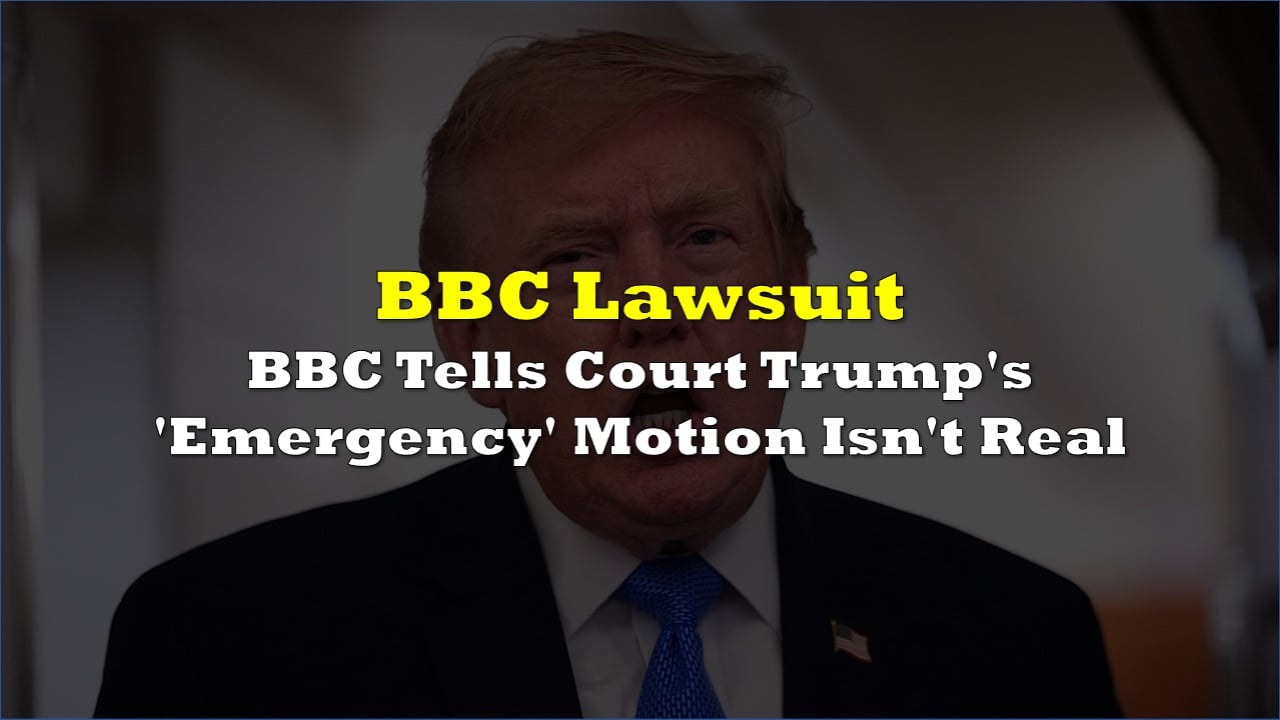

With a court-ordered deadline just hours away, President Trump’s trust filed an emergency motion Wednesday trying to stop the BBC from receiving financial records covering roughly 400 of Trump’s business entities. The network pushed back the same day, telling the court that Trump’s own team manufactured the emergency by waiting until the last moment to act.
The BBC also rejected Trump’s claim that it’s pursuing the case for political reasons, and Trump’s attorneys have now offered an unspecified date for him to sit for a deposition, assuming the case survives that long.
Read: A $10 Billion Defamation Suit Is Becoming a January 6 Discovery Nightmare for Trump
 Sponsored · Selkirk Copper Mines
The dispute traces back to Trump’s $10 billion defamation suit against the BBC over a 2024 “Panorama” documentary that spliced together portions of his January 6, 2021, speech, making it appear he directly urged supporters toward violence. The BBC has apologized for the edit but rejected Trump’s demand for damages.
Last month, US Magistrate Judge Enjoliqué Lett ordered the Donald J. Trump Revocable Trust to begin turning over years of tax filings, ownership paperwork, and financial statements reaching back to early 2023, with a first batch due within ten days and further batches arriving weekly. Trump’s own complaint, which claims the documentary damaged the value of his “brand, properties and businesses,” gave the judge grounds to allow the subpoena.
Read: Judge Confirms Trump Must Formally Hand Over Financial Records to the BBC
Rather than act quickly, Trump let most of that ten-day window lapse. When his lawyers finally reached out on Monday asking the BBC to voluntarily extend the deadline, the network turned them down. His attorneys then filed what they called, in their own certification to the court, “a true emergency,” arguing that once records reach the BBC, nothing can undo the exposure. The filing accused the network of trying “to wrongly exploit this litigation for its own political benefit” — both for itself and for Trump’s other political opponents.
The BBC’s opposition called the emergency a problem of Trump’s own making, noting the trust waited until the day before its deadline “despite the weeks that have passed since” Lett’s order. BBC lawyers also pointed to what they called months of stalling by Trump’s side on interrogatories, document requests, and deposition scheduling.
A day before the emergency motion, Trump’s team separately asked to amend the complaint, reframing the alleged harm from damage to his businesses toward personal reputational injury instead, a shift that could undercut the BBC’s own justification for the sweeping financial subpoena if a judge accepts it. The BBC has yet to respond to that request.
The presiding judge has also already set a trial date for February 2027, meaning discovery fights like this one are likely to keep surfacing for months before the case ever reaches a jury.